 Custer
 Everson and Custer: Two Communities, One Set of Weather Problems
Everson sits along the Nooksack River in Whatcom County, just a few miles from Custer and not far from the Strait of Georgia. Homes here deal with a combination of conditions that's harder on an exterior than most people realize: salt-laden air moving in off the water, long stretches of driving rain through fall and winter, and a moss and algae season that can run nine months out of the year on a shaded north wall. None of that is dramatic on its own, but stacked together year after year, it's what determines whether a home's siding, roof, windows, and deck are still doing their job in fifteen years — or already failing.
We work Everson and Custer as part of our regular service area, not as an occasional trip. That matters more than it sounds like it should, and we'll get into why below.
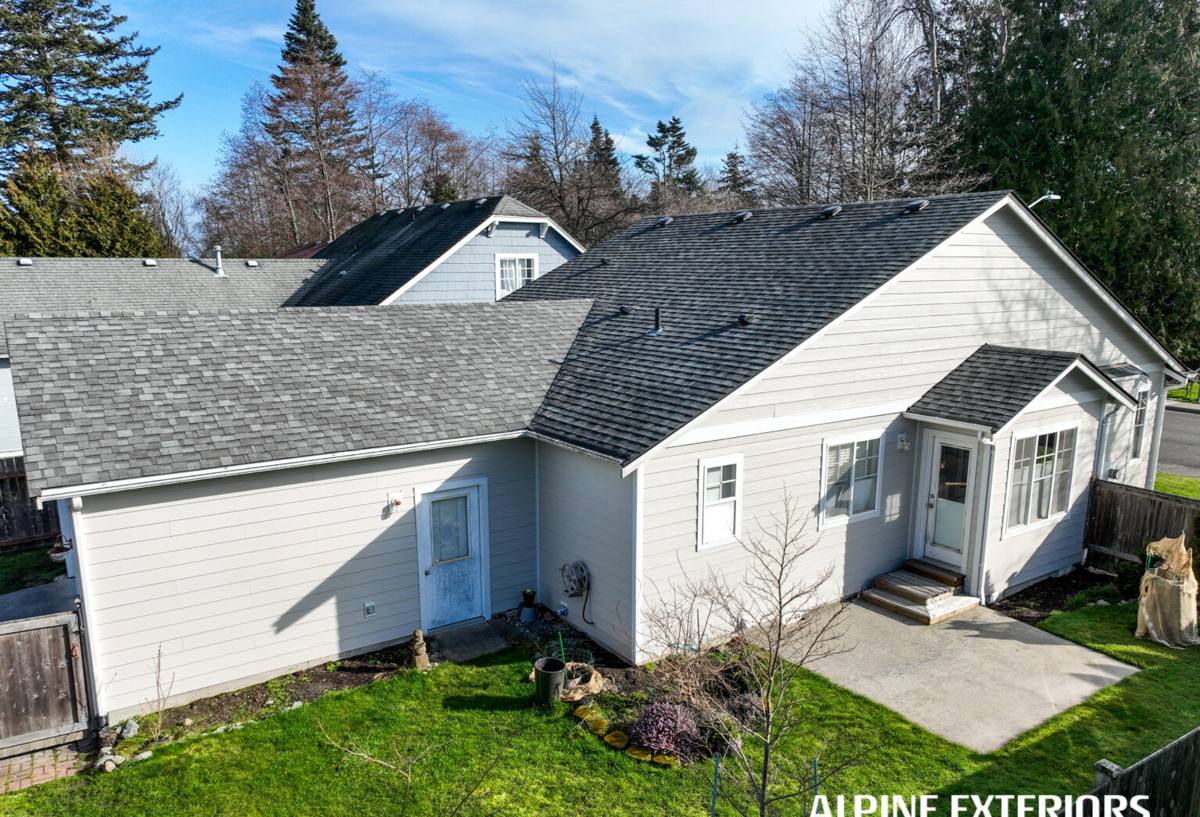
What Whatcom County Weather Actually Does to a House
Salt Air
Proximity to Puget Sound and the Strait means airborne salt is a real factor here, even a few miles inland. Salt accelerates corrosion on fasteners, flashing, and any metal trim, and it can degrade lower-quality paint finishes faster than a manufacturer's warranty accounts for. Siding and trim products need a finish that's engineered to resist that kind of exposure, not just a coat of paint applied on site.
Driving Rain
Rain in this part of Washington doesn't just fall — wind off the water pushes it sideways into walls, window frames, and anywhere two building materials meet. That's where water intrusion actually starts: not through the face of a wall, but through a poorly flashed joint, a gap at a window, or a siding seam that wasn't sealed correctly. The material matters, but the installation detailing matters just as much.
Moss and Algae Season
Shaded, north-facing walls and roof slopes in Custer and Everson can stay damp for most of the year. That's ideal growing conditions for moss and algae, which hold moisture against the surface underneath them. On a roof, that shortens shingle life. On siding, it can trap moisture against seams and fastener points if the product and paint system aren't built to handle it.
Siding That's Built for This Climate
We install James Hardie fiber cement siding exclusively. That's not a marketing angle — it's a standard we hold to because of what we've seen happen to other materials under exactly the conditions Everson and Custer homes deal with every year.
James Hardie siding is non-combustible fiber cement, engineered in climate-specific HZ product lines for exactly this kind of Pacific Northwest exposure — rain, moisture cycling, and coastal air. It comes with a factory-applied ColorPlus finish, which is baked on under controlled conditions rather than painted on site, and it carries a strong transferable warranty that follows the house if it sells.
Why We Don't Install Other Products
We get asked regularly about vinyl, LP SmartSide, Cemplank, Allura, or primed cedar and spruce siding. Each of those has a place in the market, and none of them is a bad product in every situation. But we've made a professional decision to standardize on one system so we can guarantee the installation quality and long-term performance we put our name behind:
| Material | Common trade-off in this climate |
|---|---|
| Vinyl siding | Can warp or become brittle with temperature swings; seams and butt joints are a common water entry point in driving rain |
| LP SmartSide (engineered wood) | Wood-based core is more vulnerable to moisture intrusion at cut edges and fastener points than fiber cement |
| Cemplank / Allura (fiber cement alternatives) | Similar base material to Hardie, but without Hardie's specific HZ climate engineering or ColorPlus factory finish system |
| Primed cedar or spruce | Real wood requires ongoing repainting and sealing to hold up against salt air and prolonged damp — a higher maintenance burden over time |
| James Hardie fiber cement | Non-combustible, climate-engineered HZ lines, factory-cured ColorPlus finish, strong transferable warranty |
The trade-off with any product is real — cost, weight, installation sensitivity. Hardie isn't the cheapest option on the shelf, and it has to be installed correctly (proper clearances, fastener patterns, and joint treatment) to perform the way it's designed to. But when it's installed to spec, it's the product we're confident will still look and perform well after a decade of Whatcom County winters.
Roofing, Windows, and Decks: The Rest of the Exterior
Siding doesn't work in isolation. A house's exterior is a system, and the same climate pressures that affect siding affect the roof, windows, and any outdoor structures like decks.
Roofing
Moss growth, prolonged moisture, and wind-driven rain are the main things shortening roof life in this area. Proper flashing at valleys, chimneys, and wall intersections is often the difference between a roof that lasts and one that develops slow leaks nobody notices until there's interior damage.
Windows
Window replacement and correct window flashing go hand in hand with siding work. A large share of the water intrusion problems we find during a siding tear-off trace back to window openings that weren't flashed correctly, sometimes decades ago. When we're already opening up a wall for siding, it's the right time to address window flashing rather than close it back up around the same problem.
Decks
Decks in this region take a beating from the same rain and damp-shade conditions as siding and roofing. Ledger board attachment and flashing where a deck meets the house is a frequent trouble spot — it's structurally important and it's also a common water entry point into the home if it's not detailed correctly.
Handling siding, roofing, windows, and decks under one crew means fewer handoffs, fewer finger-pointing situations if something doesn't line up between trades, and a better shot at getting the water management details right where these systems meet.
Why a Local Crew Matters in Everson and Custer
Whatcom County's coastal-influenced, rain-heavy climate isn't the same as what a crew based further inland or south deals with day to day. A local crew that regularly works Everson and Custer has a working understanding of:
- Which sides of a house typically need the most attention for moss and moisture
- How local permitting and inspection processes actually run in Whatcom County
- What a proper installation needs to hold up to salt air and driving rain specifically, not just "Pacific Northwest weather" in general
- Realistic scheduling around the wetter months, so work isn't rushed into a rain window that compromises the install
That local familiarity doesn't replace good installation practices — it supplements them. But it does mean fewer surprises during the project and a better sense of what a given home actually needs versus a generic recommendation.
Signs Your Home's Exterior Needs a Closer Look
Homeowners in Everson and Custer don't need to wait for an obvious problem before getting an exterior evaluated. Some early indicators worth a call:
- Persistent moss or algae staining on siding or roof surfaces, especially on shaded walls
- Soft spots, bubbling, or discoloration on siding, particularly near the ground or around window trim
- Visible gaps, cracking, or separation at siding seams and window trim
- Granule loss or curling shingles on the roof, or moss buildup on north-facing slopes
- Soft or spongy decking near where the deck attaches to the house
- Musty smell or discoloration on interior walls near exterior corners — often a sign of slow water intrusion from outside
Any one of these on its own might be minor. Several together, or anything involving interior signs of moisture, is worth an inspection before it becomes a bigger repair.
What to Expect from a Project
An exterior project — whether it's a full siding replacement or a combination of siding, roofing, and window work — typically follows the same general sequence: an on-site evaluation, a written scope and estimate, removal of the old material, correction of any water damage or flashing problems found underneath, then installation of the new material to manufacturer spec. On a Hardie siding job specifically, that means correct clearances from grade and roof lines, proper fastener spacing, and sealed joints — the details that determine whether the product performs the way it's designed to for the next several decades.
A Few Cost Factors Worth Knowing
| Factor | Why it affects the estimate |
|---|---|
| Extent of existing water damage | Rot or damaged sheathing found during tear-off has to be repaired before new material goes on |
| House size and complexity | More corners, dormers, and roof intersections mean more flashing and trim work |
| Siding profile and color | Different Hardie profiles (lap, shingle-style, panel) and ColorPlus finishes carry different material costs |
| Scope combination | Bundling siding with roofing, window, or deck work can reduce redundant setup and access costs |
| Site access | Tight lots, slopes, or landscaping obstacles can affect labor time |
Choosing the Right Contractor
Whether you end up working with us or someone else, a few questions are worth asking of any contractor bidding exterior work in Whatcom County:
- Are they licensed and insured to work in Washington, and can they provide proof?
- Do they specify the exact siding product and profile in writing, not just "fiber cement" or "Hardie-style"?
- Will they inspect and address sheathing or framing damage found during tear-off, or just cover it back up?
- Do they detail flashing at windows, roof lines, and deck ledgers as part of the scope, not as an afterthought?
- Can they explain their fastener spacing and clearance approach for the specific product being installed?
- Is the warranty — both manufacturer and workmanship — explained clearly and in writing?
A contractor who can answer these plainly, without vague reassurances, is usually one who understands what correct installation actually requires in this climate.
Get a Free, No-Pressure Estimate
If you're in Everson, Custer, or elsewhere in Whatcom County and want an honest look at your siding, roofing, windows, or deck, we're glad to come take a look. There's no obligation and no pressure — just a straight assessment of what your home's exterior actually needs. Use the form below to get started.