 Custer
 Two Materials, One Job — But They Don't Do It the Same Way
If you've priced out siding for a home in Custer or anywhere else in Whatcom County, you've probably run into both of these products. James Hardie fiber cement and LP SmartSide engineered wood get compared constantly because they're both marketed as the "upgrade" from vinyl — more rigid, more paintable, more durable-looking. But they're built from completely different raw materials, they fail in different ways, and they ask homeowners to accept different long-term trade-offs. We only install James Hardie on the homes we work on, and we think homeowners deserve a straight explanation of why — not a sales pitch that pretends LP SmartSide doesn't have real strengths, because it does.
This page walks through what each product actually is, how they hold up against the specific weather this corner of the state throws at a house, and what that means for your maintenance schedule and your wallet over 20-plus years.
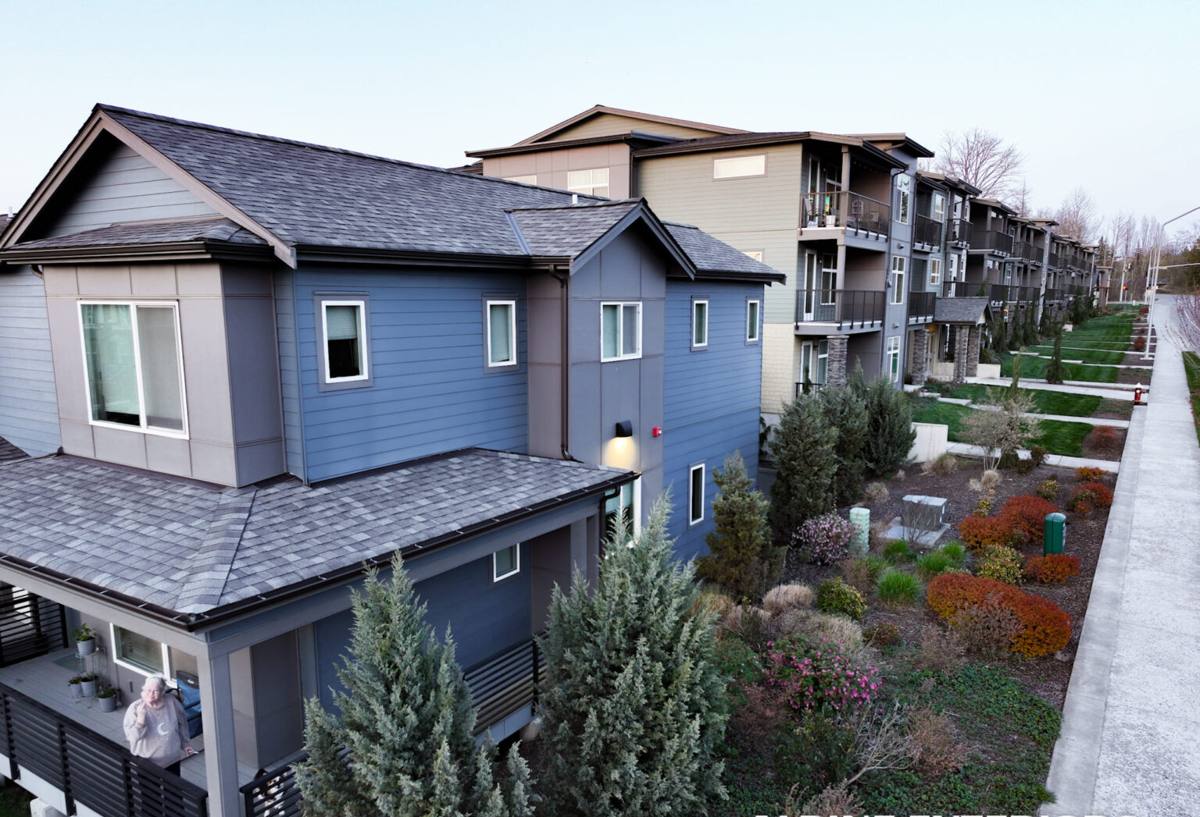
What LP SmartSide Actually Is
LP SmartSide is an engineered wood product — strands of wood fiber bonded with resin under heat and pressure, then treated with a zinc borate preservative to resist fungal decay and insects, and finished with a primer coat at the factory. It's a genuine improvement over old-school OSB siding, and LP has spent real engineering effort on the treatment and coating process. It's lighter than fiber cement, easier for crews to cut and nail without special blades, and it holds a good, crisp panel or lap profile.
The catch is in the name: it's still wood. Zinc borate slows decay, it doesn't eliminate the fact that the core material is a wood composite that can absorb moisture if the factory coating is compromised — at a cut edge, a nail hole, a scratch, or a seam where caulking has failed. Once moisture gets into the substrate of an engineered wood product, the strand-and-resin structure doesn't dry out or recover the way solid lumber sometimes can. It swells, softens, and in bad cases delaminates from the inside out, often before it looks like a problem from the curb.
What James Hardie Fiber Cement Actually Is
James Hardie siding is cement, sand, and cellulose fiber, cured into a rigid board. There's no organic wood fiber for moisture to feed on and no resin bond that breaks down when it gets wet. It can absorb a small amount of surface moisture and release it without swelling, warping, or rotting, which is the core reason fiber cement has become the standard material for architects and contractors who work in wet Pacific Northwest climates specifically.
Hardie also builds region-specific product lines. The HZ5 formulation, engineered for colder, wetter climates like ours, is a different mix than the HZ10 formulation sold in hot, humid southern markets. That's not a marketing gimmick — freeze-thaw cycling and prolonged damp exposure stress a board differently than heat and UV do, and the engineering reflects that.
ColorPlus vs. Job-Site Painted Finish
Most Hardie siding we install uses the ColorPlus factory finish — a multi-coat, baked-on finish applied in a controlled facility, not brushed or sprayed on a scaffold in variable weather. It resists fading and chipping better than field-applied paint and comes with its own finish warranty separate from the product warranty. LP SmartSide is sold primed, which means the actual color coat is either factory-applied topcoat (on some product lines) or field-painted after install — and a field-painted finish is only as good as the weather conditions and prep work on the day it went on.
The Real Battleground: Moisture, Rain, and Whatcom County Weather
This is the part that matters most for a house in Custer. We're close enough to the water that salt air is a real factor on siding, gutters, and fasteners, and the driving rain that comes through in fall and winter storms doesn't fall straight down — it gets pushed sideways into wall assemblies, working its way into any gap in the exterior envelope. On top of that, this area gets a long moss season: extended stretches of damp, shaded, low-sun conditions that let moss and algae establish on any siding surface that stays wet for long periods, particularly on north-facing walls and under roof overhangs.
For an engineered wood product, that combination is the worst-case scenario. Sustained dampness plus organic growth on the surface is exactly the environment that stresses the factory coating and pushes moisture toward any vulnerable edge — cut ends at corners and openings, nail penetrations, and butt joints between panels. Manufacturers of engineered wood siding are explicit that field-cut edges need to be re-sealed with the correct primer or sealant during installation, and that caulked joints need to be maintained over the life of the product. Skip a step, or let caulking fail years later without recaulking, and moisture has a direct path into the core.
Fiber cement doesn't remove the need for good flashing and installation practice — no siding product does — but because the material itself isn't organic, a lapse in caulk maintenance doesn't carry the same risk of the board itself rotting from the inside. That's the practical reason fiber cement has become the go-to choice for coastal and high-rainfall regions of the Northwest specifically, ours included.
Fire Exposure and Pest Resistance
Fiber cement is non-combustible — it doesn't contribute fuel to a fire the way any wood-based product does, engineered or not. That matters more in some parts of the state than others, but it's a straightforward, verifiable difference in the raw material itself, not a close call.
On pests: the zinc borate treatment in LP SmartSide is specifically there to deter insects and fungal decay, and it does real work. But it's a treatment applied to a wood product, not an inherent property of the material. Fiber cement has nothing in it for insects to feed on or fungus to colonize in the first place, so there's no treatment to depend on holding up over decades.
Comparing the Two Head-to-Head
| Factor | James Hardie Fiber Cement | LP SmartSide Engineered Wood |
|---|---|---|
| Core material | Cement, sand, cellulose fiber | Wood strands bonded with resin |
| Moisture response | Does not swell or rot; no organic material to decay | Can swell, soften, or delaminate if coating is breached |
| Fire rating | Non-combustible | Combustible (wood-based) |
| Factory finish | ColorPlus baked-on finish with separate finish warranty | Primed; topcoat often applied on-site or by installer |
| Cut-edge maintenance | Recommended but low-risk material | Field-applied sealant required at every cut edge |
| Weight / handling | Heavier, requires fiber-cement blades and technique | Lighter, easier to handle and nail |
| Typical warranty | 30-year limited, transferable | Commonly 5-year workmanship / longer limited product warranty, terms vary by line |
Warranty Structure — Read the Fine Print Either Way
James Hardie backs most of its lap and panel siding with a 30-year limited transferable warranty, and ColorPlus finishes carry their own separate finish warranty covering fade and chipping. That transferability matters if you plan to sell the home — a buyer can inherit real coverage, not just a manufacturer's goodwill.
LP SmartSide's warranty terms vary by product line and have changed over the years, and like any siding warranty, coverage is conditioned on installation following the manufacturer's specifications — including that edge-sealing and caulk maintenance we mentioned above. A warranty that's contingent on ongoing homeowner maintenance is a very different practical promise than one that isn't, and it's worth reading the actual document rather than assuming "it's covered" means all scenarios are covered.
Cost Factors to Weigh, Not Just the Upfront Number
LP SmartSide typically installs for less than fiber cement, and material and labor costs shift over time, so we're not going to hand you numbers that will be stale in a year. What we'd rather you weigh is the full cost picture:
- Upfront material and installation cost
- Expected repainting or refinishing cycle if the product isn't factory pre-finished with a long-warranty coating
- Caulk and edge-sealant maintenance labor over the life of the siding
- Risk and cost of localized repair or replacement if moisture gets behind the coating at a joint or edge
- Resale impact of a transferable, well-known warranty versus a shorter or conditional one
A lower installed price today that comes with a recurring maintenance obligation and a narrower warranty isn't automatically the cheaper choice over 20 years — it depends on how diligent the maintenance actually is, year after year, which is a hard thing to guarantee for any homeowner.
What to Check Before You Choose Either Product
- Ask what specific product line and thickness is being quoted, not just the brand name
- Ask whether the finish is factory-applied or will be field-painted, and what that finish is warrantied for
- Ask exactly how cut edges, corners, and joints will be sealed, and who's responsible for re-sealing them later
- Ask for the manufacturer's written installation instructions and confirm the contractor follows them, since most siding warranties require it
- Ask what the warranty actually covers if you sell the house — is it transferable, and for how long
- Get everything — product, warranty terms, and maintenance expectations — in writing before signing
Why We Standardized on James Hardie for Custer Homes
We made a decision as a company to install only James Hardie fiber cement, and it comes down to what holds up best against the specific conditions homes face here: salt-laden air off the water, driving winter rain that gets pushed into every gap in a wall system, and a moss season long enough to keep siding surfaces damp for extended stretches. Fiber cement doesn't eliminate the need for correct flashing, proper fastening, and good installation practice — nothing does — but it removes the single biggest long-term liability of an engineered wood product in a wet climate: an organic core that can rot once moisture finds a way in.
LP SmartSide is a legitimate product with real engineering behind it, and it performs reasonably in drier climates or on homes where maintenance stays consistent for decades. We just don't think that's a bet worth asking a Custer homeowner to make against Whatcom County weather, especially when a non-combustible, moisture-stable, factory-finished alternative with a strong transferable warranty is available and proven in this exact region.
If you're weighing siding options for your home, we're happy to walk you through what correct Hardie installation looks like, which HZ5 colors and profiles fit your house, and what the real cost picture looks like over time. Reach out for a free, no-pressure estimate — no obligation, just a straight answer about what your home actually needs.