 Custer
 What Board and Batten Actually Is
Board and batten is one of the oldest siding patterns in American building — wide vertical boards with narrow strips (battens) covering the seams between them. It started as a practical way to weatherproof barns and farmhouses with minimal material, and it has stuck around because the vertical lines read as clean, modern, and a little more distinctive than standard horizontal lap siding. On a lot of Custer homes we see it used as an accent — a gable end, a porch, a garage face — paired with lap siding on the rest of the house. On others, homeowners want the whole exterior done in vertical board and batten for a more farmhouse or modern-craftsman look.
The style hasn't changed much in two hundred years. What has changed is the material behind it, and that matters more than most homeowners realize when they're picking a product for a house that sits a few miles off the Salish Sea.
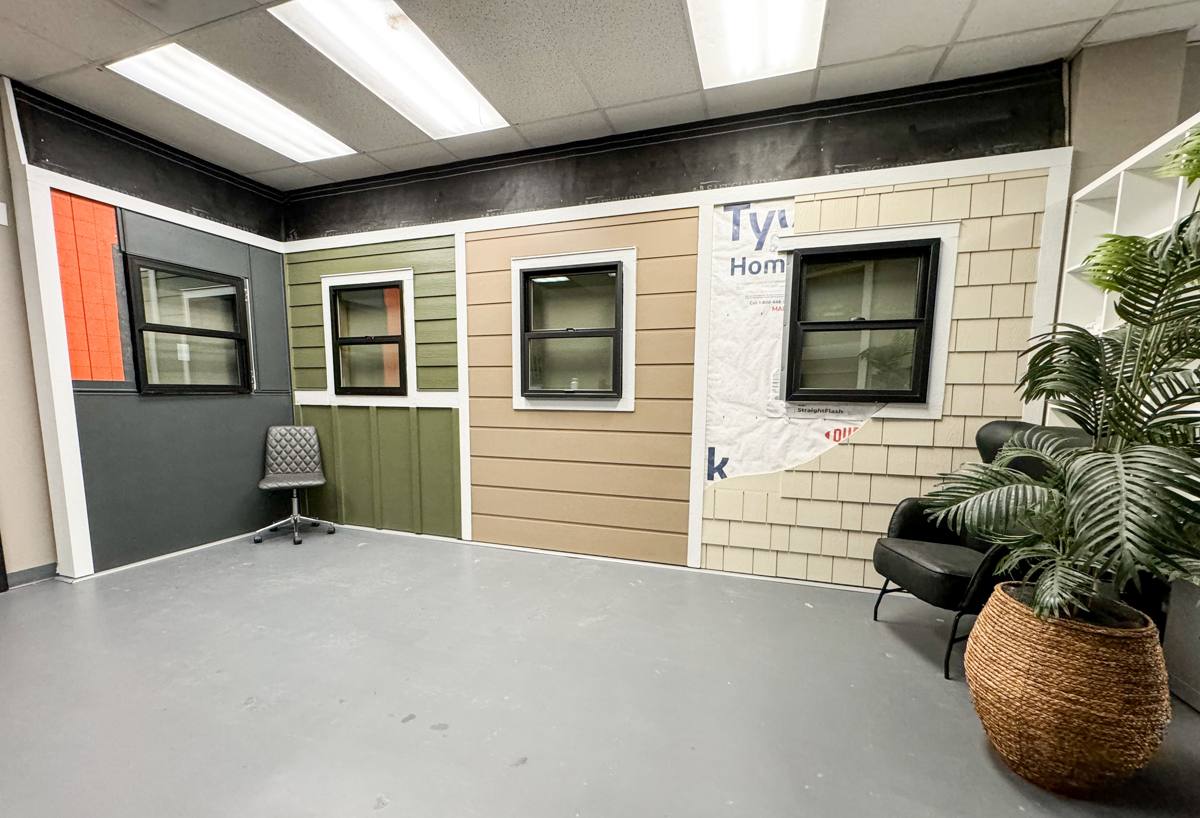
How James Hardie Builds Board and Batten
Two Ways to Get the Look
Hardie offers board and batten in two basic systems, and the difference is worth understanding before you pick one:
- HardiePanel vertical siding with battens — a single large fiber cement panel (typically 4x8 or 4x10 feet) installed vertically, with separate batten strips fastened over the panel seams. This is the most common and most budget-predictable approach.
- Individual boards with battens — narrower HardieTrim or HardiePlank-style boards installed side by side with a gap, then covered with battens, mimicking the original historic construction more closely. This method uses more material and more labor hours, and it costs more as a result.
Both approaches use the same fiber cement formulation underneath — Portland cement, sand, and cellulose fiber, autoclaved for stability. Fiber cement doesn't warp, cup, or crack from moisture cycling the way wood-based products can, which is the whole reason it's worth the premium over other options in a wet marine climate.
Batten Spacing and Reveal
Batten spacing is a design decision as much as a structural one. Wider spacing (16"–24" on center) reads as more contemporary; tighter spacing (8"–12") reads closer to traditional farmhouse. Battens are typically 1x2 or 1x3 trim boards, and the reveal — how far the batten stands proud of the panel — affects how strong the shadow lines look, especially under the flat, overcast light Whatcom County gets a lot of the year. A slightly deeper reveal actually helps a board and batten exterior look good even on gray days, because it doesn't rely on strong sun angle to show its lines.
Board and Batten vs. Traditional Lap Siding
Neither style is objectively better — it's a look decision first, with some practical differences worth knowing.
| Factor | Board & Batten (Vertical) | Lap Siding (Horizontal) |
|---|---|---|
| Visual style | Modern farmhouse, craftsman, barn-inspired | Traditional, colonial, most common style in the PNW |
| Water shedding | Vertical lines shed water quickly down the face | Overlapping courses shed water course to course |
| Material use | Similar or slightly more, depending on batten density | Standard, most efficient layout |
| Best used as | Full exterior or accent (gables, entries, dormers) | Full exterior, most common default |
| Installation sensitivity | Batten fastening and seam flashing are more detail-heavy | Straightforward, well-established technique |
A lot of the board and batten projects we do in Whatcom County aren't whole-house jobs — they're a gable, a bump-out, or a front entry done in vertical siding against a lap-sided body. It's an easy way to add visual interest without redoing an entire elevation, and it holds up exactly as well as full board and batten because it's the same material and the same installation standards.
Why Installation Detail Matters More Here Than Elsewhere
Custer sits close enough to the water that homes deal with salt-laden air, driving rain that comes in sideways during winter storms, and a moss season that can run most of the year on north- and west-facing walls. None of that is a reason to avoid board and batten — but it is a reason to care who installs it and how.
What Correct Installation Looks Like
- A weather-resistant barrier (WRB) installed and lapped correctly behind the panels, not just stapled up as an afterthought
- Rainscreen furring or vertical strapping behind the siding to create a drainage gap, so any moisture that gets behind the cladding can actually drain and dry instead of sitting against the wall sheathing
- Battens fastened through the panel into framing, not just into the panel face, so they don't work loose under wind load
- Proper flashing at every horizontal transition — window heads, roof-to-wall intersections, and the bottom termination near grade
- Correct fastener spacing and Hardie-approved caulking only at the joints specified by the manufacturer, not everywhere
Fiber cement is a genuinely durable material, but board and batten in particular has more vertical seams and more fastener penetrations than a lap pattern, which means there are more opportunities for a rushed installer to cut corners. This is a product where the installation matters as much as the material — a correctly installed board and batten wall will outlast the house's other systems, and a poorly installed one can trap moisture behind battens that never see daylight to dry.
Salt Air, Driving Rain, and Moss: What Whatcom County Does to Siding
Three things work against exterior cladding out here specifically:
Salt air off the Strait accelerates corrosion on unprotected metal fasteners and trim. This is why we use corrosion-resistant fasteners and factory-finished trim wherever possible, rather than field-cut lumber that exposes raw edges to salt-laden moisture.
Driving rain during fall and winter storms pushes water sideways into wall assemblies, not just straight down. That's the whole argument for a rainscreen gap behind board and batten — it gives wind-driven moisture that finds its way past the cladding somewhere to go besides the sheathing.
Moss and algae thrive on north-facing and shaded walls for most of the year in this climate. Fiber cement doesn't feed mold or moss growth the way wood-based siding does, since there's no organic wood fiber at the surface for it to root into — but a factory finish that resists dirt and moisture adhesion still makes a visible difference over ten or fifteen years compared to field-applied paint.
Color and Finish Options
Board and batten's strong vertical lines make color choice more visually impactful than it is on lap siding, because the shadow lines from the battens read differently under different sheens and colors.
ColorPlus vs. Field Paint
Hardie's ColorPlus finish is baked on at the factory in a controlled environment, which gives more consistent color and a coating that resists fading and chipping better than a coat of paint applied on-site after installation. It also comes with a longer finish warranty than field-applied paint typically carries. Field painting after installation is still an option — useful if you want a custom color outside Hardie's ColorPlus palette — but it puts the long-term finish performance on the paint product and the painter's prep work rather than a factory process.
Practical Color Notes for This Climate
Darker colors show less of the grayish film that can build up between cleanings in a wet climate, but they also absorb more heat and can show fastener heads and seams more readily under raking light. Lighter and mid-tone colors hide dust and pollen better but show moss and algae streaking sooner on shaded elevations. Neither is wrong — it's a maintenance-tolerance decision as much as an aesthetic one.
Cost Factors to Understand Before You Budget
| Factor | Why It Moves the Price |
|---|---|
| Full exterior vs. accent areas | Whole-house board and batten costs more than lap; using it as an accent limits material and labor to a smaller area |
| Panel system vs. individual boards | Individual board construction takes more install time than large-format panels |
| Batten density | Tighter batten spacing means more trim material and more fastening labor |
| Rainscreen assembly | Furring strips and drainage detailing add material and labor but are what makes the system perform long-term |
| ColorPlus vs. field paint | Factory finish carries a material premium; field paint shifts cost to labor and future repainting |
| Substrate condition | Sheathing repair or WRB replacement on an older home adds cost before siding even goes up |
Questions Worth Asking Before You Commit
- Is a rainscreen gap included behind the board and batten, or is it installed direct-to-sheathing?
- Will battens be fastened through to framing, or only into the panel?
- Is the flashing detail at window heads and roof-to-wall transitions spelled out in the estimate?
- Is the finish ColorPlus factory-applied, or will it be field-painted after installation?
- Does the installer follow James Hardie's published fastening and clearance specifications, including ground clearance near grade?
Board and batten is a style choice with real staying power, and James Hardie fiber cement is a material that can carry that style for decades in a climate that isn't gentle on exteriors. The details of how it's built into the wall — the rainscreen, the flashing, the fastening — matter as much as which pattern you pick. If you're weighing board and batten for a full exterior or as an accent on a Custer home, we're happy to walk the house, talk through the options, and put together a free, no-pressure estimate.