 Custer
 Siding takes more abuse than almost any other part of your house, and it usually fails quietly. By the time paint is peeling or boards are visibly warped, moisture has often been working behind the surface for a year or more. In Whatcom County, where salt air off the Strait of Georgia, long stretches of driving rain, and a moss season that can run from October through May all hit the exterior of a home at once, siding problems tend to show up earlier than homeowners expect. This guide walks through what to look for, why it happens, and how to tell the difference between something cosmetic and something structural.
Why Siding Fails Faster in Custer
Custer sits close enough to the water that salt-laden air is a regular part of the weather, not an occasional event. Salt air accelerates corrosion on fasteners, staples, and metal flashing, and it degrades certain paint and coating systems faster than inland climates do. Add in Whatcom County's rain pattern — long, low-intensity storms that push moisture sideways against walls for days at a time — and siding here spends more cumulative hours wet than siding in drier parts of the state.
Then there's moss. Custer's mild, damp winters create ideal conditions for moss and algae growth on north-facing walls, under eaves, and anywhere airflow is restricted. Moss holds moisture against the siding surface long after the rain has stopped, which matters a lot depending on what the siding is made of.
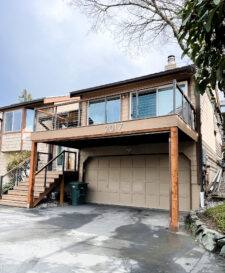
Visual Warning Signs
Paint and Finish Problems
Paint failure is usually the first visible sign of trouble, but not all paint failure means the same thing. Chalking — a powdery residue that comes off on your hand — is normal UV wear and not urgent. Peeling, bubbling, or paint that's lifting in sheets is different. That pattern usually means moisture is trying to escape from inside the siding material outward, which tells you the problem is deeper than the finish coat.
Warping, Buckling, and Waviness
Run your eyes down a wall at a low angle in good light. Waviness, buckling, or boards that no longer sit flat against the wall almost always mean the siding material has absorbed moisture and swollen, or that it was installed without enough room to expand and contract with temperature swings. This is common with wood-based and engineered wood products that weren't sealed properly on cut edges during installation.
Cracking and Splitting
Small hairline cracks are worth monitoring. Cracks that run the full width of a board, or that appear at butt joints and corners, are entry points for water. Once water gets behind siding through a crack, it doesn't dry out quickly in this climate — it sits, and it starts working on the structure behind it.
Discoloration and Staining
Dark streaking below nail heads, staining that follows seams, or a persistent damp-looking patch on one section of wall are all signs that water is finding a path in and not draining back out. This is different from surface moss or algae, which grows on top of the siding rather than seeping through it.
Signs You Can Feel or Hear
- Soft or spongy spots when you press on the siding, especially near the bottom courses and around windows
- A hollow or crumbly feel where boards meet trim
- Visible sagging or separation at seams and corners
- Fasteners that have backed out or left rust streaks below them
- A musty smell near exterior walls inside the house, particularly in closets or rooms on exterior corners
- Trim boards that feel wet to the touch even on a dry day
Any one of these on its own might be minor. Two or more together, especially on the same section of wall, usually means it's time for a closer look before the damage spreads to the sheathing or framing underneath.
Where Failure Starts First
Siding rarely fails evenly across a house. In Custer and the surrounding Whatcom County area, the trouble spots follow a predictable pattern:
| Location | Why It Fails First |
|---|---|
| North and west walls | Least sun exposure, slowest to dry, most moss and algae buildup |
| Bottom courses near grade | Splash-back from rain, contact with soil or mulch, poor drainage |
| Around window and door trim | Caulk failure and flashing gaps let water track behind the siding |
| Under eaves with poor overhang | Direct rain exposure without roof protection, common on additions |
| Corners and butt joints | Seams are the weakest point in any siding system if not detailed correctly |
Material Matters More Than People Expect
Not all siding materials age the same way, and the material has a lot to do with how early warning signs show up and how serious they are once they do.
Wood and primed wood products swell, split, and rot when moisture gets in, and they need consistent repainting to keep water out — a maintenance cycle that's harder to keep up with in a climate that's wet more months than it's dry. Vinyl siding doesn't rot, but it can warp, crack in cold snaps, and fade unevenly, and it traps moisture behind it rather than managing it. Engineered wood products are more stable than solid wood but are still vulnerable at cut edges and seams if those aren't properly sealed during installation — and in a high-moisture climate like this one, that installation detail matters enormously.
This is a big part of why we standardized on James Hardie fiber cement siding for the homes we work on. It's non-combustible, it doesn't absorb moisture the way wood-based products do, and it holds its factory-applied ColorPlus finish far longer than field-applied paint on wood or engineered products. That doesn't mean Hardie siding is immune to problems — poor installation, caulking, or flashing can undermine any siding system — but the material itself isn't the weak link the way it can be with other products.
Cosmetic Issue vs. Real Problem: A Quick Checklist
Use this list as a starting point for your own walk-around inspection:
- Chalky residue that wipes off — cosmetic, plan for repainting eventually
- Light moss on shaded areas with no soft spots underneath — cosmetic, clean carefully
- Peeling or bubbling paint in a concentrated area — investigate for moisture behind the siding
- Any soft, spongy, or crumbly section — treat as urgent, moisture has likely reached the substrate
- Warping or buckling boards — investigate installation and drainage, don't just repaint over it
- Cracks wider than a hairline or running full board length — repair or replace before winter rains
- Interior musty smell or visible interior staining on an exterior wall — urgent, get it inspected
What Happens If You Wait
The reason siding problems deserve prompt attention isn't the siding itself — it's what's behind it. Water that gets past failing siding reaches the house wrap, sheathing, and eventually framing. In a climate like Whatcom County's, where things don't dry out quickly between storms, that moisture can sit long enough to cause rot, attract pests, and in some cases lead to mold growth inside wall cavities. What starts as a cosmetic repair on the outside can turn into a sheathing or framing repair on the inside if it sits too long — and that's a very different scope and cost.
What a Proper Inspection Looks At
A thorough siding inspection isn't just a look from the driveway. It should include checking behind trim boards where accessible, probing suspect areas for softness, examining caulk joints and flashing at windows and doors, checking the bottom courses near grade and any areas where siding meets a deck, porch, or roofline, and looking at attic or interior wall areas for signs of moisture intrusion. Photos of problem areas, taken over time, can also help track whether an issue is stable or getting worse.
Maintenance That Actually Extends Siding Life
Regardless of what's currently on your house, a few habits make a real difference in this climate: keep gutters clear so water isn't overflowing onto walls, keep landscaping and mulch pulled back from direct contact with siding, clean moss and algae gently rather than letting it sit for years, re-caulk gaps at trim and penetrations before they open up, and address any soft or damp spot as soon as you notice it rather than waiting for a full inspection. None of this is expensive, and all of it buys years of extra life out of whatever siding is currently on the house.
If you've noticed any of these signs on your home, or you're just not sure how your siding is holding up, we're happy to take a look. We offer free, no-pressure estimates and can tell you honestly whether you're looking at a repair, a maintenance fix, or something worth planning a replacement around.