 Custer
 Deck Building in Everson: Built for Whatcom County Weather, Not Against It
Everson sits inland from the coast but still catches the same weather pattern that defines this whole corner of Whatcom County: long wet winters, a short dry window in summer, and a moss season that seems to stretch longer every year. A deck built here has to survive standing water on the boards, moisture wicking up through the frame, and UV exposure that alternates with weeks of gray, damp air. That combination is harder on a deck than either extreme on its own — it's the freeze-thaw-soak cycle repeated for months at a time that breaks down fasteners, warps boards, and rots ledger connections that weren't flashed correctly the first time.
We build decks for homes in and around Custer and Everson regularly, and the difference between a deck that lasts fifteen-plus years and one that needs major repair in five almost always comes down to what's underneath the boards — the framing, the flashing, and the fasteners — not the decking material people see and pick first.
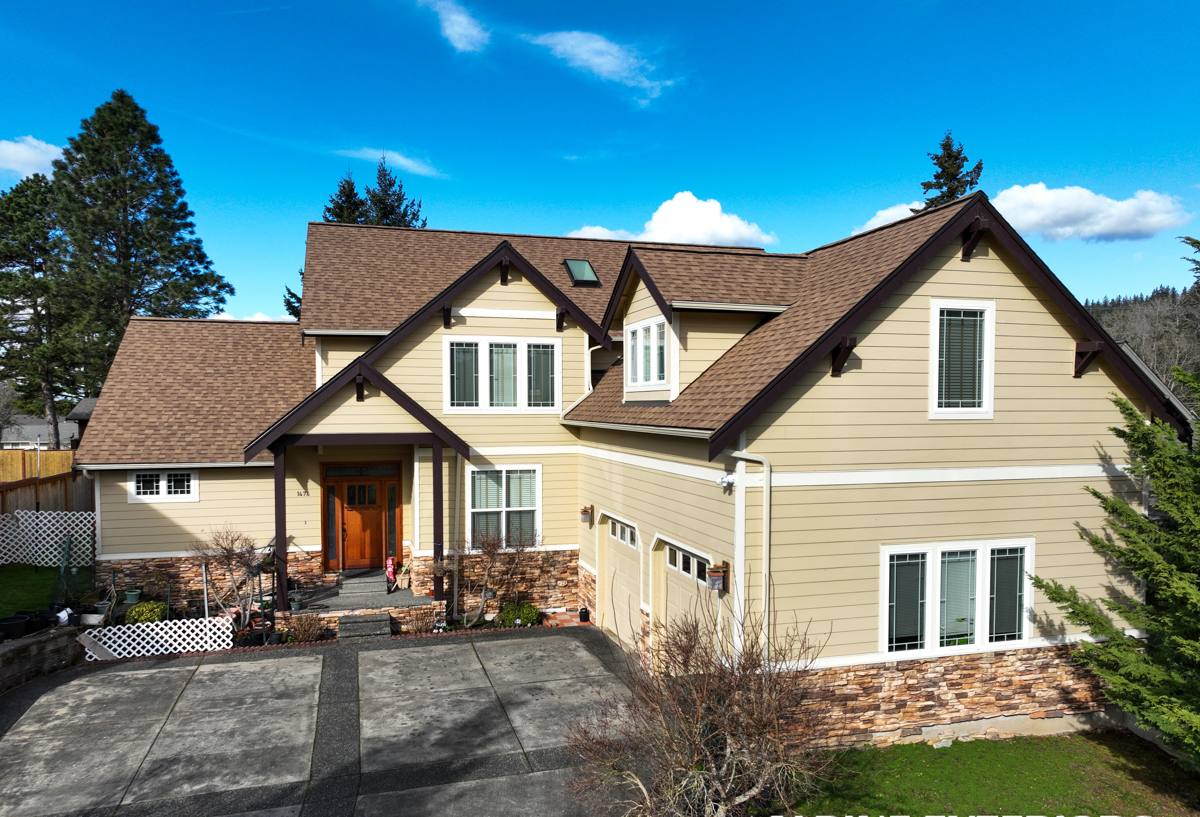
What Everson Homes Actually Need From a Deck
Salt-tinged air off the Strait and Georgia Strait drifts inland with the prevailing weather, and combined with regular rain, it accelerates corrosion on anything less than properly rated hardware. Add driving rain that comes in sideways during winter storms, and any deck attached to the house needs a ledger board connection that actually sheds water instead of trapping it against the siding.
Moss is the other local reality. It doesn't just grow on roofs here — it colonizes any horizontal wood surface that stays damp and shaded, including deck boards, especially on the north or east side of a house where sun doesn't reach in winter. Moss holds moisture against the board surface far longer than plain rain does, which is why deck boards in shaded Whatcom County yards often show rot and staining years before boards in full sun on the same property.
The three things that matter most locally
- Ledger flashing — the point where the deck attaches to the house is the single most common source of hidden rot in this climate. It has to be flashed so water runs away from the house, not into the rim joist.
- Fastener and hardware rating — coastal-influenced air corrodes standard fasteners faster than people expect. Everything in contact with treated lumber needs to be rated for it.
- Airflow underneath — a deck built low to the ground or over poorly graded soil traps moisture underneath, which rots joists from below even when the top of the deck looks fine.
Decking Material Choices for This Climate
There's no single "best" decking material — there's a best fit for the site, the budget, and how much maintenance a homeowner actually wants to do. In Whatcom County's wet, moss-prone conditions, we generally steer conversations toward composite or capped-composite boards for anyone who wants to minimize yearly upkeep, while pressure-treated wood remains a solid, budget-conscious option for homeowners willing to stain or seal on a schedule.
| Material | Moss/moisture behavior | Maintenance | Typical lifespan here |
|---|---|---|---|
| Pressure-treated wood | Absorbs moisture; needs sealing to resist moss staining and cupping | Re-stain/seal every 1-3 years | 10-15 years with upkeep |
| Cedar | Naturally rot-resistant but still needs sealing in constant damp | Sealing every 2-3 years, moss cleaning | 15-20 years with upkeep |
| Composite (capped) | Doesn't absorb water; moss can still grow on the surface film but doesn't rot the board | Periodic wash-down, no sealing | 25-30+ years |
| PVC decking | Fully moisture-resistant; least susceptible to moss staining sinking in | Wash-down only | 25-30+ years |
We don't push any one product line as the automatic answer. Composite and PVC cost more up front and that's a real trade-off — for a rental property or a lower-traffic deck, treated wood done right is still a legitimate, honest choice. Our job is to lay out what each option actually costs to own over ten years, not just to install.
How We Approach a Deck Build in Everson
1. Site and structure assessment
We look at grade, drainage, existing ledger condition (if replacing an old deck), and sun exposure. A shaded, north-facing deck site gets different material and airflow recommendations than a south-facing one, because the moss and moisture load is genuinely different.
2. Framing built to shed water, not hold it
Joists, beams, and posts are sized and spaced for the actual load and span, using fasteners and connectors rated for treated lumber contact. Where the deck meets the house, we flash the ledger so water is directed away from the rim joist and siding — this is the detail that determines whether the house itself stays dry behind the deck for the next twenty years.
3. Decking installation with proper gapping
Board spacing matters more here than in drier climates — too tight and boards can't shed water or dry between rain events, which speeds up moss growth and staining. We set gapping to manufacturer spec for whatever material is chosen, factoring in expansion behavior for composite versus wood.
4. Railing, stairs, and code compliance
Whatcom County has permitting and inspection requirements for most deck builds, particularly around railing height, guard spacing, and structural attachment. We handle permitting as part of the process so the finished deck is inspected and compliant, not something that surfaces as a problem at resale.
5. Final walkthrough
Before we consider the job finished, we walk the deck with the homeowner, check fastener seating, confirm drainage is working as intended, and go over what seasonal maintenance — if any — the chosen material needs.
Common Problems We Fix in Older Everson-Area Decks
A lot of our deck calls in this area aren't new builds — they're repairs or full rebuilds on decks that failed early because of climate-related issues that weren't accounted for originally.
- Rotted ledger boards from missing or improperly installed flashing
- Joist hangers and fasteners corroded from years of damp, salt-influenced air
- Deck boards cupping or splitting from moisture trapped underneath due to poor airflow
- Persistent moss and algae staining on boards installed too tight together or in deep shade
- Undersized footings that have shifted with seasonal ground saturation
Most of these are avoidable with correct framing and material choices from the start, which is why we spend more time on the structural conversation than most homeowners expect before we ever discuss board color or railing style.
Why a Crew That Already Works Everson Matters
Building codes, permitting timelines, and typical soil and drainage conditions vary by jurisdiction, and Whatcom County's requirements aren't identical to neighboring counties. A crew that regularly works Custer and Everson already knows the local permitting process, has a working sense of which yards drain well and which don't, and has seen firsthand how moss and moisture behave on decks through multiple wet seasons in this specific area — not a generic Pacific Northwest average.
That local familiarity shows up in small decisions: how deep to set footings given typical frost depth here, which side of a house needs extra airflow consideration, and how to sequence a build around the wetter months so lumber isn't installed already saturated.
What Affects the Cost of a Deck Build Here
| Factor | Why it matters locally |
|---|---|
| Deck size and layout | Larger or multi-level decks require more framing and footings, and more surface exposed to weather |
| Decking material | Composite and PVC cost more upfront but reduce long-term maintenance in this climate |
| Height off the ground | Taller decks need more substantial framing, railing, and often stairs |
| Site drainage and grading | Poor drainage sites may need grading work or additional footing depth first |
| Ledger and flashing complexity | Older homes or unusual siding conditions can add labor to do the ledger connection correctly |
| Permitting requirements | Structural decks generally require permits and inspection, which adds time but protects the homeowner |
We give straightforward, itemized estimates so homeowners can see where the money is going, rather than a single lump number that hides which decisions are driving the cost.
A Practical Pre-Build Checklist
If you're planning a deck build or replacement in Everson or the surrounding Custer area, these are the questions worth having answered before work starts:
- Is the deck attached to the house (ledger) or freestanding?
- What's the sun/shade exposure — will moss be a significant factor?
- Does the site drain well, or does water pool near the proposed footprint?
- Is a permit required for the size and height being planned?
- What's the realistic maintenance commitment — sealing every couple years, or none?
- Are stairs, railings, or multiple levels part of the design?
- Is this replacing an existing structure that needs to be assessed for hidden rot first?
Maintaining a Deck Through Whatcom County's Wet Season
Whatever material is chosen, a little seasonal attention extends a deck's life significantly in this climate. Clearing leaves and debris before the fall rains keeps moisture from sitting in corners and between boards. A wash-down before winter reduces the moss and algae buildup that otherwise sets in over the wettest months. For wood decks, checking the sealant coverage each spring — especially on horizontal surfaces that took the brunt of winter rain — catches wear before it turns into rot. None of this is complicated, but skipping it is exactly how a well-built deck ends up needing early repairs in a climate this consistently wet.
If you're weighing a new deck or replacing one that's showing its age, we're happy to take a look and give a straightforward, no-pressure estimate — just fill out the form below and we'll get in touch.