 Custer
 Siding Installation for Everson Homes in a Tough Whatcom County Climate
Everson sits inland from the Salish Sea but still catches plenty of the moisture-heavy weather that defines this corner of Washington. Homes here deal with a long wet season, driving rain that comes in sideways off frontal systems, and a persistent film of moss and algae that never fully dries out between October and April. Add in the salt-laden air that drifts up from the coast and the Strait of Georgia on windier days, and you have a set of conditions that will find every weak point in a siding system within a few years. Siding installation in Everson isn't just about picking a color and nailing up boards — it's about building a wall assembly that can shed water, resist rot, and hold its finish through decades of this exact weather pattern.
We install siding across Whatcom County, and Everson jobs are a regular part of that work. That means we already know what this climate does to a house, and we build every installation around that knowledge rather than treating it as a generic siding job.
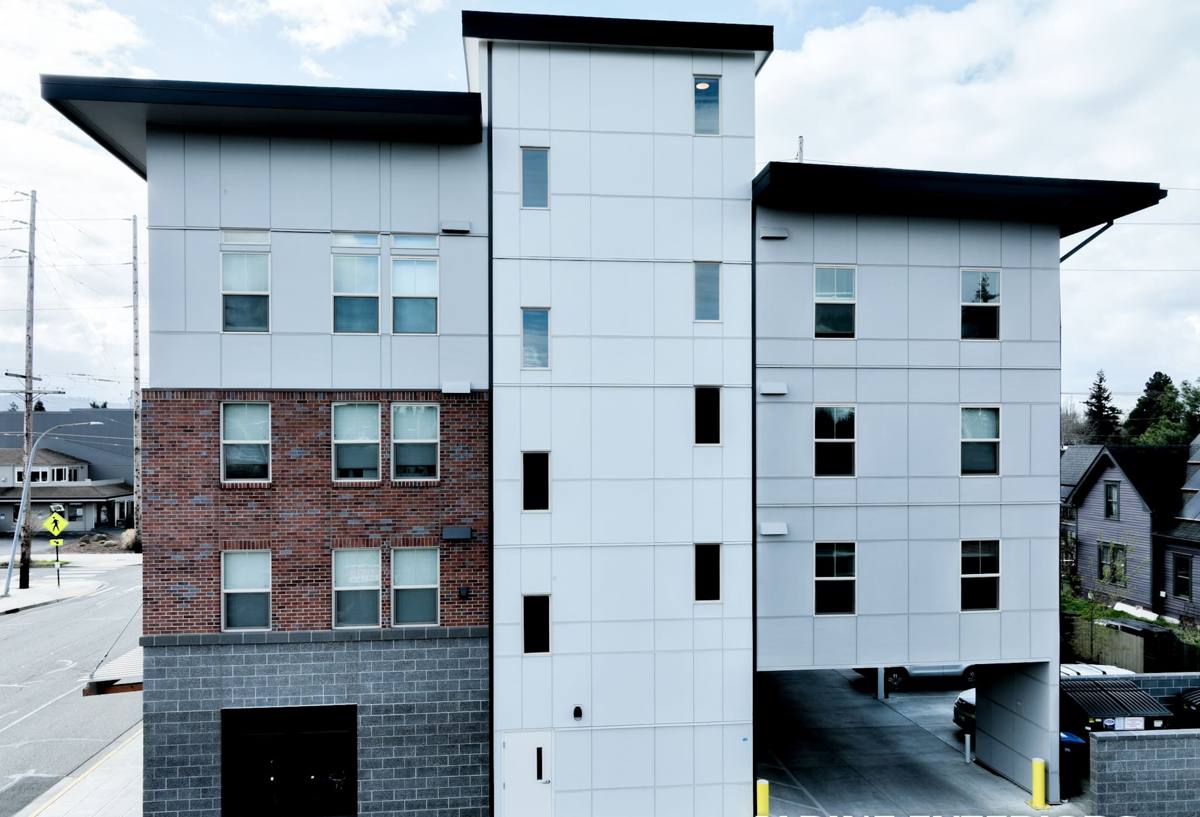
What Driving Rain, Salt Air, and Moss Season Actually Do to Siding
Each of these three regional factors stresses siding in a different way, and a correct installation has to account for all three at once.
Driving Rain
Wind-driven rain pushes water sideways and upward, not just straight down. That means laps, seams, and trim joints that would stay dry in a calmer climate can take on water here. If a siding system relies on caulk alone to keep water out at those joints, it's only a matter of time before that caulk fails and moisture gets behind the cladding.
Salt Air
Airborne salt accelerates corrosion on fasteners, flashing, and any metal trim components. It also breaks down lower-grade paint finishes faster than an inland climate would, leading to chalking and fading well ahead of schedule on products that weren't engineered for coastal-adjacent exposure.
Moss and Algae Season
Everson's long stretch of cool, damp weather is close to ideal for moss and algae growth on north-facing and shaded walls. Beyond the cosmetic issue, moss holds moisture directly against the siding surface for extended periods, which is a problem for any material that isn't dimensionally stable when wet.
Why We Install Only James Hardie Fiber Cement Here
We standardized on James Hardie fiber cement siding for every home we work on, including Everson, and we don't install vinyl, LP SmartSide, or other engineered wood or fiber cement alternatives. That's not a marketing position — it's a decision built around what actually holds up in this climate over the long term.
Fiber cement is non-combustible and dimensionally stable, meaning it doesn't swell, warp, or delaminate the way wood-based products can when they take on repeated moisture exposure. James Hardie's ColorPlus factory finish is baked on under controlled conditions rather than field-applied, which gives it better adhesion and UV resistance than most site-painted siding — a real advantage against the salt air and long gray winters this area gets. Hardie also builds climate-specific HZ product formulations, engineered for either humid or freeze-prone regions, so the material specified for a Whatcom County home is matched to the moisture load it will actually face.
None of this means other products are worthless — vinyl is inexpensive and low-maintenance in mild climates, and engineered wood siding has genuine fans. But for the rain, salt, and moss exposure Everson homes deal with, we've made fiber cement our standard because it's the material we're comfortable standing behind for the long haul.
What a Correct Siding Installation Involves
The siding itself is only part of the system. Most siding failures we see on older homes in this area trace back to installation shortcuts, not the material itself.
Water-Resistive Barrier and Drainage Plane
Every wall gets a continuous water-resistive barrier behind the siding, installed shingle-style so any water that gets past the cladding drains down and out rather than pooling behind it. In a climate with this much driving rain, a drainage plane isn't optional — it's the backup system for the moments when wind pushes water past the surface layer.
Flashing at Every Penetration
Windows, doors, hose bibs, light fixtures, and vents all need proper flashing integrated with the water-resistive barrier, not just caulked over. Caulk is a maintenance item that will eventually crack and shrink; flashing is a permanent mechanical solution.
Clearance and Fastening
Hardie siding needs proper clearance from grade, roof lines, decks, and other horizontal surfaces so water can't wick up into the bottom edge of the boards. Fasteners need to be corrosion-resistant and driven to the manufacturer's exact spacing and depth — over-driven or under-driven nails are one of the most common causes of premature siding problems.
Joint Treatment
Butt joints and trim connections need to be treated per Hardie's specifications, with proper caulking, flashing, or H-molding depending on the detail. Done wrong, these are the first places moss gets a foothold and the first places water finds its way in.
Our Installation Process
- On-site assessment: We walk the exterior, check the current siding and sheathing condition, note drainage issues, roofline interactions, and any moisture damage already present.
- Product and color selection: We help you choose the right Hardie product line and ColorPlus finish for your home's exposure and style.
- Tear-off and sheathing check: Old siding comes off and we inspect the sheathing underneath for rot or damage before anything new goes up — covering a problem instead of fixing it just guarantees a repeat failure.
- Water-resistive barrier and flashing installation: The drainage plane and flashing details go in first, correctly lapped and sealed at every penetration.
- Siding installation: Panels or lap boards go up to Hardie's fastening and clearance specifications, with attention to every joint and trim detail.
- Final walkthrough: We review the finished work with you and confirm everything meets spec before we consider the job done.
Choosing the Right Hardie Product Line
James Hardie makes several siding profiles, and the right one depends on the home's style and exposure, not just personal preference.
| Hardie Product | Profile | Best Suited For |
|---|---|---|
| HardiePlank Lap Siding | Traditional horizontal lap | Most home styles; the standard choice for full re-sides |
| HardiePanel Vertical Siding | Vertical panel with battens | Modern or farmhouse-style exteriors, accent walls |
| HardieShingle Siding | Staggered or straight-edge shingle look | Craftsman and cottage-style homes wanting a shingle look without cedar's maintenance |
| HardieTrim Boards | Corner, frieze, and window trim | Finishing details on any of the above, matched for durability |
For homes with heavier moss or shaded exposure, we'll also talk through gutter and roof overhang details, since siding performance is tied to how well the rest of the exterior manages water before it ever reaches the wall.
Cost Factors for Siding Installation
Every Everson home is different, so we don't publish flat pricing — but the factors that move a bid are consistent across most jobs.
| Factor | Why It Affects Cost |
|---|---|
| Home size and wall complexity | More square footage and more corners, dormers, and cutouts mean more labor and material |
| Current siding condition | Sheathing repairs from hidden moisture damage add cost beyond the siding itself |
| Product line and trim detail | Vertical panel, shingle profiles, and heavier trim packages cost more than standard lap |
| Access and site conditions | Steep lots, limited staging area, or tall walls affect labor time |
| Paint vs. ColorPlus finish | Factory-applied ColorPlus finish costs more upfront but avoids a repaint cycle |
Signs Your Everson Home May Need New Siding
- Persistent moss or algae staining that returns shortly after cleaning
- Soft, spongy, or visibly warped sections of siding
- Paint that's peeling, bubbling, or chalking heavily, especially on shaded or north-facing walls
- Visible gaps at joints, corners, or trim where caulking has failed
- Rising energy bills that suggest the wall assembly is no longer insulating or sealing properly
- Interior signs like musty odors or discoloration near exterior walls, which can point to moisture getting through
Why Hiring a Crew That Already Works in Whatcom County Matters
Siding installation isn't a one-size-fits-all trade. A crew that mostly works drier inland climates may not think twice about details that matter a lot here — drainage plane continuity, flashing at every penetration, fastener corrosion resistance, and clearance from grade. Those details are exactly what determine whether a siding job still looks and performs well after a decade of Everson winters. We work throughout this part of Whatcom County regularly, which means we're not learning the local climate on your house — we're applying what we already know works.
If you're weighing a siding replacement or repair in Everson or the surrounding Custer area, we're happy to take a look and talk through what your home actually needs — no pressure, no sales script. Request a free estimate below and we'll get back to you with a straightforward assessment.