 Custer
 Decks Built for Everson's Weather, Not Just Its Views
Everson sits close enough to the water and low enough in the Nooksack valley that a deck here works harder than a deck built forty miles inland. Between the salt-tinged air drifting up from Bellingham Bay, the driving rain that comes sideways off winter storms, and a moss season that can run from October clear through April, an Everson deck spends most of the year fighting moisture instead of hosting barbecues. We build custom decks for this specific stretch of Whatcom County, and the difference between a deck that lasts fifteen years and one that starts failing at year five almost always comes down to decisions made before the first board goes down.
This page covers what we build in the Everson area specifically — the framing choices, decking materials, and detailing that hold up to Custer-area weather, and how our process works from first call to finished deck.
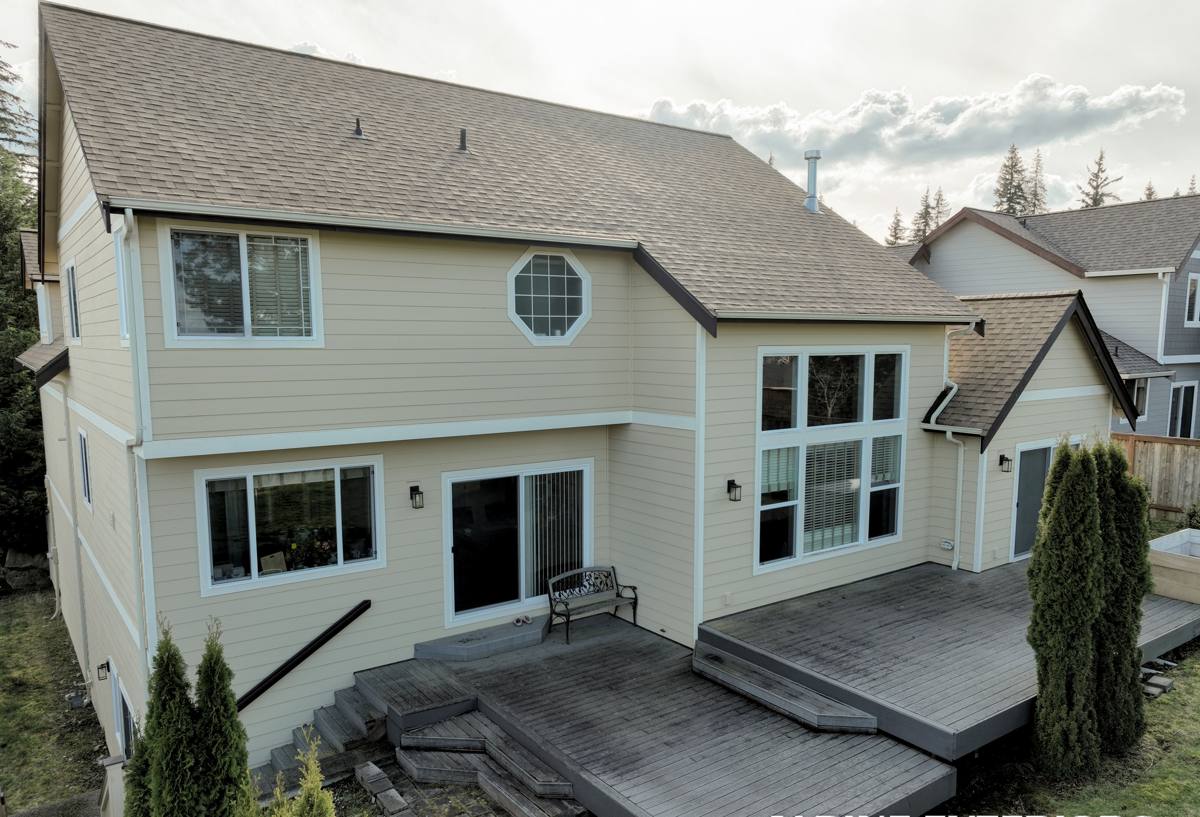
What Local Homes Actually Need From a Deck
A deck in Everson has to handle three things a deck in a drier climate never deals with at the same intensity:
Moisture That Doesn't Let Up
Whatcom County gets long stretches of gray, wet weather rather than short hard storms. That means wood surfaces — ledger boards, joists, the undersides of decking — stay damp for days at a time instead of drying out between rains. Any spot where water can pool, or where two pieces of wood sit tight against each other without airflow, becomes a rot risk within a few seasons.
Driving Rain and Wind-Driven Water
Storms coming off the Strait push rain sideways, which means water gets forced up under flashing, behind ledger boards, and into any gap that a calmer climate might get away with. Ledger attachment to the house is one of the most common failure points we see on older decks in this area, because the flashing detail was never built for wind-driven rain in the first place.
Moss and Algae Growth
Moss doesn't just look bad — it holds moisture against the decking surface and turns a walking surface slick and dangerous. A deck with poor airflow underneath, tight board spacing, or a north-facing shaded orientation will grow moss faster here than almost anywhere else in the state. Material choice and board spacing both affect how fast this happens.
Salt Air Corrosion
Custer and Everson are both close enough to the bay that airborne salt reaches fasteners, brackets, and any exposed metal hardware. Standard hardware corrodes faster here than it would fifty miles inland, and once a fastener starts rusting, it weakens the connection it's supposed to hold.
What a Correctly Built Deck Involves
A deck that's going to hold up under these conditions isn't built differently in some dramatic way — it's built with more attention to the details that matter in a wet coastal climate.
Framing and Foundation
We size footings to the soil conditions on your specific lot rather than using a one-size template — river-valley soil around Everson can vary from firm to soft within the same yard, and footing depth has to account for local frost and drainage patterns. Joists get spaced to manufacturer spec for whatever decking will go on top, with extra attention where the deck sits low to the ground and airflow underneath is limited.
Ledger Attachment and Flashing
This is the single most important detail on any deck attached to a house in this climate. We flash the ledger board properly — meaning water is directed away from the house framing, not trapped behind the deck — and use proper structural fasteners rated for the load, not just deck screws. A poorly flashed ledger is the number one cause of hidden rot damage we find on decks we're asked to repair or rebuild.
Hardware and Fasteners
Given the salt air exposure this close to the water, we use corrosion-resistant hardware rated for coastal or wet-climate use throughout — joist hangers, structural screws, and post bases. Standard interior-grade hardware is a false economy here; it costs less up front and costs more in repairs later.
Airflow and Drainage Underneath
Low decks or decks over patios need enough clearance and grading underneath to let air move and water drain away rather than sitting in standing puddles. Where clearance is tight, we look at options like drainage systems under the deck surface to manage water actively rather than hoping it evaporates.
Choosing the Right Decking Material for Everson
Material choice matters more here than in a drier region, because whatever you choose has to survive constant moisture and a long moss season, not just occasional rain.
| Material | How It Handles Local Climate | Maintenance Burden |
|---|---|---|
| Pressure-treated lumber | Resists rot when properly sealed; needs re-sealing on a regular schedule to keep performing | Moderate to high — annual inspection, periodic re-staining/sealing |
| Cedar | Naturally rot-resistant and handles moisture well, but graying and moss growth happen faster without upkeep | Moderate — periodic cleaning and finish maintenance |
| Composite decking | Doesn't absorb moisture the way wood does, resists rot, and sheds moss more easily with regular cleaning | Low — occasional washing, no sealing or staining |
We don't push one material on every job. A composite deck makes sense for owners who want to spend their weekends using the deck instead of maintaining it. A wood deck, properly built and finished, can look better to some owners and costs less up front — but it only holds up in this climate if the maintenance actually happens on schedule. We'll walk through the honest trade-offs for your specific site, orientation, and budget rather than steering you toward whatever's easiest for us to install.
How Our Process Works
- Site visit and assessment. We look at your yard's drainage, sun/shade exposure, soil, and how the deck will tie into the house — all of which affect material and framing decisions.
- Design and material selection. We talk through layout, size, railing style, and decking material with honest pros and cons for each option given your site.
- Permitting. Deck projects in Whatcom County typically require a permit depending on size and height — we handle that process so you don't have to chase it down yourself.
- Foundation and framing. Footings sized to your soil, structural framing built to code, and ledger flashing done correctly the first time.
- Decking, railing, and finish work. Installation of your chosen decking material, railings, stairs, and any finish or sealant work needed.
- Final walkthrough. We go over the finished deck with you, including what maintenance it needs and on what schedule.
Local Factors That Affect an Everson Deck Build
Permitting and Setbacks
Whatcom County has specific permit requirements for decks over a certain size or height, and setback rules that vary by property. Getting this wrong means rework or fines later — we handle the permitting process as part of the job rather than leaving it to the homeowner to figure out.
Soil and Site Drainage
Low-lying areas near the Nooksack floodplain can have soil that holds water longer than higher ground. Footing depth and drainage planning need to reflect the actual conditions on your lot, not a generic assumption.
Orientation and Shade
A deck tucked under trees or facing north stays damp longer and grows moss faster than one with more sun exposure. This affects both material recommendation and how often cleaning/maintenance is needed — we factor it into the design conversation up front.
Maintenance That Actually Keeps a Deck Working
Whatever material you choose, a few habits make the biggest difference in how long an Everson-area deck lasts:
- Sweep debris and standing leaves off the surface regularly, especially in fall and winter — trapped organic matter holds moisture and feeds moss growth
- Rinse or wash the deck surface periodically to knock down algae and moss before it gets established
- Check ledger flashing and the area where the deck meets the house once a year for signs of water intrusion
- Inspect fasteners and hardware for rust or corrosion, particularly on decks closer to the water
- Re-seal or re-stain wood decking on the schedule the finish product recommends — don't wait until it's visibly failing
- Keep gutters and downspouts near the deck clear so runoff isn't dumping extra water onto or under the deck structure
- Clear vegetation that's shading the deck or blocking airflow underneath, where practical
Why Hiring a Crew That Already Works in Everson Matters
A deck built by a crew unfamiliar with this specific stretch of Whatcom County often looks fine for the first year or two and then starts showing problems — usually moisture-related, usually in spots that were framed or flashed as if the climate were drier than it actually is. We work in Custer and the surrounding communities regularly, which means we're not guessing at how much rain exposure a north-facing deck gets here, how fast moss establishes on a shaded low deck, or what soil conditions look like on a given lot near the river valley. That familiarity shows up in the small decisions — footing depth, ledger flashing, hardware grade, board spacing for airflow — that don't get noticed until they either hold up or don't.
We're also familiar with the local permitting process, so that part of the project moves without extra back-and-forth or delays that can happen when a permit application is being handled for the first time in an unfamiliar jurisdiction.
Get a Free, No-Pressure Estimate
If you're planning a new deck, or your current one is showing signs of rot, loose railings, or a slick moss-covered surface, we're happy to come take a look and give you an honest assessment. There's no obligation and no pressure — just a straightforward conversation about what your Everson-area home actually needs. Use the form below to request your free estimate.