 Custer
 Siding, Roofing, Windows & Decks for Birch Bay Homes
Birch Bay sits close enough to the water that the air itself becomes part of the maintenance conversation. Homes here don't just deal with rain — they deal with salt-laden wind off the bay, long stretches of damp shade under fir and cedar canopy, and a moss season that can run most of the year in a normal Whatcom County winter. Custer Siding works this stretch of the county regularly, and Birch Bay's exterior demands are a big part of why we standardized on one siding product instead of offering a menu of them.
We install James Hardie fiber cement siding exclusively, and we also handle roofing, windows, and decks — because on a coastal property, those systems all have to work together. A siding job that doesn't account for the roof's drainage, or a deck ledger that traps moisture against the wall, undoes a lot of the value of good materials. Treating the exterior as one system, rather than four separate trades, is the difference between a house that ages well near the water and one that needs attention every couple of years.
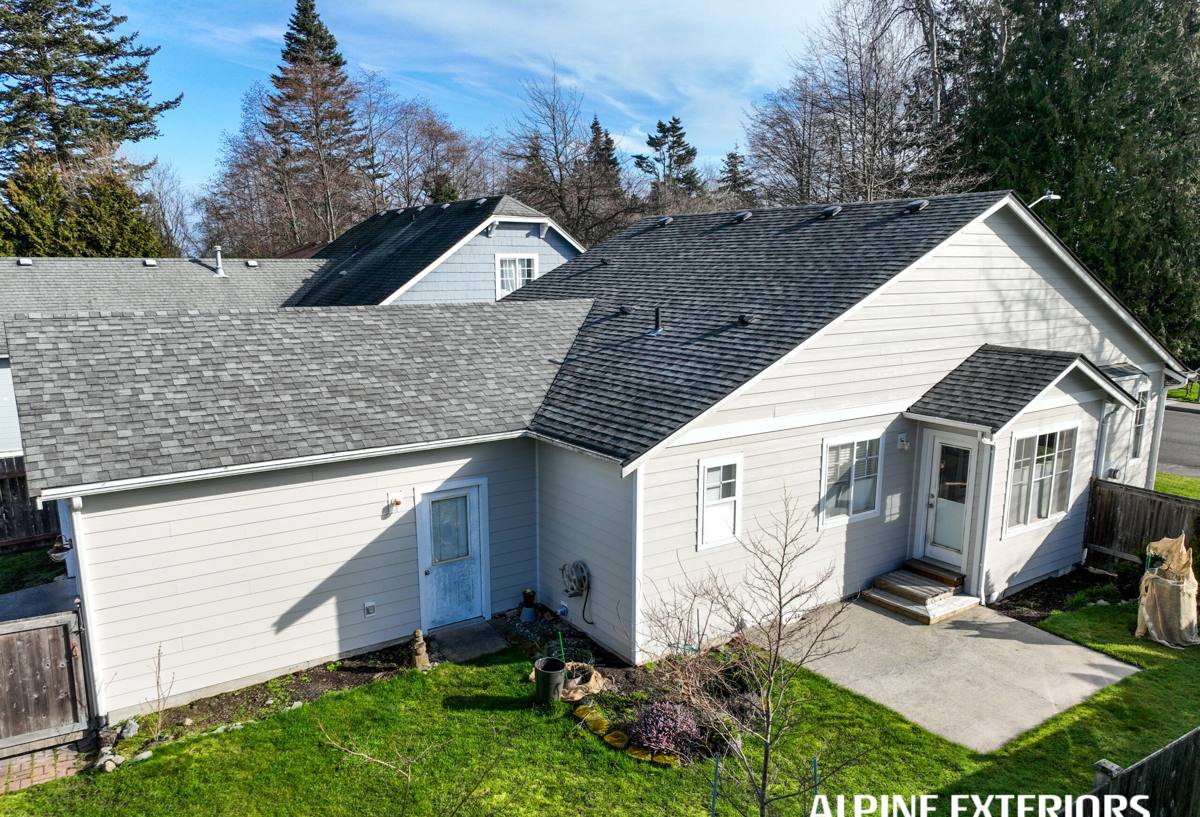
What Birch Bay's Climate Actually Does to Siding
Salt Air
Proximity to Birch Bay and the Strait of Georgia means airborne salt reaches building exteriors more consistently than it does further inland in the county. Salt accelerates corrosion on fasteners and trim hardware, and it can degrade cheaper paint films and coatings faster than manufacturers' published timelines suggest. It doesn't damage fiber cement the way it damages some other claddings, but it does mean fastener selection and finish quality matter more here than they would on a home in, say, Sumas or Deming.
Driving Rain
Storms coming off the water don't just fall straight down — wind-driven rain hits walls at an angle, which pushes water into seams, laps, and penetrations that would stay dry in a calmer rain event. This is a wall-assembly problem as much as a siding problem: house wrap, flashing, and proper lap detailing all have to be right, because the siding is only the outermost layer of a system that's supposed to keep water out.
Moss and Sustained Moisture
Whatcom County's moss season is long, and Birch Bay's tree cover and marine humidity extend it further on north-facing and shaded walls. Moss and algae growth on siding isn't just cosmetic — sustained organic growth holds moisture against the substrate, and on materials that absorb water or swell, that's a slow path to rot, delamination, or paint failure. It's a bigger factor in choosing a cladding material here than it would be in a drier part of the state.
Why We Install Only James Hardie Fiber Cement
We used to get asked why we don't offer vinyl, LP SmartSide, or a lower-cost fiber cement alternative. The honest answer is that we made a call about what holds up in this specific climate and stopped installing products we didn't want to stand behind on a coastal Whatcom County job.
Vinyl Siding
Vinyl is inexpensive and easy to install, and for a lot of markets that's a reasonable trade-off. In a place with driving rain and salt air, vinyl's weaknesses show up faster: it can warp or become brittle with UV and temperature swings, its seams and J-channels are a common water entry point, and its color is baked into thin plastic that fades unevenly over time rather than aging gracefully. It's also not fire-resistant, which matters more to some homeowners than others but is worth knowing.
LP SmartSide and Wood-Based Products
Engineered wood siding has improved a lot over the decades, but it's still a wood-strand product with a resin binder, and wood-based sidings are inherently more moisture-sensitive than fiber cement. In a zone with a long wet season and sustained shade on some elevations, that sensitivity is exactly the wrong trade-off. Edge sealing and caulking maintenance become non-negotiable, and skipping a year of upkeep costs more here than in a drier climate.
Cedar and Primed Spruce
Natural wood siding can look great and plenty of older Birch Bay homes still wear it. But real cedar and primed spruce require an ongoing commitment to repainting, caulking, and moisture monitoring that most homeowners underestimate when they buy the house. Near the water, with moss pressure and driving rain, that maintenance cycle tightens.
Cemplank and Allura
These are also fiber cement products, and fiber cement as a category is the right call for this climate. We standardized on James Hardie specifically because of its ColorPlus factory-baked finish, its HZ5 product engineering for harsher moisture and freeze-thaw exposure, and a warranty structure and manufacturer track record we're comfortable putting our own name behind. That's a business decision about who we install for, not a claim that competing fiber cement products can't perform — we just prefer to specialize in one system we know inside and out.
How James Hardie Performs in This Environment
| Concern | How Hardie Fiber Cement Addresses It |
|---|---|
| Salt air / corrosion | Non-combustible cement composition doesn't corrode; we pair it with stainless or coated fasteners rated for coastal exposure |
| Driving rain | Rigid board profile holds tight laps and shiplap joints; installed with a rainscreen or properly detailed drainage plane |
| Moss and algae | Dense fiber cement doesn't swell or delaminate from surface moisture the way wood-based products can |
| UV and color fade | ColorPlus finish is factory-baked and warrantied against fade and peeling, unlike field-applied paint |
| Fire exposure | Non-combustible material, a meaningful consideration for wildfire-adjacent summers |
Our Installation Approach in Birch Bay
The siding itself is only part of the job. How it's installed determines whether it performs for the next 30-plus years or starts showing problems in five. On Birch Bay projects specifically, we pay close attention to a few things:
- Correct fastener spacing and fastener material selection for salt-air exposure
- Proper house wrap and flashing integration, especially around windows, doors, and roof-to-wall transitions
- A drainage plane or rainscreen approach where the wall assembly calls for it, so wind-driven rain has somewhere to go besides the sheathing
- Correct clearance between siding and grade, decks, and roof lines to reduce splash-back and standing moisture
- Manufacturer-spec caulking and sealant at joints and penetrations, using products rated for marine and UV exposure
None of this is exotic — it's disciplined, by-the-book installation. But it's the part that gets skipped when a crew is moving fast or unfamiliar with coastal detailing, and it's the part that actually determines whether a Birch Bay home stays dry.
Roofing, Windows, and Decks: Why We Don't Just Do Siding
A new siding job next to a failing roof, worn-out windows, or a rotting deck ledger is a partial fix. Water doesn't respect trade boundaries — a bad roof valley can send water behind good siding, and a poorly flashed deck ledger can rot a wall from the inside regardless of what cladding is on the outside.
Roofing
We handle roofing on the same properties where we install siding, which lets us coordinate flashing details at rooflines, chimneys, and dormers instead of leaving that boundary to two separate contractors who never talk to each other.
Windows
Window replacement done alongside siding work means proper flashing and integration from the start, rather than siding installed around old, leaking window units.
Decks
Deck ledger connections are one of the most common sources of hidden wall rot on coastal homes. When we build or repair a deck, we make sure that connection is flashed and sealed correctly against the house — not just structurally sound, but weathertight.
Signs Your Birch Bay Home May Need Exterior Attention
- Persistent moss or algae staining on north- or west-facing walls that returns soon after cleaning
- Paint that's peeling, chalking, or fading unevenly, especially on sun- and salt-exposed elevations
- Soft spots, discoloration, or a hollow sound when you tap near the base of exterior walls
- Visible gaps or separation at siding seams, trim boards, or window and door casings
- Rust streaking from fasteners or metal flashing
- A roof that's due for inspection but hasn't had one in several years
Any one of these on its own might be minor. Several at once, especially on a home that's been up for 15-20 years without an exterior refresh, is usually worth a proper look before it becomes a bigger repair.
What to Expect From a Local Crew
Working Whatcom County and the Birch Bay area regularly means we're familiar with how homes here actually weather — which elevations take the worst of the wind, where moss builds up fastest, and how local permitting and inspection processes work. That's different from a crew traveling in from outside the region for a single job. We're not the only contractor who can install siding well, but we do think there's real value in a company that installs one product system, knows it thoroughly, and is around locally to stand behind the work.
Get a Free, No-Pressure Estimate
If you're weighing a siding replacement, dealing with moss and moisture issues on your Birch Bay home, or want your roof, windows, or deck looked at alongside your siding, we're happy to come take a look. There's no pressure and no obligation — just a straight assessment of what your home actually needs. Use the form below to request a free estimate.