 Custer
 Lynden's Climate Is Harder on Siding Than Most Homeowners Realize
Lynden sits in the heart of Whatcom County, close enough to the water and the Nooksack lowlands that the same weather patterns hitting the rest of northwest Washington reach it too: long stretches of driving rain, marine air carrying moisture and salt further inland than people expect, and a wet season that can stretch from October well into spring. Add in mature tree cover on a lot of Lynden properties, and you get the third factor that quietly wrecks exterior siding here — moss and algae that thrive in shaded, damp conditions and don't let up for months at a time.
None of this is dramatic on its own. It's the accumulation that causes problems. Wood-based siding products absorb moisture a little at a time, swell and contract with the temperature swings, and eventually start to rot from the inside where you can't see it. Moss holds water against the surface longer than open air ever would, which accelerates whatever moisture damage is already happening underneath. A siding product that isn't built to shed water aggressively and resist that kind of biological growth is fighting a losing battle in this part of the county, year after year.
What This Looks Like on an Actual House
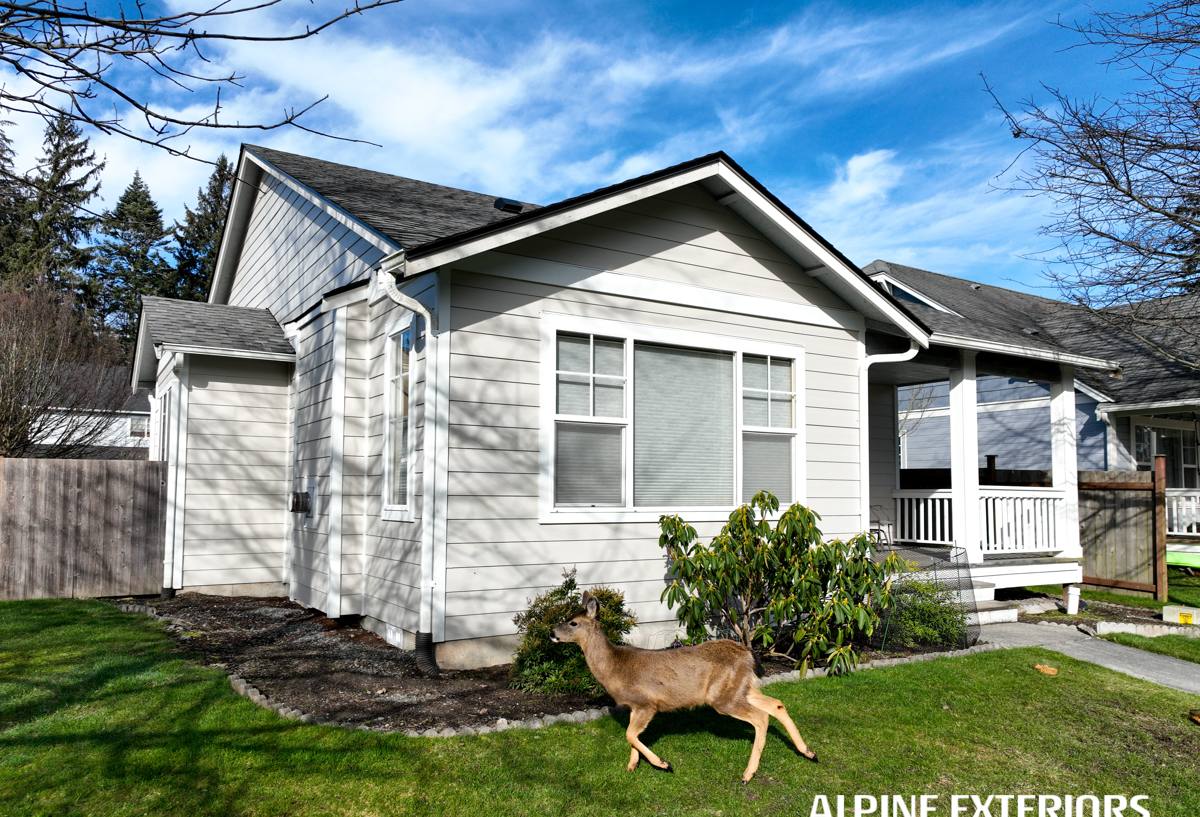
On older Lynden homes we get called to look at, the pattern is consistent: north- and west-facing walls with heavier moss growth, soft spots near ground level or under windows where water has been sitting against the siding, and paint or finish that's failing years ahead of schedule because the substrate underneath is absorbing water it was never designed to handle. None of this is unique to any one product — it's what happens when siding material and installation don't account for the actual climate.
What We Do for Lynden Homeowners
We're a full exterior contractor, not just a siding crew. For Lynden properties we handle:
- Siding replacement and repair — full re-siding, water-damage repair, and trim work
- Roofing — because a compromised roof and compromised siding fail together; water finds the weak point in either system
- Windows — replacement windows installed with proper flashing integration into the new siding, not just dropped into the old opening
- Decks — built and finished to hold up to the same rain and moss exposure as the rest of the exterior
We bring this up because siding doesn't exist in isolation. A new siding job with an aging roof, or new siding installed around old, poorly flashed windows, just moves the water problem somewhere else on the house. We look at the whole exterior envelope, tell you honestly what needs attention now versus what can wait, and don't sell you scope you don't need.
Why We Only Install James Hardie Fiber Cement
We get asked this a lot, especially by homeowners comparing quotes that include LP SmartSide, vinyl, or cedar. Here's the honest version: we used to have opinions about all of these products being fine in the right situation. What changed our minds was watching how each one actually performs, over years, in exactly this kind of climate — not in a lab, not in a drier region, but here.
Where the Other Products Fall Short in This Climate
LP SmartSide and other engineered wood products are treated wood at the core. Treated wood still swells, still needs every cut edge sealed correctly at installation, and still depends on caulking and paint staying intact to keep water out. In a region with this much sustained moisture, that's a maintenance commitment most homeowners don't keep up with, and the failure mode when it slips is soft, swollen siding that has to be replaced, not patched.
Vinyl siding is affordable and low-maintenance in the sense that it doesn't need painting, but it's a cladding, not a water barrier — it relies entirely on what's behind it to actually keep moisture out, and it becomes brittle and prone to cracking in cold snaps. It also doesn't hold up well against sustained UV and doesn't give you the factory-finish color depth or resale presentation that fiber cement does.
Cedar and primed spruce look great new. They also require the most ongoing maintenance of anything on this list — refinishing on a real schedule, careful attention to any spot where the finish wears thin — and they're combustible, which matters more every year as wildfire smoke and fire-season awareness spreads even into wetter parts of the state.
Why James Hardie
James Hardie fiber cement is cement, sand, and cellulose fiber — it doesn't rot, doesn't feed moss and algae the way wood-based products can, and is non-combustible. Hardie's ColorPlus factory finish is baked on before the boards ever reach the jobsite, which means better fade resistance and a cleaner look for longer than field-applied paint. Hardie also engineers specific product lines (their HZ5 line, for instance) for regions with exactly this rain and moisture profile. It costs more upfront than vinyl or LP, and it's not the lightest material to install correctly — but it's the product we're willing to put our name behind and warranty.
| Factor | James Hardie Fiber Cement | LP SmartSide | Vinyl | Cedar / Primed Spruce |
|---|---|---|---|---|
| Moisture resistance | Does not absorb/rot; engineered for wet climates | Treated wood core; vulnerable if seals fail | Sheds water but relies on house wrap behind it | Absorbs moisture without regular refinishing |
| Combustibility | Non-combustible | Combustible | Combustible, can melt/warp | Combustible |
| Finish | Factory-baked ColorPlus, long fade resistance | Field-applied paint, wears sooner | Color molded in, can fade/chalk | Stain or paint, needs refinishing on a schedule |
| Upfront cost | Higher | Moderate | Lowest | Moderate to high |
| Long-term maintenance | Low | Moderate to high | Low but limited lifespan | High, ongoing |
What Correct Hardie Installation Actually Involves
Fiber cement performs the way it's supposed to only when it's installed to Hardie's published specifications — and this is where a lot of siding jobs quietly go wrong, regardless of the material. Cut edges need to be sealed. Proper clearance needs to be maintained at grade, roof lines, and decks. Flashing at windows, doors, and any penetration needs to actually integrate with a water-resistive barrier behind the siding, not just sit on top of it and hope. Fastener spacing and placement matter for both weather performance and warranty compliance.
This is also where warranty gets real. Hardie backs its products, but a manufacturer's warranty on materials doesn't cover a bad install — that's on the contractor. We install to spec because it's the only way the product, and our own workmanship warranty, actually mean anything.
A Practical Pre-Project Checklist
- Ask any contractor exactly which siding product line they're proposing and why it fits your specific exposure (sun, shade, wind-driven rain)
- Get the scope in writing — cut-edge sealing, flashing details, house wrap or weather barrier, fastener schedule
- Ask what's covered under workmanship warranty versus manufacturer warranty, and for how long
- Check whether your roof, windows, and trim need attention before or during the siding work, not after
- Ask how moss and algae growth on the existing exterior will be addressed before new material goes up
Roofing, Windows, and Decks Under the Same Standard
The same climate logic that drives our siding choice applies to the rest of the exterior. A roof with degraded flashing or aging material lets water into the wall assembly from above, no matter how good the siding is. Windows installed without proper integration into the new siding's water-resistive barrier create a leak point exactly where you don't want one. Decks in this climate need materials and fasteners that won't fail under repeated wet-dry cycling and moss buildup on horizontal surfaces, which hold water even longer than vertical siding does. We treat all four — siding, roofing, windows, decks — as one connected system, because on a real house, that's what they are.
Why a Local Crew Matters for Lynden
A contractor who works Whatcom County regularly knows what a Lynden winter actually does to an exterior over several years, not just what a spec sheet promises. That shows up in small decisions — how much clearance to leave at grade given local drainage patterns, which sides of a house need the most attention for moss and shade, how to sequence a project around this region's rain windows instead of fighting them. It also means someone local is around for warranty service, not a crew that did one job in the area and moved on.
Cost Factors to Expect
Every Lynden property is different, so exact numbers depend on your home's size, current siding condition, and how much trim, window, or repair work is bundled in. Broadly, the factors that move the price are:
| Factor | Effect on Project |
|---|---|
| Existing siding removal and any water damage found underneath | Can add labor and repair costs once old material comes off |
| Home size and wall complexity (gables, dormers, trim detail) | More cuts and detail work increase labor time |
| Siding profile and ColorPlus color selection | Some Hardie profiles and premium colors cost more than base options |
| Bundling roofing, windows, or deck work | Can create efficiencies versus separate projects, but adds total scope |
We'll walk your specific property, point out anything we find — moss buildup, soft trim, flashing issues — and give you a straightforward number based on what's actually there, not a generic estimate.
Get a Free, No-Pressure Estimate
If your Lynden home's siding is showing moss buildup, soft spots, or a finish that's fading faster than it should, we're happy to take a look. The estimate is free, there's no pressure, and we'll tell you honestly what your home needs — whether that's full replacement, targeted repair, or just a maintenance conversation. Use the form below to get started.