 Custer
 What Cherry Point's Location Does to a House
Cherry Point sits right up against the Salish Sea in Whatcom County, a few minutes from Custer, and that shoreline proximity shapes everything about how a home ages here. Wind coming off the water carries salt, and that salt settles on siding, trim, gutters, and fasteners day after day. Add the region's long wet season, and you get a combination that's harder on exterior building materials than almost anywhere inland in the county.
Homes out here also tend to sit on larger, more exposed lots — open to wind off the water on one side and shaded by mature evergreens on the other. That mix of direct weather exposure and shade creates two different problems for siding at the same time: constant moisture load from driving rain, and slow-drying, moss-friendly conditions in the shaded areas. A siding product has to handle both, not just one.
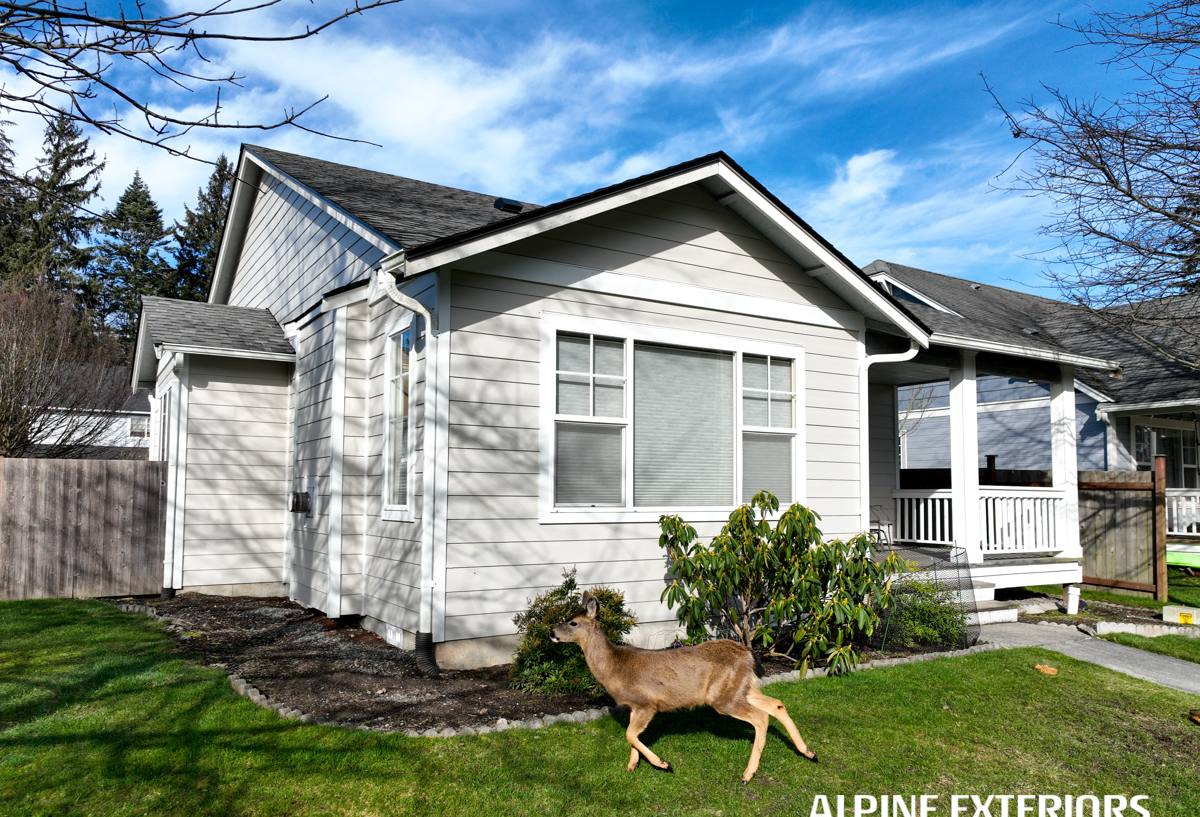
Salt Air: The Slow, Quiet Damage
Salt air doesn't announce itself the way a storm does. It works gradually — corroding fasteners, breaking down cheap coatings, and pulling moisture into materials that aren't built to shed it. On a lot of siding products, the surface finish is the first thing to go. Paint chalks and fades faster near the water. Caulking dries out sooner. Metal trim and nail heads can start showing rust well before the siding itself looks obviously worn.
This is one of the main reasons we don't treat every job the same way regardless of location. A home a mile from the water needs different detailing — corrosion-resistant fasteners, careful attention to caulking and flashing, and a siding material with a factory finish that's actually engineered to hold up to salt exposure — not just standard-grade coastal paint.
Moss Season Isn't Just a Roof Problem
Whatcom County's moss season is long, and most homeowners think of it purely as a roofing issue. It's not. Moss and algae growth on the north and shaded sides of a house is common on siding too, especially where tree cover keeps a wall from drying out between rain events. Wood-based products are the most vulnerable — moss holds moisture against the surface, and that moisture eventually gets past the paint film and into the substrate.
Fiber cement doesn't feed moss the way wood-based siding can, and it doesn't swell or soften when moss holds moisture against it for weeks at a time. That doesn't mean moss won't grow on it — moss will grow on almost anything shaded and damp long enough — but it means the siding underneath isn't degrading while it's there.
Why We Install Only James Hardie Fiber Cement
We made a deliberate decision to install one siding system: James Hardie fiber cement. We don't install vinyl, LP SmartSide, cedar, primed spruce, Cemplank, or Allura. That's not a marketing angle — it's because for a climate like Whatcom County's, and coastal exposure like Cherry Point's specifically, the trade-offs of those other products showed up too consistently in the field.
- Vinyl can warp and become brittle with temperature swings and UV exposure, and its seams and J-channels give wind-driven rain more places to work behind the panel.
- LP SmartSide and other wood-strand products perform reasonably where they stay dry, but they depend on unbroken paint film and caulking to keep moisture out of the engineered wood core — a hard standard to maintain year after year in a marine climate.
- Cedar and primed spruce are attractive but require ongoing refinishing, and constant moisture cycling accelerates rot at butt joints, corners, and anywhere moss holds water against the wood.
James Hardie fiber cement is cement, sand, and cellulose fiber — it doesn't rot, it's non-combustible, and it doesn't provide a food source for moss or mildew the way wood-based products can. Hardie's ColorPlus factory-applied finish is baked on and warranted against fading and peeling, which matters more here than in drier parts of the state, since salt air and UV both work harder on standard field-applied paint. Hardie also builds specific product lines engineered for different climate exposures, and we spec the right one for the site rather than defaulting to whatever's on the truck.
Installation Details That Actually Matter in This Climate
Fiber cement performs the way it's supposed to only when it's installed to manufacturer spec, and in a high-moisture, salt-exposed area that spec isn't optional. The details we pay close attention to on Cherry Point jobs:
- Proper rain-screen gap or drainage plane behind the siding so wind-driven rain has somewhere to go instead of sitting against the wall
- Correct fastener type and spacing to resist both wind uplift and salt-driven corrosion
- Fully sealed and back-primed cut edges, since an exposed cut edge is the one place fiber cement can take on water if left untreated
- Flashing and kick-out details at rooflines, windows, and decks that actually direct water away from the wall assembly
- Correct clearance between the bottom of the siding and grade, decks, or roof lines to avoid constant wicking
Skipping any one of these doesn't usually cause a visible problem in year one. It shows up three, five, or ten years later as a soft spot, a stain, or a section that never dries out — and by then it's a repair job instead of a five-minute installation detail.
It's Not Just Siding: Roofing, Windows, and Decks Face the Same Exposure
The same salt air and driving rain that stress siding put equal pressure on a home's roofing, windows, and decking, and they're rarely separate problems. A roof that's shedding granules or holding onto moss sends more water down the wall behind the gutter line. Aging windows with failed seals let moisture into the wall cavity right where siding meets the frame. A deck ledger board that's not properly flashed is one of the most common sources of hidden rot we find on coastal-area homes.
Because we handle siding, roofing, windows, and decks, we look at a Cherry Point home as one weather envelope rather than four unrelated projects. If we're on-site for a siding job and see a roofline detail or window flashing that's feeding moisture into the wall, we'll flag it — fixing new siding around an unresolved leak source just wastes the work.
Comparing Siding Materials for a Salt-Air, High-Moss Climate
| Material | Salt Air Resistance | Moss/Moisture Behavior | Maintenance | Fire Rating |
|---|---|---|---|---|
| James Hardie fiber cement | Strong; factory finish engineered for fade/corrosion resistance | Non-combustible, doesn't feed moss growth, doesn't rot | Low; occasional wash and caulk check | Non-combustible |
| Vinyl | Can fade and become brittle over time | Won't rot, but seams allow water intrusion behind panels | Low but limited repair options if damaged | Combustible |
| LP SmartSide / wood-strand | Moderate; depends on paint film integrity | Vulnerable to swelling if moisture gets past coating | Moderate to high; repainting and caulk maintenance | Combustible |
| Cedar / primed spruce | Weak without diligent upkeep | High moss/rot risk in shaded, damp areas | High; regular refinishing required | Combustible |
Signs a Cherry Point Home's Exterior Needs a Closer Look
Because siding problems in a marine climate develop slowly, most homeowners don't catch them until they're further along. Worth checking for:
- Persistent moss or dark staining on north- or shade-facing walls that doesn't wash off easily
- Soft spots, bubbling, or visible swelling near the bottom courses of siding or around window trim
- Rust streaks running down from fasteners or metal trim
- Caulking that's cracked, shrunk, or pulled away from joints and corners
- Paint that's chalking, peeling, or fading unevenly, especially on the side facing the water
- Any area where siding meets a deck, roofline, or window that stays visibly damp longer than the rest of the wall
Why a Local Crew Matters Out Here
Cherry Point and the surrounding Custer area aren't like the drier, more sheltered parts of Whatcom County, and they're not like the denser urban exposure crews see closer to Bellingham either. A crew that works this stretch regularly knows which walls take the worst of the weather off the water, where moss builds up fastest, and which flashing details actually hold up here versus on paper. That local pattern recognition is part of what keeps a siding job from becoming a callback five years down the road.
If you're weighing a siding replacement, or wondering whether your roofing, windows, or deck are contributing to a moisture problem on your home, we're glad to take a look. There's no pressure and no cost to get an honest read on where your home stands — use the form below to request a free estimate.