 Custer
 Exterior Contractor Serving California Creek
California Creek sits in the low, water-influenced country north of Custer, in the part of Whatcom County where Puget Sound weather and Nooksack Valley weather seem to argue with each other most winters. Homes out here take a different kind of beating than houses ten miles inland. There's salt-tinged air moving off the Sound, wind-driven rain that comes in sideways more often than straight down, and a moss season that can stretch from October clear into May if a house sits under any tree cover. We've built our business around understanding that difference and building exteriors that hold up to it, not just exteriors that look good on install day.
Custer Siding works this stretch of Whatcom County regularly, and we bring a full exterior scope to it: siding, roofing, windows, and decks. Most of what we see out here is one system failing and slowly dragging the others down with it — a roof leak that's been feeding rot behind the siding for two years, or a deck ledger board that's been wicking water into the wall framing since it was built. Treating the exterior as one connected system, rather than four separate trades, is how you actually catch that before it becomes a five-figure repair.
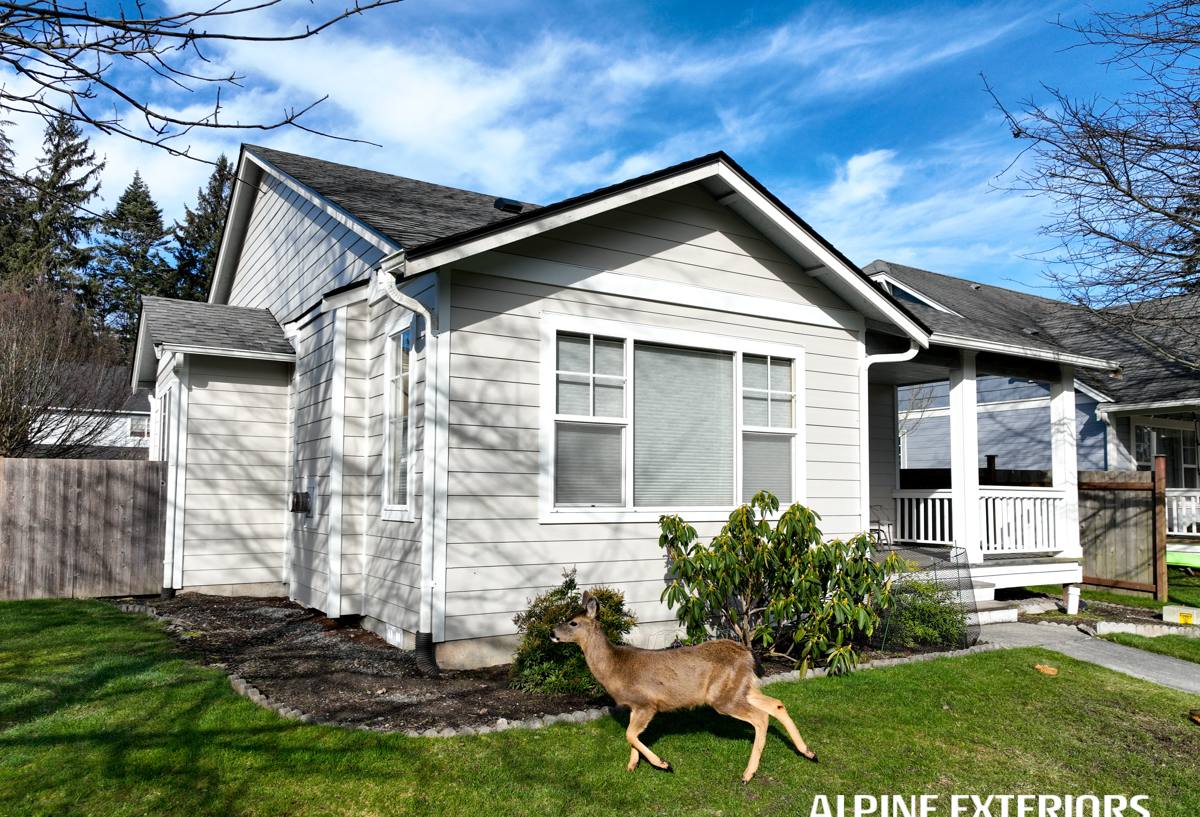
What the Climate Actually Does to a California Creek Home
Salt Air and Metal Fatigue
Proximity to salt water accelerates corrosion on anything metal — fasteners, flashing, gutter hangers, hose bib fittings. It's slow and it's easy to miss because it doesn't announce itself the way a leak does. By the time you see rust bleeding through paint or a streak running down siding from a corroding nail head, the fastener underneath has usually been compromised for a while. This is one of the reasons fastener selection and flashing detail matter more here than in a drier, inland part of the county.
Driving Rain and Wind-Loaded Water
Storms off the Sound don't drop water straight down — they push it sideways into wall assemblies, under trim, and up under lap siding edges where standard installs don't expect water to travel. A siding system that's rated for vertical rain exposure but installed without attention to wind-driven intrusion will eventually let water past the cladding, even if every board looks fine from the curb.
Moss, Shade, and Moisture Retention
Where trees shade a roof or a north-facing wall, moss and algae get a long runway to establish and hold moisture against the surface. On roofing, that means accelerated granule loss and shortened shingle life. On siding, it means paint and finish breakdown, and on wood-based products, actual substrate decay. Moss doesn't just sit there looking bad — it holds water against the building longer than open sun-exposed areas ever would.
Why We Only Install James Hardie Fiber Cement Siding
We made a deliberate decision years ago to install one siding system — James Hardie fiber cement — and nothing else. That's not a marketing position, it's a practical one built from what we see in this climate. Vinyl siding can warp and gap under wide temperature swings and doesn't hold paint if a homeowner ever wants to change color. LP SmartSide, Cemplank, and Allura are reasonable products in the right hands, but each carries trade-offs — engineered wood substrates that are more moisture-sensitive at cut edges, or manufacturing and warranty support that isn't as established in this region. Primed spruce and cedar are beautiful, and we understand the appeal, but both require a maintenance commitment — recoating, caulking, moisture monitoring — that most homeowners underestimate until year three or four, especially in a moss-heavy, salt-air environment like California Creek.
James Hardie fiber cement is non-combustible, dimensionally stable across our wet-to-dry seasonal swings, and comes factory-finished with ColorPlus technology, which means the color is baked on before the board ever reaches the jobsite — not brushed on in the field where weather and technique introduce variability. Hardie also engineers specific product lines (their HZ5 designation) for climates like ours, accounting for moisture exposure patterns that differ from, say, the desert Southwest. When it's installed to Hardie's spec — correct clearances, correct fastening, correct flashing at every penetration — it's a system we can stand behind with a real transferable warranty, not just a sales pitch.
How a Siding Job Works Here
Inspection and Moisture Check
We start by looking at what's actually happening behind the existing siding, not just what the surface looks like. Given how many homes near California Creek have some history of moisture intrusion at trim, window flashing, or deck ledgers, we check those spots specifically before quoting anything.
Removal and Sheathing Assessment
Once old siding comes off, we can see the sheathing and framing underneath. This is the point where hidden rot, if any, gets identified and priced honestly — before board goes up, not after.
Weather-Resistive Barrier and Flashing
This step matters more here than almost anywhere else in the county. Correct house wrap installation, properly lapped and taped, combined with flashing at every window, door, and penetration, is what actually keeps wind-driven rain out of the wall assembly. Hardie siding is only as good as the water management system installed underneath it.
Hardie Installation to Spec
Manufacturer-specified nailing patterns, gapping, and clearances from grade, decks, and roof lines — not shortcuts. This is where a lot of underbid siding jobs quietly fail years down the road, and it's the step homeowners can't easily evaluate themselves without knowing what to look for.
Finish Details
Trim, caulking at appropriate joints only (Hardie's ColorPlus system needs less field caulking than painted products, which is part of its appeal), and a final walk-through.
Roofing, Windows, and Decks in the Same Climate
The same salt air, wind-driven rain, and moss pressure that shape our siding recommendations apply directly to the rest of the exterior:
- Roofing: Proper ventilation and moss-resistant material choices matter more under tree cover, and flashing at valleys and penetrations needs the same wind-driven-rain attention as wall flashing.
- Windows: Window flashing integration is one of the most common failure points we find during siding tear-off — a window that leaks slowly for years, hidden behind trim.
- Decks: Ledger board attachment and flashing where a deck meets the house is a classic hidden-rot location in this climate; we check it as part of any siding scope that includes an attached deck.
Comparing Siding Options for This Climate
| Material | Moisture Behavior Here | Maintenance Burden | Finish Durability |
|---|---|---|---|
| James Hardie Fiber Cement | Stable, engineered for wet climates (HZ5) | Low — factory ColorPlus finish | Long-lasting factory finish, minimal fading |
| Vinyl | Can warp/gap with temperature swings | Low, but can't be repainted easily | Fades over time, brittle in cold snaps |
| Engineered Wood (LP SmartSide-type) | Cut-edge sealing is critical near moisture | Moderate | Good if sealed and maintained correctly |
| Cedar / Primed Spruce | Absorbs moisture without diligent upkeep | High — regular recoating, caulking | Beautiful, but finish demands ongoing attention |
Cost Factors Homeowners Should Understand
Every quote is different, but the honest cost drivers on a California Creek exterior job are usually the same handful of things: how much hidden moisture damage gets discovered once old siding or roofing comes off, the complexity of the home's trim and roofline (more corners and penetrations mean more flashing work), and whether the weather-resistive barrier needs to be replaced or can be reused. We'd rather walk a homeowner through those variables up front than surprise them mid-project.
What to Ask Before Hiring Anyone for Exterior Work
- Are they installing to the manufacturer's written specification, or their own shortcut version?
- Do they check flashing and weather barrier condition before quoting, or just measure square footage?
- Can they explain why they recommend one siding product over another, specific to this climate?
- Do they carry proper licensing and insurance for work in Whatcom County?
- Will they show you what they find once old material comes off, before proceeding?
A Local Crew Working Local Conditions
There's a real difference between a crew that works Whatcom County's coastal-influenced weather every week and one that treats every job the same regardless of where it sits. We know what a California Creek winter does to a north wall under tree cover versus a south-facing wall in the open, and we plan the work accordingly — sequencing, flashing details, and material choices included.
If you're weighing a siding, roofing, window, or deck project for a home near California Creek, we're glad to take a look and talk through what we find — no pressure, no obligation. A free estimate is the easiest way to understand what your specific home actually needs.