 Custer
 Exterior Work Built for Laurel's Climate
Laurel sits in the stretch of Whatcom County where Pacific storms roll in off the water and don't let up for days at a time. Homes here deal with salt-laden air, wind-driven rain that finds every gap in a building envelope, and a moss and mildew season that can stretch from October clear through May. If you've owned a home in this part of Whatcom County for more than a winter or two, you already know what that combination does to exterior materials that aren't up to the job.
We're a siding, roofing, window, and deck contractor working out of Custer, and Laurel is part of our regular service area. That matters more than it might sound like. A crew that works this corner of the county every week knows which exposures take the worst weather, which older homes were built with materials that don't hold up anymore, and what it actually takes to keep a house dry and sound through another wet season.
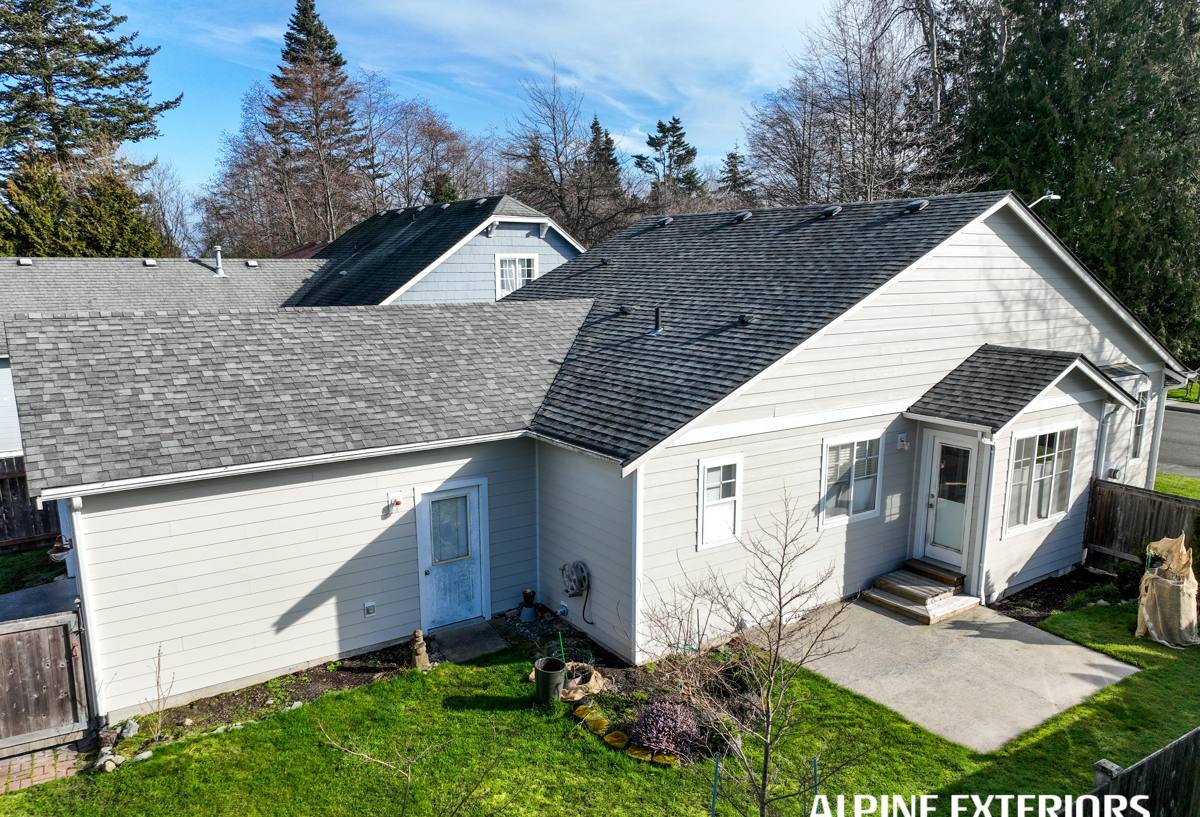
What the Weather Does to a House in Laurel
Salt Air and Slow Corrosion
Proximity to Puget Sound and the Strait of Georgia means the air carries salt further inland than people expect. Salt air accelerates corrosion on fasteners, flashing, and any metal trim that isn't rated for coastal exposure. It also breaks down paint film faster than it would inland, which is part of why so many older homes in this area show chalky, faded siding well before their paint job's "expected life" is up.
Driving Rain and Wind-Loaded Walls
Rain here rarely falls straight down. When wind pushes rain sideways into a wall, water gets tested against every seam, joint, and penetration in the siding system — not just the flat field of the wall. Homes with poor flashing details, caulked-instead-of-flashed trim, or siding that wasn't installed with the right gaps and clearances are the ones that end up with hidden rot behind an otherwise fine-looking exterior.
Moss, Mildew, and the Long Wet Season
With a wet season that runs most of the year, anything organic — wood siding, wood trim, even some composite products — becomes a food source for moss, algae, and mildew if it stays damp. On roofs, moss works its way under shingles and lifts them. On siding, it holds moisture against the surface far longer than the material was ever meant to tolerate, which is exactly the setup that leads to soft spots, delamination, and paint failure.
Siding: Why We Only Install James Hardie
We made a decision, as a company, to install James Hardie fiber cement siding and nothing else. Not vinyl, not LP SmartSide, not Cemplank or Allura, not primed spruce, not cedar. That's not a marketing angle — it's a standard we hold to because of what we've seen these materials do (and not do) in exactly the kind of climate Laurel sits in.
The Trade-Offs of the Alternatives
- Vinyl siding is inexpensive and low-maintenance in mild weather, but it expands and contracts with temperature swings, can crack in cold snaps, and offers little protection if wind-driven rain gets behind it — there's no substrate underneath doing real work.
- LP SmartSide is an engineered wood product. It performs reasonably when installed and maintained exactly to spec, but any breach in its factory coating — a cut edge, a fastener hole, a scuff — opens a path for moisture into wood-based material, and wood-based material in a wet climate is a maintenance commitment for the life of the house.
- Cemplank and Allura are fiber cement products like Hardie, and fiber cement as a category is sound. Our issue isn't the category — it's that we standardized on one manufacturer's system, warranty, and factory finish so every install we do is consistent and backed the same way.
- Primed spruce and cedar are traditional choices with real curb appeal, but bare or primed wood siding in a marine climate needs regular repainting and caulking to stay ahead of moisture. Skip a maintenance cycle in a place like Laurel and you're often looking at rot repair, not just a paint job.
What James Hardie Gets Right
James Hardie fiber cement is non-combustible, dimensionally stable, and doesn't swell, rot, or feed insects the way wood-based products can. The ColorPlus factory finish is baked on under controlled conditions, which gives it better fade and moisture resistance than field-applied paint. Hardie also engineers specific product lines (HZ5, HZ10) for different climate zones, so the board itself is matched to the moisture and temperature conditions of the region it's installed in. Backed by a strong, transferable warranty, it's the system we're willing to put our name behind on every job — including in Laurel's salt air and driving rain.
How a Proper Siding Job Holds Up Here
The material is only half of it. Fiber cement siding installed with the wrong gaps, missing flashing, or fasteners driven in the wrong spot will still fail early, regardless of the brand on the box. Correct installation in this climate means:
- Properly lapped and sealed weather-resistant barrier behind the siding, not just a single layer stapled up and forgotten
- Flashing at every window, door, and horizontal trim transition — not caulk used as a substitute for flashing
- Correct fastener spacing and type, driven to manufacturer spec rather than overdriven or underdriven
- Proper clearance between siding and grade, decks, and roof lines so water has somewhere to go
- Factory-finished cut edges sealed where the board is trimmed on site
Roofing, Windows, and Decks: The Rest of the Envelope
Siding doesn't work in isolation. A roof that's shedding moss and losing granules, windows with failed seals, or a deck that's trapping moisture against the house all put stress on the same building envelope your siding is trying to protect. We handle all four — siding, roofing, windows, and decks — because in a climate like this, they need to be thought of as one system.
Roofing
Moss removal and prevention, proper ventilation, and flashing details around penetrations matter as much as the shingle or panel choice itself. A roof that traps moisture underneath, even with good-looking shingles on top, will cause problems long before the shingles "wear out."
Windows
Old or poorly flashed windows are one of the most common hidden water entry points we find when we open up a wall. Replacing windows the right way — with proper flashing integrated into the siding system — closes off a failure point that a lot of homeowners don't think about until there's already damage.
Decks
Decks attached to the house create a junction where water management is critical. Ledger board flashing, proper drainage, and material choice all affect whether that attachment point stays dry or becomes a slow leak into the structure behind it.
Comparing Siding Options for a Laurel Home
| Material | Moisture Resistance in Marine Climate | Maintenance Burden | Fire Resistance |
|---|---|---|---|
| James Hardie fiber cement | High — engineered HZ lines for climate exposure | Low — factory finish, no repainting cycle needed for years | Non-combustible |
| Vinyl | Moderate — vulnerable if breached, no structural moisture barrier | Low, but limited lifespan in temperature swings | Combustible |
| LP SmartSide (engineered wood) | Moderate — depends heavily on coating integrity | Moderate — coating and edge sealing must be maintained | Combustible |
| Cedar / primed spruce | Lower — wood-based, absorbs moisture if finish fails | High — regular repainting and caulking required | Combustible |
What to Look For When Hiring a Contractor in This Area
Whatcom County has no shortage of contractors, but not all of them work this specific climate every day, and not all of them install to the standard a marine environment demands. A few things worth checking before you hire anyone for siding, roofing, window, or deck work in Laurel:
- Do they carry current Washington state contractor licensing and insurance, and can they show it without hesitation?
- Do they explain flashing and moisture management specifics, or just talk about the finish material?
- Do they have experience with the specific product they're recommending, including manufacturer training or certification where it applies?
- Will they put the warranty terms — both manufacturer and workmanship — in writing?
- Do they know this area, or are they driving in from somewhere with a very different climate?
Why a Local Crew Matters
Working out of Custer means we're not learning Whatcom County's weather patterns on your project — we already know what a Laurel-facing wall goes through in a January storm versus a house tucked back from direct exposure. That local knowledge shapes real decisions: where extra flashing attention pays off, which sides of a house need closer inspection for moss and moisture damage, and how to sequence a job around this region's rain patterns instead of fighting them.
If your siding, roof, windows, or deck are showing signs of wear from the salt air and wet seasons that come standard with living in this part of Washington, we're glad to take a look and talk through honest options — no pressure, no upsell on products we wouldn't put on our own homes. Reach out for a free estimate and we'll walk the property with you.