 Custer
 Storm Damage Roof Repair in Everson: Why Local Conditions Change the Job
Everson sits inland from the Salish Sea but still gets the full effect of Whatcom County weather: fast-moving Pacific fronts, wind that shifts direction mid-storm, and long stretches of gray, wet weather between November and April. Add in salt-tinged air that drifts in off the coast and a moss season that never really ends here, and you have a roofing environment that's harder on materials than most manufacturers' warranty language assumes. A storm damage repair that would hold up fine in a dry inland climate can fail here within a season or two if it doesn't account for how this specific area behaves.
That's the difference between a repair that's done and a repair that's done right. We're not describing a generic checklist — we're describing what actually happens to roofs in this part of Whatcom County, and what it takes to fix that damage so it stays fixed.
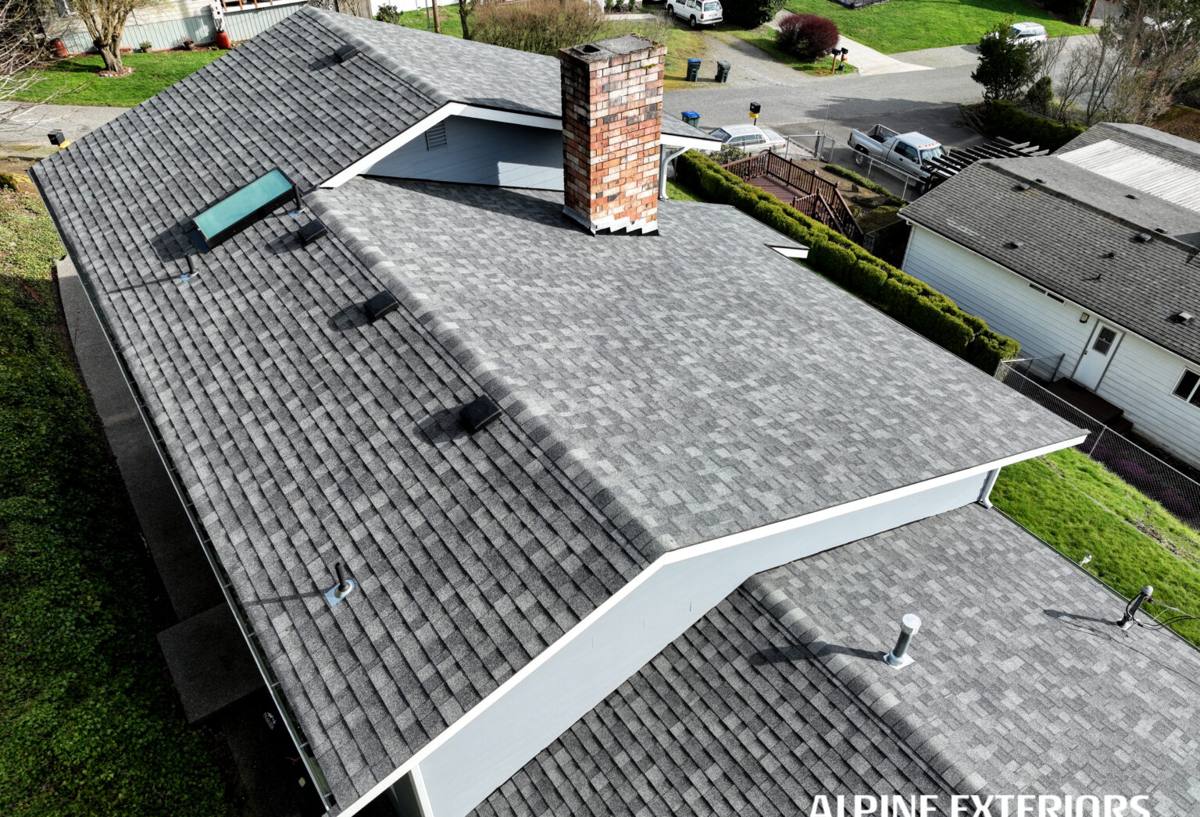
What Local Storms Actually Do to a Roof
Wind and Uplift
Wind here rarely comes from one direction for an entire storm. A front can push rain in from the southwest for an hour, then swing around, catching shingle edges and flashing laps that were never designed to shed water from that angle. The result is often lifted or cracked shingle tabs, popped nails, and stressed sealant strips — damage that's easy to miss from the ground because it doesn't look dramatic, but it's exactly the kind of opening that lets water in during the next storm.
Wind-Driven Rain
Straight-down rain is rarely the problem. Wind-driven rain gets pushed sideways and upward under laps, around chimneys, and into valleys and flashing seams that a dry-weather inspection would call fine. This is the leading cause of the slow, hard-to-trace leaks we get called out for weeks after the storm that actually caused them — by the time a stain shows up on a ceiling, the water has usually been finding its way in for a while.
Moss and Trapped Moisture
Whatcom County's moss season runs long — shaded, north-facing slopes and anything under tree cover can stay damp for months at a stretch. Moss doesn't just sit on top of shingles; it works into the granule layer and lifts edges, holding moisture against the roof deck and giving storm-driven water an easier path underneath. A roof that's already carrying moss going into storm season is more vulnerable to wind and rain damage than a clean one, which is why we treat moss removal and storm repair as connected problems, not separate jobs.
Signs Everson Homeowners Should Check For After a Storm
Most storm damage isn't obvious from the driveway. A quick, safe check after a rough weather event can catch problems before they turn into interior damage:
- Shingles that look curled, cracked, or out of alignment compared to the surrounding roof
- Granules collecting in gutters or at the base of downspouts — a sign of accelerated shingle wear
- Visible gaps or lifted metal around chimneys, vents, and skylights
- Sagging or discolored sections of soffit or fascia, which often point to water intrusion above
- New or worsening stains on interior ceilings, especially near exterior walls or attic penetrations
- Moss or dark streaking that's thicker or spreading faster than it was last season
- Debris — branches, needles, gravel from shingles — collected in valleys or against roof edges
None of these guarantee a major problem, but any one of them is worth a proper look before the next storm rolls through.
What a Correct Storm Damage Repair Involves
Finding the Real Cause, Not Just the Visible Damage
A patch over a visible tear can look fine and still fail, because the actual entry point for water is often several inches away from where the stain or damage shows up. Water travels along the underlayment and roof deck before it finds a way through, so a repair has to trace that path back to the source — a lifted shingle tab, a failed flashing seal, a nail that backed out — not just cover the symptom.
Matching Materials and Technique
Repairs need to match the existing roof in more than just color. Shingle weight, exposure, and fastening pattern all affect how well a repaired section performs against wind and driving rain compared to the rest of the roof. A repair using the wrong shingle profile or an undersized nailing pattern will often be the first thing to fail in the next storm, even if it looked acceptable the day it was installed.
Flashing and Water Path Work
Most storm-related leaks trace back to flashing — around chimneys, vents, skylights, and roof-to-wall transitions — rather than the field of the roof itself. Correct storm damage repair means resealing or replacing flashing with proper laps and underlayment integration, not just running a bead of sealant over the visible gap. Sealant-only fixes are common shortcuts, and they're also the most common reason a "repaired" roof leaks again in the next season.
Our Process, Start to Finish
We keep the process straightforward, because storm damage repair is stressful enough without added guesswork:
- Inspection. We walk the roof and check attic access where possible, tracing damage back to its actual source rather than just the visible symptom.
- Written scope and honest recommendation. We tell you plainly whether this is a targeted repair or whether the damage points to a bigger issue, and what each option involves.
- The repair itself. Matched materials, proper flashing work, and fastening that accounts for how wind actually hits roofs in this area — not just a patch job.
- Cleanup and a final check. We clear debris and confirm the repair is watertight before we consider the job finished.
Repair or Replace? What Actually Drives That Decision
Not every storm-damaged roof needs a full replacement, and not every roof that "just needs a patch" should get one. The honest answer depends on a few factors:
| Factor | Favors Repair | Favors Replacement |
|---|---|---|
| Age of roofing material | Under roughly half its expected service life | Nearing or past expected service life |
| Extent of damage | Localized to one section or feature | Spread across multiple slopes or repeat problem areas |
| Underlying deck condition | Solid, no rot or soft spots found | Signs of moisture damage to the deck itself |
| Moss and granule loss history | Minor, recently treated | Long-term, widespread granule loss |
| Number of prior repairs | First or second repair in this area | Same spot has been patched repeatedly |
We'll tell you honestly which side of that table your roof falls on. A repair that's likely to fail again within a season isn't a good use of your money, and we'd rather say that upfront than come back out for the same leak twice.
Why Hiring a Crew That Already Works in Everson Matters
A contractor based outside the area can still do competent roof repair, but there's real value in working with a crew that already knows how storms move through this part of Whatcom County — which slopes take the worst of the wind-driven rain, how aggressively moss builds up under the tree cover common around here, and how salt-carried air off the coast affects fastener and flashing choices over time. That local pattern recognition shortens the diagnostic part of the job and helps us catch damage that a one-time visitor might miss.
It also matters for response time. Storm damage rarely waits for a convenient week, and a crew that's already working in and around Everson can usually get eyes on a damaged roof faster than one dispatching from farther away — which matters when the difference is a tarped roof versus water sitting on an open deck through another round of rain.
Timing: When to Call After a Storm
The best time to have a roof checked is as soon as it's safe to do so after a storm passes — not weeks later once a ceiling stain forces the issue. Early inspection catches lifted shingles and stressed flashing while they're still a repair job, before repeated wind and rain turn them into a deck or interior damage problem. If you're not sure whether what you're seeing is worth a call, it's worth a call.
If your roof took a hit in the last storm, or you're just not sure what shape it's in after another wet Whatcom County season, we're glad to take a look. Fill out the form below for a free, no-pressure estimate — we'll give you a straight answer about what's actually going on and what it would take to fix it right.