 Custer
 Serving Marietta, Right Next Door to Custer
Marietta sits in the same stretch of Whatcom County as Custer, close enough to the water that its homes deal with the same combination of salt-laden air, wind-driven rain, and a moss season that stretches across most of the calendar year. We work this area regularly, which means we're not guessing at conditions from a truck that drove up from out of town for the day. We know what a north-facing wall on a shaded lot here looks like after fifteen years with the wrong siding on it, and we know what correct flashing and drainage detailing actually buys a homeowner over that same stretch of time.
This page is about what our exterior work looks like specifically for Marietta properties: siding, roofing, windows, and decks, and why having a crew that treats this area as home turf rather than just another stop on the route actually matters for how the work holds up.
What Marietta's Climate Does to a House
Three conditions define exterior wear here, and none of them is dramatic in isolation. It's the combination, sustained over years, that separates the exteriors that age well from the ones that don't.
Salt Air
Marietta's proximity to the water means salt-laden air is a routine part of exterior exposure across most of the community, not just on lots with a direct water view. Salt exposure accelerates finish breakdown and speeds up corrosion on fasteners, trim hardware, and any metal flashing that isn't rated for it. That kind of wear shows up gradually, which is exactly why it's easy to underestimate when choosing materials.
Driving, Wind-Pushed Rain
Rain here doesn't fall straight down for most of the year. Wind pushes it sideways into lap joints, under trim, and into any seam where water management detailing is off by even a little. That's a harder test on caulked joints and factory finishes than a simple annual rainfall number would suggest, and it's where a lot of long-term siding and window problems actually start.
A Long Moss Season
Mild temperatures paired with steady moisture keep moss and mildew active for most of the year on shaded, tree-lined lots, which describes a lot of properties in and around Marietta. Organic growth on a siding or roofing surface traps moisture against what's underneath, and that trapped moisture is where deterioration compounds fastest.
Siding: The Product We Install and Why
We install James Hardie fiber cement siding exclusively. We don't offer vinyl, LP SmartSide, Cemplank, Allura, primed spruce, or cedar, and that's a deliberate standard rather than a limitation we apologize for. Fiber cement is an inorganic material, a cured blend of Portland cement, sand, and cellulose fiber, so it doesn't have a wood-based or petroleum-based core that can absorb water, swell, or feed rot and insects the way organic siding materials can. It's also non-combustible, which is a real consideration even in a wet coastal county, not just in dry wildfire-prone regions.
Climate-Engineered for This Region
James Hardie builds different product lines for different climate zones, and the HZ5 line is engineered for regions with freeze-thaw cycles and sustained moisture exposure, which fits Whatcom County's winters better than a product engineered primarily for hot, dry climates. That's a concrete, specific reason we standardized on this manufacturer rather than fiber cement as a generic category.
ColorPlus Factory Finish
Instead of relying on a field-applied paint job, Hardie's ColorPlus finish is baked on in a controlled factory environment in multiple coats before the boards reach the job site. It's backed by its own finish warranty, separate from the substrate warranty, and it's formulated to resist fading and hold color consistency against salt air and UV exposure better than a site-painted finish typically does.
Roofing: The First Line Against Driving Rain
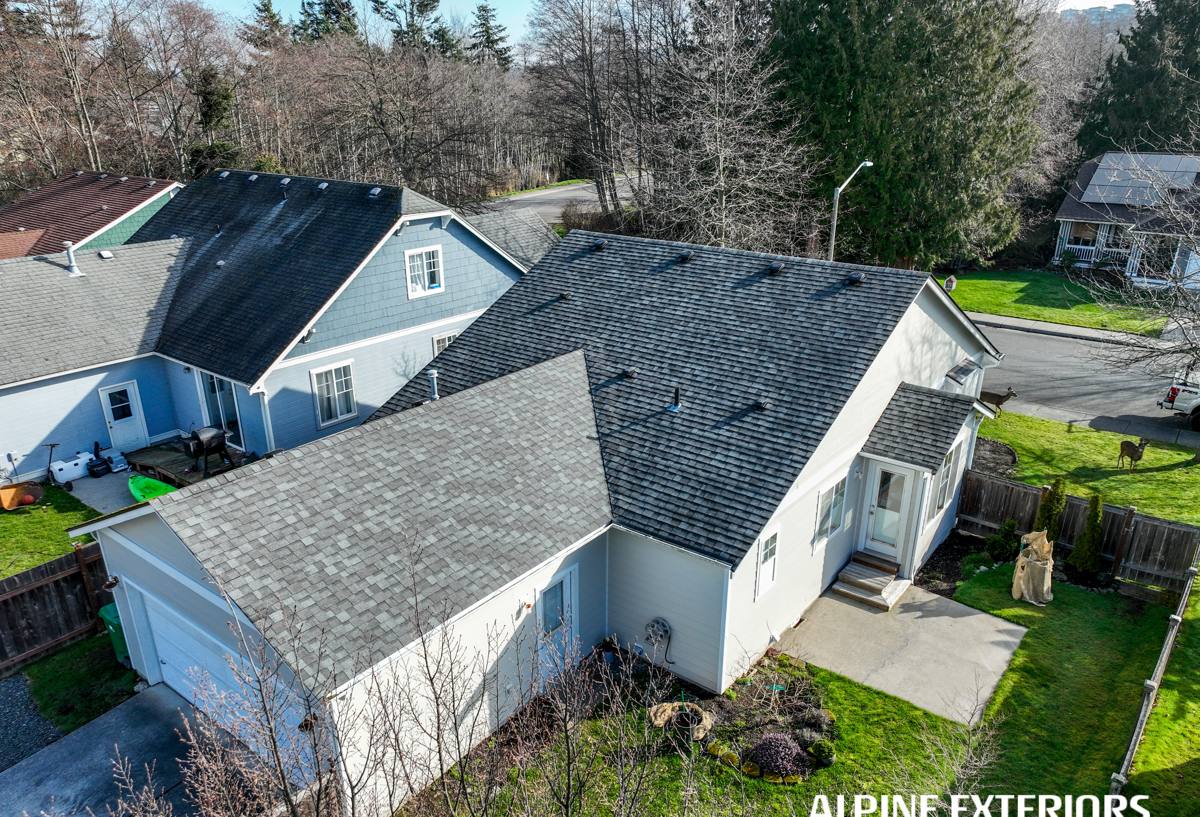
Siding gets a lot of attention, but the roof is what actually takes the brunt of Marietta's weather first. Wind-driven rain tests roof edges, valleys, and penetrations the same way it tests siding seams, and a roof that's aging out or was flashed poorly will send moisture into the wall assembly below it no matter how good the siding is. We handle roof replacement and repair as part of the same exterior scope as siding, because treating them as separate problems misses how much they depend on each other. Proper underlayment, ice-and-water protection at vulnerable transitions, and correct flashing at every penetration matter as much here as the shingle or roofing product itself.
Windows: Where a Lot of Water Problems Actually Start
Window openings are one of the most common places wind-driven rain finds its way into a wall assembly, because they involve the most seams, flashing transitions, and trim details of any part of the exterior. Old or poorly flashed windows are a frequent source of hidden rot that only shows up once siding comes off for a re-side. When we replace windows, we treat the flashing and integration with the surrounding wall as seriously as the window unit itself, because a good window installed with bad flashing detail can still leak.
- Confirm proper head, jamb, and sill flashing integrated with the wall's water-resistive barrier, not just caulk around the frame.
- Check that window selection accounts for the amount of direct wind-driven rain exposure on that specific elevation of the house.
- Ask whether the old window opening will be inspected for hidden moisture damage before the new unit goes in.
Decks: Built for Year-Round Wet Exposure
A deck in this climate spends most of the year wet, shaded, or both, which makes material choice and drainage detailing especially important. Ledger board flashing, proper joist spacing, and decking material that can handle sustained moisture without becoming a slip hazard or a maintenance burden all matter more here than they would in a drier climate. We build and repair decks with the same attention to water management that we bring to siding and roofing work, because a deck that traps moisture against the house structure creates the same kind of long-term problem a poorly flashed window does.
Why a Local Crew Matters for This Kind of Work
Exterior work in a climate like this isn't just about installing a good product correctly on day one. It's about understanding how a specific lot's sun exposure, tree cover, and wind exposure will affect that installation over the next fifteen or twenty years. A crew that works this area regularly develops a feel for which lots need extra attention to drainage detailing, which elevations take the worst of the wind-driven rain, and which roof lines tend to hold moss longer than others nearby. That's knowledge that's hard to fake from a one-time visit, and it's part of why we send the same certified installers back to this area job after job rather than rotating in whoever's available.
Cost Factors to Weigh
| Factor | What It Affects |
|---|---|
| Material choice (fiber cement vs. alternatives) | Upfront cost is typically higher than vinyl, but long-term maintenance cost is generally lower since there's no wood-based core to repaint or reseal on a schedule |
| Site exposure (wind, sun, tree cover) | Determines how much extra flashing and drainage detailing a given elevation needs, which affects labor scope |
| Condition of existing sheathing and framing | Hidden rot found once old siding or roofing comes off can add scope; a clear change-order process matters here |
| Scope bundling (siding, roofing, windows, decks together) | Coordinating multiple exterior components in one project can reduce redundant setup and access costs compared to hiring separately over time |
| Warranty structure | Transferable, non-prorated warranties matter more if you expect to sell the home before the coverage period ends |
Before You Commit to Any Exterior Contractor
Whether you end up working with us or someone else, these are worth confirming before signing anything:
- Ask whether the crew is manufacturer-certified for the specific siding or roofing product being proposed, not just generally experienced.
- Ask what the warranty covers, whether it's prorated, and whether it transfers to a future buyer if you sell.
- Ask how the contractor handles hidden damage discovered once old siding, roofing, or windows come off.
- Ask how they detail flashing and drainage at windows, rooflines, and deck ledgers specifically, not just what material they're installing.
- Ask whether they regularly work in your specific neighborhood, or if it's a one-off trip for them.
If you're weighing a siding, roofing, window, or deck project in Marietta, we're glad to walk the property, look at what's actually happening on the walls and roofline now, and give you a straight answer about what we'd recommend and why. Use the form below to schedule a free, no-pressure estimate.