 Custer
 Roof Repair in Everson: A Different Kind of Wear
Everson sits in the Nooksack River valley, close enough to the water and to the coast that homes here take on a specific combination of punishment: salt-tinged air moving up from the coast, long stretches of driving rain off the Pacific storm track, and a moss season that can run eight months or longer under the tree cover common to this part of Whatcom County. None of that is dramatic on its own. What it does is slow and cumulative — the kind of wear that shows up as a small leak two or three years after the actual damage started.
A roof repair here has to account for that pattern, not just patch the spot where water is currently showing up inside the house. We've worked enough roofs in this stretch of the county to know that the visible leak and the actual failure point are often a few feet apart, and that a repair done without understanding how water moves under wind-driven rain will fail again within a season or two.
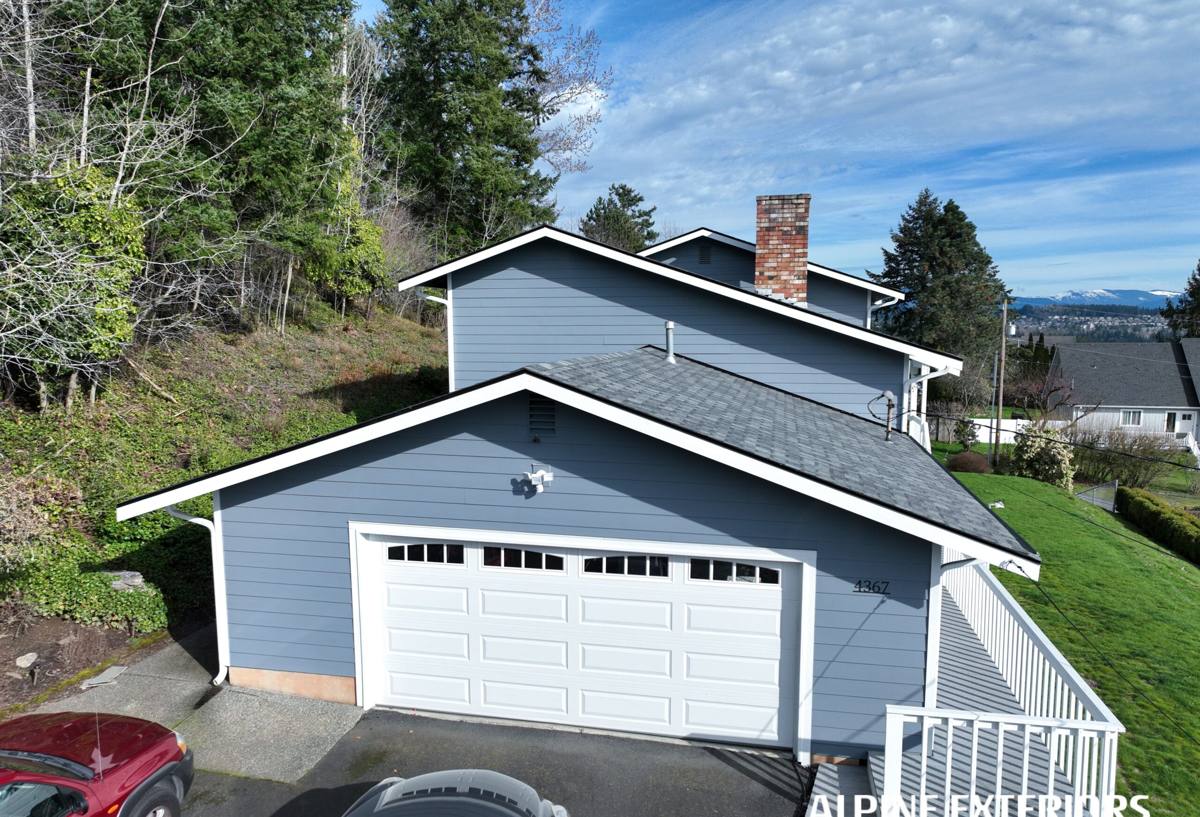
Signs Your Everson Roof Needs Repair — Not Just a Look
Most calls we get start the same way: a stain on a ceiling, a damp attic smell, or shingle granules collecting in a gutter after a windstorm. A few signs are worth acting on before they turn into interior damage:
- Dark streaking or a spongy, discolored patch of moss on north-facing slopes — a sign moisture is being held against the roofing material longer than it should be
- Curling, cupping, or missing shingles, especially on slopes that catch the prevailing wind and rain
- Rust streaks or gaps around flashing at chimneys, skylights, and roof-to-wall junctions
- Sagging in the roof deck when viewed from the ground at a low angle
- Granule buildup in gutters or downspouts after normal weather, not just after a storm
- Daylight visible through the roof deck from inside an unfinished attic
Any one of these is worth a look. Two or more together usually means the damage has moved past the surface and into the underlayment or decking, which changes the scope of the repair.
The Repairs We See Most Often Around Everson
Flashing Failure at Penetrations
Chimneys, vent pipes, and skylights are the most common leak points on this type of roof, and it's rarely the field shingles that fail first. Driving rain pushes water sideways and upward under flashing that's been nailed down flat rather than properly stepped and counter-flashed. This is the single most common repair we do in this area, and it's also the one most often done wrong by a quick patch job — caulk over a flashing gap buys a season, not a fix.
Moss-Related Deck and Shingle Damage
Moss doesn't just look bad. It holds moisture against the shingle mat, lifts shingle edges as it grows, and in bad cases works its way under the shingle course and into the underlayment. By the time moss is visibly thick, there's often already some granule loss and localized softening of the decking underneath it that isn't visible until the moss is cleared.
Valley and Ridge Leaks
Roof valleys concentrate water flow, and on older installations the valley metal or woven-shingle valley can be undersized for the volume of water a real Pacific Northwest storm pushes through it. Ridge caps take direct wind-driven rain and are often the first place nails back out or seals fail.
Gutter and Edge Water Damage
Where the roof edge meets the gutter, wind can drive rain back up under the drip edge if it's missing, undersized, or improperly lapped. This shows up as fascia rot and soffit staining well before it shows up as an interior leak.
What a Correct Repair Actually Involves
The difference between a repair that lasts and one that doesn't usually comes down to whether the underlying cause was addressed, not just the visible symptom. A proper repair means:
- Removing enough surrounding roofing material to see the actual extent of the damage, not just the leak point
- Checking the decking underneath for soft spots or rot before replacing shingles or flashing over it
- Replacing flashing with new material and correct lapping technique — not caulking over old, failed flashing
- Matching shingle type, weight, and where reasonably possible, color and age of the surrounding roof
- Confirming ventilation isn't contributing to the moisture problem from underneath
Patch Repair vs. Section Rebuild
| Approach | When it's the right call | What it doesn't fix |
|---|---|---|
| Spot patch (shingle or sealant repair) | Isolated, recent damage with sound decking underneath | Won't address hidden rot or a flashing system that's failing more broadly |
| Section rebuild (strip, deck repair, reflash, reroof section) | Moss-related decay, repeated leaks at the same spot, or visible deck damage | More labor and material cost than a patch, but stops recurring calls to the same area |
| Full flashing replacement at a penetration | Chimney, skylight, or vent leaks with rusted or improperly lapped flashing | Doesn't help if the leak is actually from the field shingles nearby |
We'll tell you honestly which category a given repair falls into before we start. If a patch is genuinely enough, that's what we'll recommend — there's no reason to sell a section rebuild when the underlying deck is sound.
How Our Process Works
- Roof assessment. We walk the roof (not just look from a ladder) and check the attic from inside where accessible, since interior moisture signs often tell us more than the exterior surface does.
- Written scope and estimate. You get a clear explanation of what's actually wrong, what it will take to fix it correctly, and what it costs — before any work starts.
- Repair. We remove and inspect back to sound material, address the actual cause, and rebuild with matched materials and correct flashing technique.
- Cleanup and walkthrough. Debris and old material hauled off, gutters checked and cleared if they were affected, and a walkthrough so you can see what was done and why.
Cost Factors for Everson Roof Repair
Every roof is different, so we won't quote a number without seeing it, but the honest range for a repair depends on a few consistent factors:
| Factor | Why it matters |
|---|---|
| Extent of decking damage | Rotted plywood or sheathing has to be cut out and replaced before any new roofing goes down — this is usually the biggest cost swing between a simple and complex repair |
| Roof pitch and access | Steeper roofs and roofs with limited ground access around the home take longer and require more safety setup |
| Shingle age and availability | Matching a 15-year-old shingle line exactly isn't always possible; close matches are more affordable than trying to source discontinued products |
| Flashing material and complexity | A straightforward vent boot is quick; a chimney with multiple roof plane intersections takes more time and metal work |
| Number of repair locations | Multiple small leaks across a roof often point to a system-wide issue that's more efficient to address in one visit than repeat trips |
For most single-point repairs — a flashing fix, a section of damaged shingles, a valley repair — homeowners in this area typically land in the low-to-mid hundreds through low thousands of dollars, depending on the factors above. A roof with widespread moss damage or multiple failure points will run higher because the scope is genuinely bigger, not because of markup.
Managing Moss and Salt Air Between Repairs
Because Whatcom County's climate doesn't give a roof much of a break, ongoing maintenance matters as much as the repair itself. A few things extend the life of a repaired roof here:
- Keeping tree limbs trimmed back so shaded, damp sections of roof get some sun and airflow
- Gentle, low-pressure moss removal rather than pressure washing, which can strip granules and shorten shingle life
- Zinc or copper strips near the ridge, which help slow moss regrowth on shaded slopes over time
- Clearing gutters and downspouts before and after the wet season so water isn't backing up under the roof edge
- A periodic visual check of flashing points, since that's where salt-air corrosion and rain intrusion show up first
None of this replaces a proper repair when something has actually failed, but it does mean fewer repairs are needed in the first place.
Why It Matters That We Already Work in Everson
A roof repair crew that mostly works drier inland climates or different roofing conventions will often treat a Whatcom County roof the way they'd treat a roof anywhere else — and that's exactly how avoidable repeat leaks happen. Knowing how this area's rain moves, how long moss has to work on a north-facing slope before it becomes a real problem, and which flashing details actually hold up against driving coastal rain isn't something you get from a general roofing checklist. It comes from doing the work here, on roofs with the same exposure and the same weather pattern as yours.
That local familiarity also means a faster, more accurate first assessment — we're not guessing at what Whatcom County weather does to a roof over a decade, we're seeing it on every job.
Questions Worth Asking Before You Hire
Whoever you choose to do the work, these are reasonable things to ask before signing anything:
- Will you check the decking condition before quoting the repair, or only after starting the work?
- Is the estimate itemized so I can see labor, materials, and any deck repair separately?
- What warranty applies to the repair itself, separate from any manufacturer material warranty?
- Are you licensed and insured to work in Washington, and can you provide proof?
- Will the flashing be replaced and properly lapped, or sealed over the existing flashing?
A contractor who answers these plainly, without hedging, is usually one worth hiring.
If you're dealing with a leak, moss buildup, or a roof that's just due for a look after a hard winter, we're happy to come take a look. Estimates are free and there's no pressure to move forward — you'll get a straight answer about what's actually going on and what it would take to fix it.