 Custer
 Siding, Roofing, Windows, and Decks for Bellingham Homes
Bellingham sits close enough to Custer that our crews are on local roads every week, and the two areas share the same exterior enemies: salt-laden air off Bellingham Bay, long stretches of driving rain, and a moss season that can run most of the year on north-facing walls. We work on homes throughout this part of Whatcom County, and Bellingham is one of the communities where we spend a lot of our time — from older neighborhoods with mature tree cover to newer builds on the edges of town where wind exposure is different from block to block.
We install siding, roofing, windows, and decks. On the siding side, we've made a deliberate choice: we only install James Hardie fiber cement. That's not a marketing line — it's a standard we hold to because of what we've seen happen to other siding materials in this exact climate, and we'll explain why below.
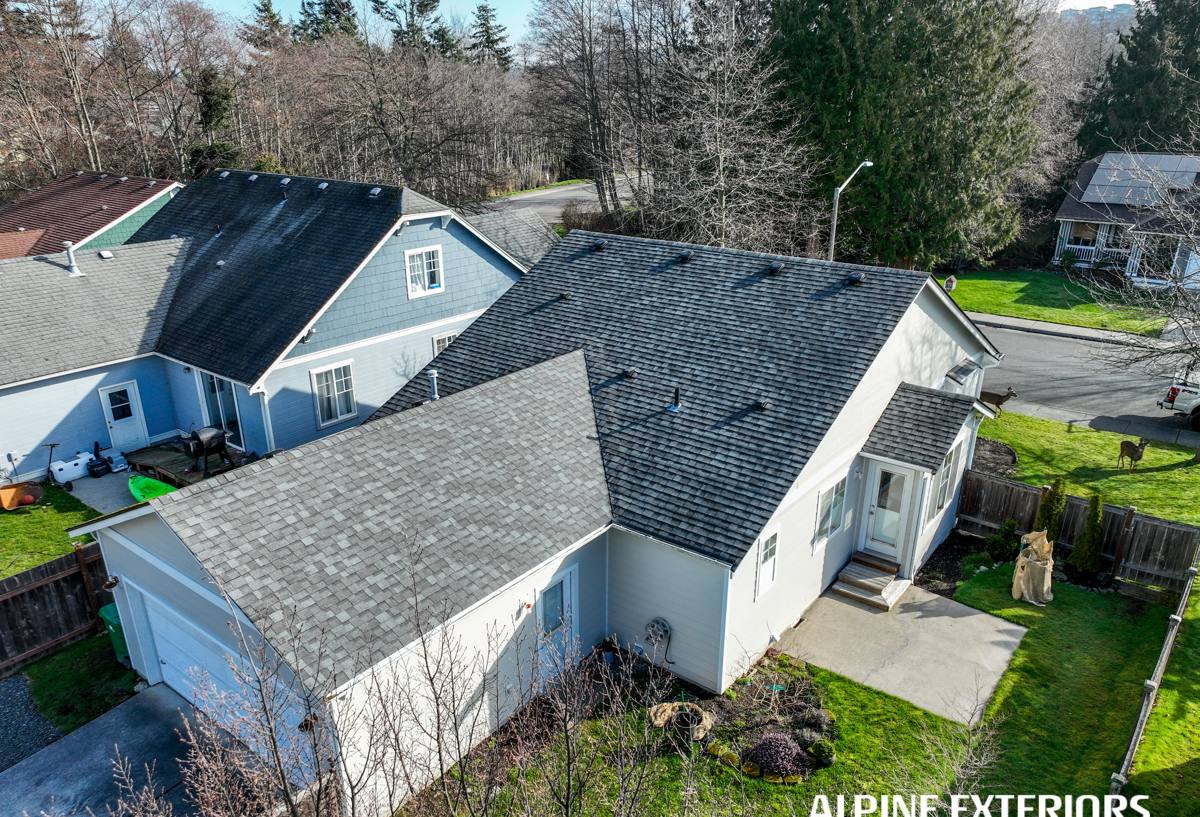
What the Bellingham Climate Actually Does to a House
Bellingham's exterior challenges aren't exotic, but they're persistent, and persistence is what wears siding out. A few things stand out for homes in and around this area:
Salt Air and Moisture
Homes closer to Bellingham Bay and the shoreline deal with airborne salt that settles on siding, trim, and fasteners. Over years, that salt exposure accelerates corrosion on lower-grade metal components and can contribute to premature breakdown of coatings that weren't engineered for a marine-influenced environment. It's a slow process, but it's constant, and it doesn't stop at the waterfront — salt air carries inland further than most homeowners expect.
Driving Rain
Rain here doesn't just fall — wind off the water and through the valleys often pushes it sideways into wall assemblies. That matters more than people think, because wind-driven rain finds gaps that vertical rain never reaches: lap joints, butt seams, trim intersections, and anywhere flashing was skipped or done wrong. A siding product's ability to shed and resist water at those seams is one of the biggest differences between products that last and products that fail early.
Moss and Organic Growth
Shade, moisture, and mild temperatures add up to a long moss and algae season on north- and east-facing walls, especially under tree cover, which is common throughout Bellingham's older, more established neighborhoods. Moss holds moisture against the siding surface far longer than open sun-exposed walls, and on materials that aren't dimensionally stable or properly sealed, that sustained dampness is where rot, swelling, and finish failure start.
Why We Only Install James Hardie Fiber Cement
We get asked fairly often why we don't offer vinyl, LP SmartSide, cedar, primed spruce, or other fiber cement brands like Cemplank or Allura. Every one of those products has legitimate uses and loyal customers elsewhere. Our decision isn't that they're bad products in a vacuum — it's that we've standardized on what performs most consistently in this specific climate, and we'd rather do one thing well than offer options we can't fully stand behind here.
Vinyl
Vinyl is affordable and low-maintenance in dry climates, but it expands and contracts with temperature swings, can warp or crack under long-term UV and moisture cycling, and its seams and J-channels give wind-driven rain more places to work its way behind the cladding. In a coastal, high-rain environment, that's a durability trade-off we're not willing to install and warranty.
LP SmartSide, Primed Spruce, and Cedar
These are wood-based or engineered-wood products, and wood's biggest vulnerability is moisture. Even with treated strand board or quality primer, sustained dampness — the kind moss and shaded walls create here — is exactly the condition that leads to swelling, delamination, and rot at cut edges and seams if maintenance ever slips. Cedar is a beautiful, genuine material, but it demands a maintenance schedule (staining, sealing, moss treatment) that most homeowners underestimate until the wood starts showing damage.
Other Fiber Cement Brands
Cemplank and Allura are also fiber cement, and fiber cement as a category is the right direction. Where we've drawn the line is the factory finish, the climate-specific product engineering, and the warranty backing. James Hardie's ColorPlus finish is baked on and cured at the factory under controlled conditions, which gives more consistent, longer-lasting color adhesion than field-applied paint. Hardie also engineers regional HZ5 product lines specifically for wetter, harsher climates like ours, and backs installations with a strong transferable warranty when installed to spec — which matters if you ever sell the house.
What Correct Hardie Installation Involves
Fiber cement siding is only as good as its installation. A huge share of siding failures we're called out to inspect — regardless of brand — trace back to installation shortcuts, not the material itself. For Bellingham's rain and salt exposure, we pay particular attention to:
- Proper weather-resistive barrier and rainscreen or drainage gap behind the siding so any moisture that gets in can dry out and drain away
- Correct flashing at every window, door, and roofline intersection — the most common place we find leaks on older homes
- Manufacturer-specified nailing patterns and fastener types rated for coastal exposure, to reduce corrosion and streaking over time
- Proper lap and butt joint sealing to resist wind-driven rain intrusion
- Factory-cut and field-cut edges sealed per Hardie's specifications, since raw cut edges are the most vulnerable point on any fiber cement board
- Adequate clearance between siding and grade, decks, roofs, and hardscape to prevent constant moisture wicking
None of this is unusual or proprietary — it's simply following the manufacturer's installation manual completely instead of partially, which is where a lot of shortcuts happen on rushed jobs.
Siding Product Comparison for This Climate
| Material | Moisture Behavior in Coastal Rain | Maintenance Burden | Typical Finish Longevity |
|---|---|---|---|
| James Hardie Fiber Cement | Dimensionally stable, engineered HZ lines for wet climates | Low — occasional wash | Long-lasting factory ColorPlus finish |
| Vinyl | Seams and channels vulnerable to wind-driven rain | Low, but limited repair options if damaged | Can fade, warp, or crack over time |
| LP SmartSide / Engineered Wood | Vulnerable at cut edges and seams if maintenance lapses | Moderate — requires vigilance on caulking/paint | Depends heavily on upkeep |
| Cedar | Absorbs moisture; needs consistent sealing | High — regular staining/sealing, moss treatment | Variable, maintenance-dependent |
| Other Fiber Cement Brands | Generally stable, similar category to Hardie | Low to moderate | Depends on finish system and warranty |
Roofing, Windows, and Decks in the Same Environment
Siding rarely fails in isolation — a leaking roof, a failed window seal, or a rotting deck ledger board all put moisture where it doesn't belong, and that moisture eventually shows up as a siding problem. Because we handle all four trades, we can look at a Bellingham home as one connected exterior system rather than patching siding while ignoring a roof valley that's been dumping water against a wall for years.
Roofing
Roof-to-wall flashing details are one of the most common leak points we find in this region. When we're already on a home for siding, we check those transitions rather than assuming someone else got them right.
Windows
Window flashing and sealing integrate directly with siding installation. Replacing siding around old, poorly flashed windows without addressing the windows themselves just reinstalls the same failure point behind new material.
Decks
Deck ledger connections against the house are a frequent source of hidden rot, especially where they meet siding that's been holding moisture from moss or poor drainage. We look at that intersection as part of any exterior job.
Why a Local Crew Matters
Exterior work in Whatcom County isn't generic. A crew that works this area regularly knows which neighborhoods deal with heavier wind exposure, which older homes tend to have outdated or missing flashing, and how long moss actually takes to become a real moisture problem versus a cosmetic one. That local knowledge shapes decisions on-site — where to add extra flashing attention, where drainage needs more consideration, and which details actually matter for a Bellingham house versus a generic installation manual.
Being local also means we're reachable after the job is done. If something needs a look five years down the road, we're not a crew that passed through once — we're working in this area continuously.
What to Expect From a Bellingham Siding Estimate
A thorough estimate isn't just measuring wall square footage. We look at the whole exterior picture:
- Current siding material and condition, including any signs of moisture damage, moss buildup, or rot at seams and edges
- Existing flashing at windows, doors, and roof intersections
- Drainage and grading around the foundation and any areas where water tends to sit against the house
- Sun and shade exposure on each elevation, since north-facing walls typically need different attention than south-facing ones
- Condition of trim, fascia, and any areas where roofing, windows, or decking intersect with the siding
From there, we put together a scope and cost range specific to the home, not a generic per-square-foot number that ignores the details that actually drive cost — tear-off condition, trim complexity, and repair work needed underneath.
Cost Factors to Understand Before You Budget
| Factor | Why It Affects Cost |
|---|---|
| Condition underneath existing siding | Hidden rot or damaged sheathing adds repair work before new siding goes on |
| Trim and architectural detail | More corners, gables, and window/door surrounds increase labor time |
| Home height and access | Multi-story homes or difficult access require more setup and safety measures |
| Flashing and moisture barrier upgrades | Bringing older homes up to current water-management standards is worth doing right, not skipping |
| Color and finish selection | Factory-finished ColorPlus boards versus field-painted options can shift material cost |
We'd rather walk a homeowner through these factors honestly upfront than surprise anyone mid-project. If a bid seems unusually low, it's worth asking exactly what's included — tear-off, disposal, flashing work, and trim are easy line items to quietly leave out.
If you're weighing a siding, roofing, window, or deck project on a Bellingham-area home, we're happy to take a look and put together a straightforward, no-pressure estimate. There's no obligation — just an honest assessment of what your home actually needs.