 Custer
 Why Decks in Everson Wear Out Faster Than You'd Expect
Everson sits in the part of Whatcom County that gets the full package: long stretches of driving rain from fall through spring, damp air pulled in off the Salish Sea, and a moss season that can run six months or longer on shaded, north-facing structures. A deck built with standard techniques and left to its own devices doesn't fail because the homeowner did anything wrong. It fails because it was never detailed for this specific climate in the first place.
Most decks we're asked to replace in this area aren't old in the way a deck in a dry climate would be old. They're often 12 to 18 years in, sometimes younger, and the damage is concentrated in a handful of predictable spots: the ledger board where the deck meets the house, the joist ends, the post bases, and any board that sits in shade most of the day. Salt-laden air moving in from Custer and the surrounding coastal lowlands accelerates corrosion on fasteners and hardware, which is often the real reason a deck starts to feel spongy or loose long before the visible decking looks bad.
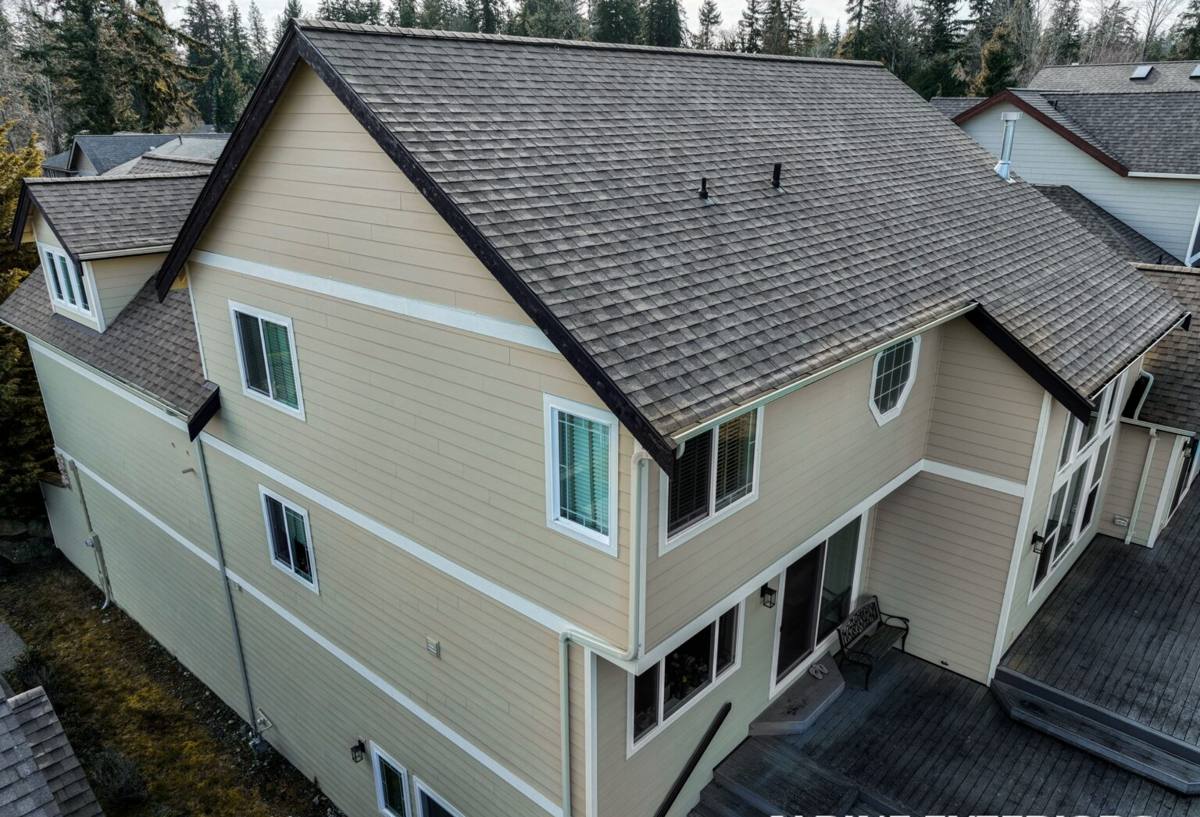
Signs a Deck Needs Replacement, Not Another Repair
Not every deck problem means starting over. But there's a point where patching individual boards is just delaying a bigger job and spending money that won't show up in the final result. Here's how we tell the difference when we're out looking at a deck in Everson or anywhere else in Whatcom County.
- Soft or spongy decking in more than one area, especially near the house or in shaded corners
- Rust streaking around fasteners, or fasteners that back out or spin freely
- Visible gap, staining, or soft wood where the ledger board meets the siding or foundation
- Posts that have shifted, footings that have heaved, or a railing that flexes more than it should
- Persistent moss or algae growth that comes back within weeks of cleaning
- Structural framing (joists, beams) showing rot, not just surface graying on the decking boards
If the problems are limited to the decking surface itself and the framing underneath is sound, a resurfacing or partial repair can make sense. Once the framing, ledger connection, or footings are compromised, replacement is the honest recommendation, and we'll tell you that directly rather than sell you a patch job that won't hold.
What a Correct Deck Replacement Actually Involves
A deck replacement is not just swapping old boards for new ones. The parts of the structure you never see are the parts that determine whether the deck lasts five years or twenty-five in this climate. We treat the substructure as the real project and the decking surface as the finish layer on top of it.
Ledger Board and Flashing
The connection between the deck and the house is the single most common failure point we find on older decks in this area, because it's the spot where water is most likely to get trapped against wood framing and siding. A correct install uses proper structural fasteners (not just nails), a code-compliant ledger flashing detail, and a moisture barrier between the ledger and the house rim joist. Skipping or shortcutting this step is the number one reason decks develop hidden rot behind a deck that still looks fine from the top.
Footings and Posts
Whatcom County's wet ground and freeze-thaw cycles put real stress on footings that weren't poured to the right depth or size. We size and place footings to current code requirements for the local soil and frost conditions, not to whatever was there before, and we use post bases that keep the wood post off the concrete so it isn't sitting in standing water after every storm.
Framing and Joists
Joist spacing, beam sizing, and joist hangers all get selected for the actual span and load of your deck, not copied from the old structure by default. Where the old framing was undersized or spaced too wide, that's exactly the kind of thing a "replace the boards, keep the frame" job would miss.
Decking Surface
This is the layer everyone sees, and where material choice matters most for how much upkeep the deck demands going forward.
Choosing a Decking Material for This Climate
There's no single right answer here — it depends on how much maintenance you want to take on and what look you're after. What we won't do is recommend a product based on what's cheapest to install rather than what holds up under the moss, moisture, and salt air this area sees every year.
| Material | Moisture Behavior | Maintenance | Typical Lifespan Here |
|---|---|---|---|
| Pressure-treated wood | Absorbs water; needs sealing to manage swelling and checking | Annual cleaning, re-sealing every 1-2 years | 10-15 years with upkeep |
| Cedar | Naturally rot-resistant but still absorbs moisture over time | Regular cleaning, periodic staining/sealing | 12-18 years with upkeep |
| Composite decking | Sheds water at the surface; some older composites can hold moisture at cut ends if not capped/sealed properly | Periodic washing to control moss/algae, no staining or sealing | 20-30 years, manufacturer-dependent |
| PVC/capped polymer | Fully water-resistant surface, doesn't absorb moisture | Occasional washing | 25+ years, manufacturer-dependent |
In a moss-prone, high-moisture area like Everson, composite and PVC products generally require less ongoing attention, but they cost more up front and installation quality still matters — hidden fasteners, proper gapping for drainage, and correct ventilation underneath all affect how the material actually performs, regardless of what the brochure says. Wood decks aren't a wrong choice, but we'll be direct that they need real annual maintenance in this climate to hit their expected lifespan, not just a coat of sealer whenever someone remembers.
Our Deck Replacement Process
- On-site assessment — We inspect the existing deck's framing, ledger connection, footings, and posts, not just the surface, so you know what's actually driving the need for replacement.
- Scope and material discussion — We walk through material options and their real maintenance trade-offs for your specific site (shade, exposure, drainage) before any decision gets locked in.
- Permit and code check — We confirm what Whatcom County requires for your deck's size, height, and attachment method before work starts.
- Demo and structural rebuild — Old decking, framing, ledger, and footings are removed or replaced as needed; nothing marginal gets buried under new boards.
- Decking installation — Surface material goes down with attention to fastener pattern, board gapping for drainage, and edge/end sealing where the material calls for it.
- Final walkthrough — We go over the finished deck with you, including what maintenance (if any) the material you chose will need going forward.
Permits and Whatcom County Code Considerations
Most deck replacements that involve structural changes — new footings, a different attachment to the house, or a change in height or size — require a permit through Whatcom County. This isn't paperwork for its own sake: it's the mechanism that makes sure footing depth, ledger attachment, and guard rail height actually meet code for our frost depth and load requirements. We handle the permit process as part of the job rather than leaving it for the homeowner to sort out, and we won't cut a corner here just to save a step, since a deck built outside of code can create real problems at resale or insurance time.
Cost Factors to Expect
Every deck is different, so we won't quote a number without seeing the site, but these are the variables that move the price up or down on most Everson projects:
| Factor | Effect on Cost |
|---|---|
| Deck size and shape (multiple levels, angles, curves) | Larger and more complex layouts increase framing and labor time |
| Decking material selected | Wood costs less upfront; composite and PVC cost more but need less upkeep over time |
| Height above grade | Taller decks need more substantial framing, footings, and guard rail work |
| Condition of existing footings/posts | Reusable footings lower cost; footings that need replacement add to it |
| Railing style and material | Custom or metal/cable railings cost more than standard wood balusters |
| Site access | Decks with difficult equipment or material access can add labor time |
Maintenance Checklist for Everson Homeowners
Whatever material you choose, a few habits make a real difference in how long a deck lasts in this climate:
- Clean moss and algae off the surface at least once a year, more often on shaded decks
- Keep gutters and downspouts clear so water isn't dumping directly onto or near the deck
- Check the ledger area and any spot where the deck meets the house for staining or soft wood
- Reseal wood decking on the schedule the product actually requires, not "whenever it looks dry"
- Keep planters and rugs from sitting in one spot for long periods, since trapped moisture underneath accelerates wear
- Inspect fasteners and hardware yearly for rust or loosening, especially on older wood decks
Why Hiring a Crew That Already Works Everson Matters
A deck replacement done by a crew that hasn't worked much in Whatcom County can look fine on day one and still be built for the wrong climate — decking gapped too tight for our rain volume, a ledger flashing detail that works in a drier region but not here, or a material recommendation based on price rather than how it actually performs under a Custer-area moss season. Working regularly in this area means we've already seen which details matter and which shortcuts show up as problems two winters later, not two weeks later.
It also means we're not guessing at permit requirements or code specifics for the county — we already know the process because we go through it regularly, which keeps your project from stalling on paperwork.
If your deck in Everson is showing soft spots, loose railings, or just isn't holding up the way it should, we're happy to take a look and give you a straight answer about repair versus replacement. Reach out for a free, no-pressure estimate using the form below.