 Custer
 Siding Built for Nooksack's Whatcom County Weather
Nooksack sits in the flat, river-fed lowlands of Whatcom County, close enough to the Salish Sea and the Nooksack River corridor that homes here deal with a steady diet of moisture almost year-round. Winters bring long stretches of driving rain pushed in off the water, spring and fall add fog and dew that linger on north-facing walls, and the humidity rarely lets up long enough for exterior surfaces to fully dry out. That combination is exactly what shortens the life of the wrong siding material and exactly what James Hardie fiber cement siding was engineered to handle.
We're a local crew that works this stretch of Whatcom County — Custer, Nooksack, and the small communities in between — so we see the same handful of failure patterns on homes here over and over. Understanding those patterns is the whole reason we standardized on one siding product instead of offering the full menu of options a big-box contractor might pitch.
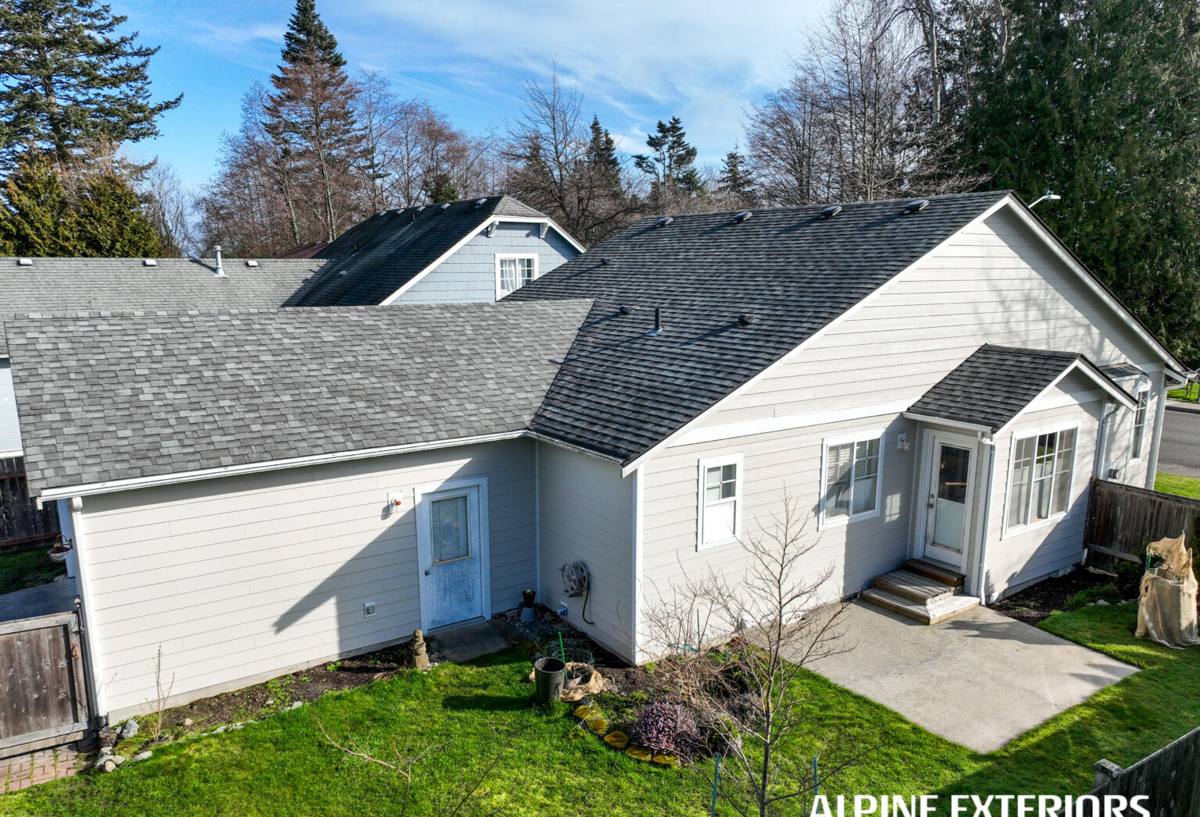
What Nooksack's Climate Actually Does to a House
Driving Rain and Wind-Driven Moisture
Rain in this part of Whatcom County doesn't just fall straight down — wind off the water and open farmland pushes it sideways into wall assemblies, especially on the west and south exposures of a home. Over years, that wind-driven rain finds every seam, nail hole, and butt joint in a siding system that wasn't detailed correctly. Water that gets behind siding and can't escape is the single biggest cause of rot, mold, and structural damage in homes throughout this region.
Salt Air and Corrosion
Whatcom County's proximity to the Salish Sea means a low but constant background level of salt-laden air moving inland, even on properties that aren't waterfront. Salt air accelerates corrosion of fasteners, trim, and any siding material with metal components or a finish that isn't formulated to resist it. It also speeds up the breakdown of paint films, which is part of why site-painted wood and some composite sidings need repainting far sooner here than manufacturers' national averages suggest.
Moss, Algae, and the Long Wet Season
Because the region rarely gets a long, dry, sun-baked stretch, moss and algae get a real foothold on north-facing walls, under eaves, and anywhere shade keeps a surface damp for days at a time. On porous or absorbent siding materials, that green film isn't just cosmetic — it holds moisture against the substrate and can accelerate rot underneath. On a dense, factory-finished material, it's mostly a surface issue that rinses off.
Why We Only Install James Hardie Fiber Cement
We get asked fairly often why we don't offer vinyl, LP SmartSide, cedar, or other fiber cement brands. The honest answer is that we've made a professional judgment call: in this climate, one product consistently holds up with the least maintenance and the fewest callbacks, and that's James Hardie.
Non-Combustible and Dimensionally Stable
James Hardie siding is fiber cement — a mix of cement, sand, and cellulose fibers — which makes it non-combustible and far more dimensionally stable than wood-based products. It doesn't swell, cup, or delaminate the way engineered wood siding can when it takes on repeated moisture cycles, which matters a great deal in a climate that almost never gives a house a long dry break.
Climate-Engineered Product Lines (HZ System)
Hardie manufactures different formulations for different climate zones through its HZ5 and HZ10 engineering. The versions specified for the Pacific Northwest are formulated for moisture resistance and freeze-thaw performance appropriate to our winters, rather than a one-size-fits-all product shipped nationwide.
ColorPlus Factory Finish
Rather than relying on site-applied paint, most Hardie installations we do use the ColorPlus factory finish — a baked-on finish applied under controlled conditions with better adhesion and UV resistance than field painting can achieve. In an area with salt air and constant humidity, that factory finish is a meaningful advantage: it resists fading and peeling far longer than paint applied on-site in variable weather, and touch-up product is available so small nicks don't require a full repaint.
Warranty Backing
James Hardie backs its siding with a strong, transferable limited warranty and the ColorPlus finish carries its own separate finish warranty. That matters to homeowners in Nooksack who may sell within a decade or two — a transferable warranty is a real selling point, not just paperwork.
How Hardie Compares to the Alternatives We Don't Install
| Material | Moisture Behavior in Wet Climates | Typical Maintenance | Why We Pass on It |
|---|---|---|---|
| Vinyl siding | Doesn't absorb water itself, but seams and panels can allow moisture behind the cladding; can warp in heat and become brittle in cold | Low, but panels can crack, fade, and are hard to color-match after impact damage | Appearance and impact resistance fall short of what we want to stand behind long-term |
| LP SmartSide | Engineered wood strand product; performs reasonably when installed and maintained to spec, but is more sensitive to moisture intrusion than fiber cement | Requires diligent caulking and paint upkeep, especially at cut edges and seams | Installation sensitivity is higher, and any lapse in detailing shows up faster in this rainfall |
| Cedar / primed spruce | Natural wood; absorbs and releases moisture constantly, which drives expansion, checking, and eventual rot | Highest — regular repainting or staining, sealing cut ends, ongoing inspection | Long-term maintenance burden is the highest of any common option in a climate this wet |
| James Hardie fiber cement | Dense, engineered for moisture resistance; factory finish sheds water and resists the freeze-thaw and salt-air cycle | Low — periodic rinsing, occasional caulk check at penetrations | What we install on every siding job |
This isn't a claim that other products are junk — plenty of them perform fine when installed and maintained perfectly, everywhere, forever. It's a statement about real-world outcomes in a climate that doesn't offer much margin for a missed maintenance cycle or a slightly loose installation detail.
A Full Exterior Approach, Not Just Siding
Siding doesn't work in isolation — it's one part of a building envelope that also includes the roof, windows, and any attached structures like decks. We handle all four because they interact directly with each other on every home we work on.
- Roofing: A roof in poor condition sheds water onto siding and trim in ways that accelerate wear, especially at eaves and valleys that drain onto wall sections below.
- Windows: Window flashing and siding integration is one of the most common places we find water intrusion on older homes — the two trades have to be coordinated, not treated as separate jobs.
- Decks: Ledger boards and deck-to-wall connections are another frequent point where moisture gets behind siding if not flashed correctly during construction or a resale.
- Siding: Ties it all together as the primary weather barrier for the wall assembly itself.
When we look at a home in Nooksack, we're evaluating the whole envelope, not just quoting a siding swap in isolation.
Why a Local Crew Matters Here
Whatcom County's microclimates vary more than people expect over short distances — a property near the Nooksack River floodplain, one tucked against tree cover, and one out in open farmland can each need slightly different attention to drainage planes, ventilation, and flashing details. A crew that works this specific area regularly develops a feel for which details actually matter here versus generic installation instructions written for a national audience. That local pattern recognition is part of what a homeowner is paying for when they hire a contractor who's based in the region rather than a traveling crew passing through for one job.
What Drives Cost on a Siding Project
| Factor | Why It Matters |
|---|---|
| Home size and wall complexity | More corners, dormers, and cutouts mean more cutting, fitting, and flashing labor |
| Existing siding removal | Tear-off and disposal of old material adds labor and hauling costs versus a bare or already-stripped wall |
| Underlying sheathing condition | Rot or damage found once old siding comes off may need repair before new siding goes on |
| Product line and finish | Hardie's various plank profiles, textures, and ColorPlus color options carry different material costs |
| Trim and accessory work | Corner boards, window trim, and fascia detailing add scope beyond flat wall panels |
| Access and site conditions | Multi-story sections, tight lot lines, or difficult staging areas affect labor time |
We give straightforward, itemized estimates so homeowners can see exactly where the cost is going rather than a single lump-sum number.
Maintaining Hardie Siding in a Wet Climate
One of the appeals of fiber cement is how little upkeep it asks for compared to wood or engineered wood products, but "low-maintenance" isn't "zero-maintenance." A simple seasonal routine keeps it performing the way it's designed to:
- Rinse the exterior periodically with a garden hose to keep moss and algae from building up on shaded, north-facing walls.
- Walk the exterior once a year and check caulking around windows, doors, and any penetrations for cracking or gaps.
- Keep gutters clear so overflow doesn't run down wall sections and saturate siding at the top edge.
- Trim back vegetation and tree branches that hold moisture against the wall or restrict airflow.
- Touch up any chips or scrapes with matching ColorPlus touch-up product before bare fiber cement is exposed to weather for long periods.
If you're weighing a siding, roofing, window, or deck project on a home in Nooksack, we're glad to walk the property with you and talk through what we're seeing and what it would take to address it — no pressure, no obligation. Use the form below to request a free estimate.