 Custer
 Exterior Work for Sumas Homes
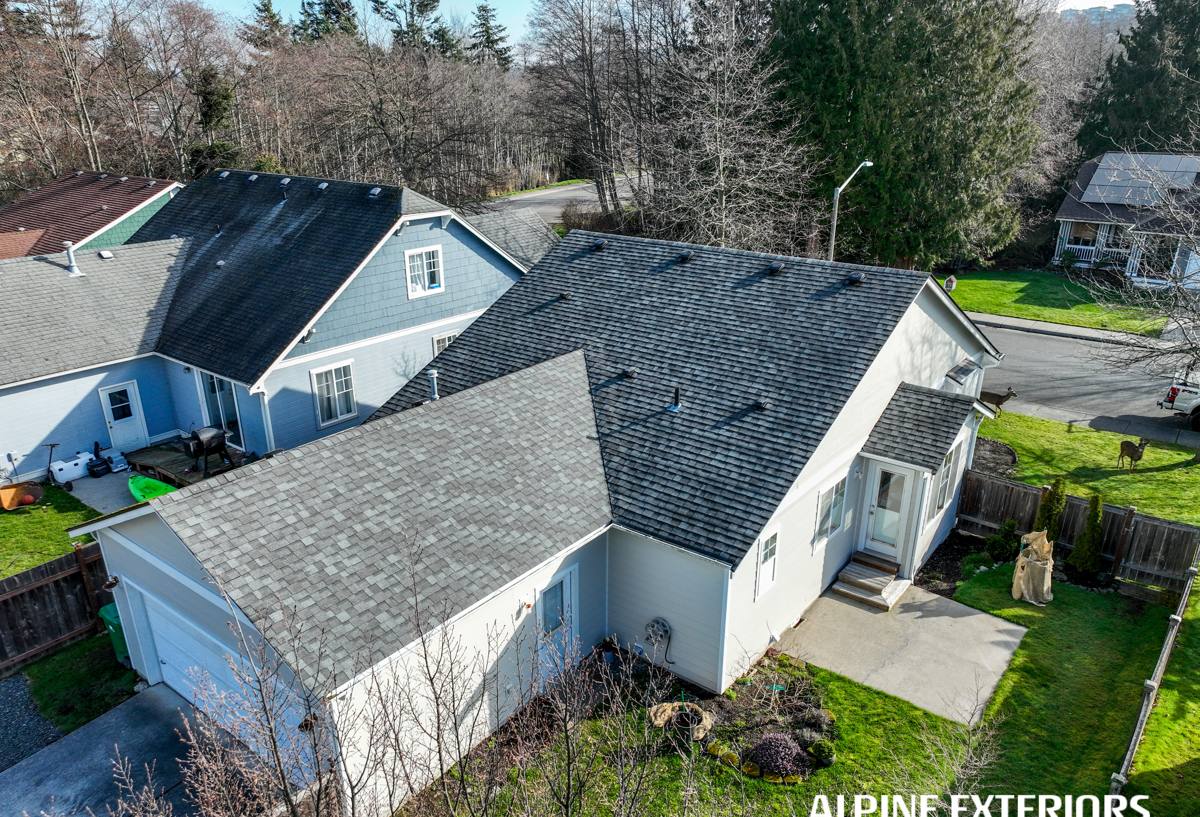
Sumas sits at the edge of Whatcom County, close enough to the Nooksack floodplain and the foothills that its homes deal with a specific combination of weather stress: long stretches of wet, gray weather in fall and winter, humidity that never fully lets up, and enough cold snaps most years to put real freeze-thaw pressure on exterior materials. Add in the region's driving rain — wind-blown rather than straight-down — and you have conditions that test siding, roofing, windows, and trim in ways that drier parts of the state simply don't experience.
We're a local crew that works across Whatcom County, and Sumas is part of our regular service area. That matters more than it sounds like it should. Exterior materials that get specified for a subdivision in Spokane or Boise don't always hold up the same way here, and installation details that are optional in a dry climate are not optional in ours.
What the Local Climate Does to a House
Homeowners in Sumas usually don't think about their siding until something goes wrong — a soft spot near a window, dark streaking that won't wash off, or moss creeping up from the ground line. Those are the visible symptoms of a longer process:
- Extended dampness. Wood-based products (cedar, primed spruce, and even engineered wood siding like LP SmartSide) stay wet longer here than manufacturers' test conditions often assume, which accelerates swelling, delamination, and rot at joints and cut edges.
- Moss and organic growth. Shaded north-facing walls and roof valleys stay damp for weeks at a time during our wet season, giving moss and algae a long runway to establish themselves on porous or textured surfaces.
- Freeze-thaw cycling. It doesn't need to get brutally cold — just cold enough, often enough, that trapped moisture in a wall assembly expands and contracts, working at caulk joints, fastener holes, and seams over years.
- Driving, wind-blown rain. Rain that hits siding at an angle finds its way into laps, gaps, and poorly flashed penetrations that would stay dry in calmer climates.
None of this means a house in Sumas is doomed to problems — it means the materials and installation details have to be chosen with this specific climate in mind, not a national average.
Why We Standardized on One Siding Product
We install James Hardie fiber cement siding exclusively. We don't offer vinyl, LP SmartSide, Cemplank, Allura, primed spruce, or cedar as options — not because those products have no merit, but because after years of exterior work in this climate, we don't think they hold up as consistently as fiber cement does, and we'd rather stand behind one product we trust completely than offer several with different failure points.
The honest trade-offs with the alternatives
Vinyl siding is affordable and low-maintenance in mild climates, but it's prone to cracking in a hard freeze, can warp under sustained heat reflection, and its seams and J-channels give wind-driven rain more opportunities to get behind the cladding. Engineered wood products like LP SmartSide perform well when detailing and caulking are kept up religiously, but they're wood at their core — any breach in the factory coating exposes the substrate to the same swelling and rot risk as traditional wood siding, just with an extra step of denial before it shows. Cedar and primed spruce are attractive and traditional, but they demand a maintenance schedule — repainting, caulk inspection, moisture monitoring — that most homeowners underestimate until the wood has already started to suffer.
James Hardie fiber cement is non-combustible, dimensionally stable across our freeze-thaw swings, and doesn't feed moss or rot the way wood-based products can. Its ColorPlus factory finish is baked on and warranted against fading and peeling, which matters in a climate where a house sits under moisture and low light for months at a time. That's a real, honest reason to standardize on it — not a knock on every other product, just where we've landed after doing this work in this specific climate.
Full Exterior Envelope: Siding, Roofing, Windows, Decks
Siding is only one piece of how a house sheds water. We also handle roofing, windows, and decks, because those systems interact directly with siding at every transition point — flashing, trim, and fastening details have to work together or water finds the gap.
Roofing
A roof in poor condition sends water down behind fascia and siding long before a homeowner sees a leak inside. When we're on a Sumas property for siding work, we look at roof condition, flashing, and gutter function as part of the same conversation — not a separate sales pitch.
Windows
Window flashing and integration with the siding plane is one of the most common failure points we see on older homes. Reworking siding is often the right time to correct window flashing details that were never done properly the first time.
Decks
Decks attached to the house share the same moisture exposure as the wall behind them, and a poorly flashed ledger board is a common source of hidden rot. We build and repair decks with the same attention to water management we apply to siding and roofing.
What Correct Installation Actually Involves
James Hardie siding performs to its rated lifespan only when it's installed to the manufacturer's specifications — and a surprising number of failures attributed to "bad siding" are actually installation shortcuts. Correct installation in our climate includes:
- Proper rain-screen or drainage gap behind the siding so incidental moisture can drain and dry
- Correct fastener placement and spacing per Hardie's engineering specs, not shortcuts to save labor time
- Factory-cut and pre-primed edges wherever possible, with field cuts sealed per spec
- Flashing integration at every window, door, and penetration — not just caulk as a substitute
- Proper clearance from grade, decks, and roof lines to avoid wicking moisture from the ground or splashback
This is where a local, experienced crew matters more than the brand name on the product. Hardie siding installed without these details will still develop problems in our climate — the material is only as good as the install.
Cost Factors to Understand
Every property is different, but the factors that drive cost on a Sumas exterior project are fairly consistent. This isn't a quote — it's a guide to what typically moves the number up or down.
| Factor | Why It Matters |
|---|---|
| Existing siding removal | Tear-off of old wood, vinyl, or damaged material adds labor and disposal cost versus a clean substrate |
| Underlying sheathing condition | Rot or moisture damage found once old siding comes off often needs repair before new siding goes on |
| Home size and wall complexity | More corners, gables, and trim details mean more cutting, fitting, and labor time |
| Hardie product line selected | Lap siding, panel systems, and shingle-style profiles differ in material and installation cost |
| Window and door count | Each opening requires flashing and trim work that adds time regardless of siding type |
| Site access | Steep grades, tight lot lines, or limited staging space can affect scaffolding and logistics |
Why a Local Crew Matters in Sumas
Whatcom County's weather isn't uniform — conditions near the border and foothills can differ from what a crew based farther south or in a drier region is used to working around. A local crew knows which details can't be skipped here: drainage planes, flashing sequences, and material choices that hold up specifically to this area's damp, moss-prone, freeze-thaw climate. We're not learning this region on your project — it's the region we work in every week.
A quick homeowner checklist before hiring anyone for exterior work
- Ask what siding products they install and why — and what they don't install
- Confirm they carry proper licensing and insurance for Washington state work
- Ask how they handle flashing at windows, doors, and roof transitions
- Get specifics on warranty coverage — both the manufacturer's and the installer's workmanship warranty
- Ask whether they inspect roofing and windows as part of a siding project, not as an upsell
Moss, Maintenance, and What to Watch For
Even with the right siding installed correctly, a bit of homeowner awareness goes a long way in this climate. Keep gutters clear so overflow doesn't run down the wall face. Trim back vegetation that keeps a wall shaded and damp longer than it needs to be. Rinse siding periodically to discourage moss and algae buildup, especially on north- and west-facing walls that see less direct sun. And if you notice dark streaking, soft spots, or gaps opening at trim joints, get it looked at before the next wet season sets in rather than after.
If you're weighing a siding, roofing, window, or deck project on a Sumas property, we're glad to take a look and talk through what your home actually needs — no pressure, no generic sales script. Reach out for a free estimate using the form below.