 Custer
 Blaine's Climate Is Harder on a House Than It Looks
Blaine sits right where the Salish Sea meets Whatcom County's border country, and that location shapes everything about how a house ages here. Homes near Semiahmoo Bay and Drayton Harbor deal with a steady mix of salt-laden air, wind-driven rain off the water, and a wet season that can stretch from October well into spring. None of that is dramatic on any given day. It's the accumulation that gets a house — siding, trim, and roofing that look fine in July and start showing their age by the following winter.
We're based in Custer, just up the road, and we've built our business around exterior materials that are engineered to handle exactly this kind of environment rather than just tolerate it for a few years.
What Salt Air Actually Does to Exterior Materials
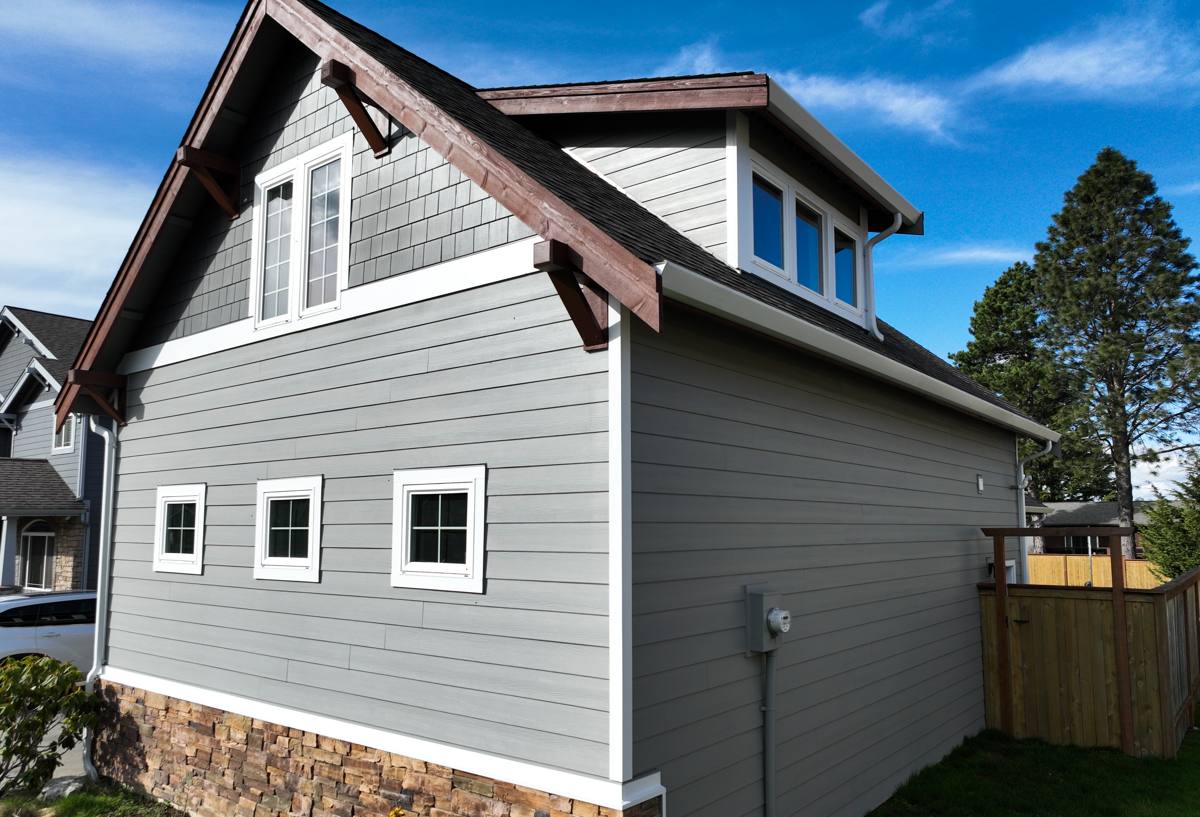
Coastal air carries fine salt particles that settle on every exposed surface of a house. On siding, that salt film holds moisture against the surface longer than it would inland, which accelerates two things: corrosion of exposed metal fasteners and trim, and breakdown of paint and coatings that aren't formulated for it. Wood-based siding products are particularly vulnerable — salt exposure speeds up the cycle of swelling, cracking, and paint failure that already happens with normal moisture.
This is a big part of why we don't install everything on the market. Products that perform reasonably well forty miles inland can struggle on a bluff-facing or bay-facing home in Blaine. We'd rather steer homeowners toward materials that are proven in this exact kind of exposure than sell something that needs repainting or partial replacement in under a decade.
Driving Rain and Wind-Loaded Walls
Blaine also catches wind off the water, which turns ordinary rain into wind-driven rain that hits siding at an angle instead of running straight down. That matters for how a siding system is detailed — flashing, joints, and butt seams have to be installed with more margin for water intrusion than a calmer, more sheltered site would need. It's less about the material alone and more about installation discipline, which is where a lot of siding jobs quietly fail even when the product itself is a good one.
The Long Moss Season
Whatcom County's wet, mild winters are close to ideal growing conditions for moss and algae, and north-facing or shaded wall sections in Blaine can stay damp for weeks at a stretch. Moss holds moisture against a surface, and over time that constant dampness is what actually causes rot and paint failure — the moss itself is more of a symptom than the root cause.
- Check north- and west-facing walls, and anywhere shaded by trees or fencing, for green or black staining
- Look at the bottom few inches of siding near grade, where splash-back keeps material wet longer
- Inspect around window and door trim for soft spots, bubbling paint, or gaps in caulking
- Look for streaking below gutters and downspout joints, which often signals a drainage problem before it becomes a siding problem
- Note any siding boards that feel spongy or look swollen compared to the boards around them
None of this means moss is unavoidable — it means the wall assembly and material need to be able to shed and dry out faster than the moss can take hold.
Why We Install Only James Hardie Fiber Cement
We standardized on James Hardie for every siding job we do, including in Blaine, because it's a non-combustible fiber cement product engineered specifically for climate zones like ours. Hardie's HZ5 product line is formulated for the kind of freeze-thaw and moisture-heavy Pacific Northwest exposure Blaine gets, and the factory-applied ColorPlus finish is baked on under controlled conditions rather than field-painted, which matters a lot in a place where field-painted coatings take a beating from salt air and constant moisture.
We don't install LP SmartSide, vinyl siding, Cemplank, Allura, primed spruce, or cedar. That's not a knock on every homeowner who has one of those products already — plenty of them hold up fine with regular maintenance. It's that we've made siding installation our full-time trade, and fiber cement from Hardie is what we're willing to put our name behind for the coastal, high-moisture conditions this area sees year-round. Wood products need more frequent repainting and are more prone to moisture-driven rot near grade and at joints. Vinyl can warp or become brittle with UV and temperature swings, and it doesn't hold color pigment the way a factory finish does over the long run. Fiber cement from other manufacturers may be a reasonable product, but we've chosen to specialize in one system so our crews install it correctly every time, rather than splitting expertise across several product lines.
What "Climate-Engineered" Actually Means
James Hardie makes region-specific formulations — HZ5 for areas with more freeze-thaw cycling, HZ10 for hot, humid climates, and so on — because fiber cement's moisture and expansion behavior isn't identical everywhere. Installing the version engineered for our climate zone, with the flashing and clearances Hardie specifies, is what makes the difference between siding that holds up for decades and siding that fails early despite being a good product on paper.
Roofing, Windows, and Decks Face the Same Conditions
Siding doesn't fail in isolation — a roof that's shedding granules or a deck that's holding water will send moisture into wall assemblies and undercut even well-installed siding. We handle roofing, windows, and decks alongside siding for that reason. A roof inspection often turns up the source of a staining or leak pattern that looks like a siding problem at first glance. Aging windows with failed seals let moisture track down into wall cavities behind otherwise sound siding. And a deck built without enough separation from the house can trap moisture right where the wall meets the ledger board — a common trouble spot in wet coastal climates.
Looking at the whole exterior together, rather than treating siding as a standalone project, is standard practice for us — not an upsell.
Why a Local Crew Matters in Blaine
We're a short drive from Blaine, and that proximity is more than convenience. Crews who work this specific stretch of Whatcom County regularly understand how a bay-facing wall behaves differently than a sheltered one two streets back, know which details need extra attention on homes exposed to wind off the water, and can be back on-site quickly if a warranty question comes up. A contractor unfamiliar with the coastal border-area conditions here is more likely to under-detail flashing or underestimate how much a north wall stays wet through winter.
What a Siding Estimate Looks Like
Every Blaine home is different depending on how exposed it is to wind and salt air, how much shade and moss pressure it faces, and its current siding condition. Our estimates walk through the whole exterior, not just the parts that are obviously failing, because problems in one area — a leaking gutter, a failed window seal — often explain damage somewhere else on the wall.
Cost Factors for a Siding Project
| Factor | Why It Matters in Blaine |
|---|---|
| Wall exposure (bay-facing vs. sheltered) | Determines flashing detail and how conservative the install needs to be against wind-driven rain |
| Existing moisture or rot damage | Wet coastal climates often mean sheathing repair is needed before new siding goes on |
| Home size and complexity | More corners, trim, and window openings mean more joints that need to be detailed correctly |
| Siding profile and finish choice | Lap width and ColorPlus color selection affect material cost within the Hardie product line |
| Trim and accessory work | Fascia, soffit, and trim replacement often gets bundled in for a consistent, weathertight result |
Signs It's Time to Have Your Siding Looked At
- Paint that's peeling, bubbling, or chalking faster than it used to
- Visible warping, cupping, or swelling in siding boards
- Persistent moss or algae growth that comes back soon after cleaning
- Soft or spongy spots when you press on siding near the bottom of walls
- Rising energy bills that might point to gaps letting in drafts and moisture
- Visible gaps or cracking caulk around windows and trim
Catching these early is almost always cheaper than waiting until sheathing or framing is affected.
Get an Honest Look at Your Home
If you're in Blaine and dealing with siding that's showing its age, or you're planning ahead before the next wet season sets in, we're glad to come take a look. There's no pressure and no obligation — just a straightforward walk-around of your home's exterior and honest answers about what condition it's in and what your options are. Use the form below to request a free estimate.