 Custer
 Why Birch Bay Roofs Wear Differently
Birch Bay sits right on the water, which means every roof out here is doing a harder job than a roof twenty miles inland. Salt-laden air corrodes exposed metal faster than it should, wind off the Strait of Georgia drives rain sideways under loose or aging flashing, and the mild, wet Whatcom County winters keep moss and moisture active for most of the year instead of just a few soggy months. None of that is dramatic on its own, but stacked together over ten or fifteen years, it's why roofs in Birch Bay often show granule loss, moss growth, and flashing failure earlier than the same shingle would in a drier climate.
A roof replacement here isn't just "put new shingles on top of the old ones." It's an opportunity to fix the details that actually determine whether the next roof lasts fifteen years or thirty — the underlayment, the flashing at every penetration, the ventilation, and the material choice itself. That's the lens we bring to every Birch Bay roof.
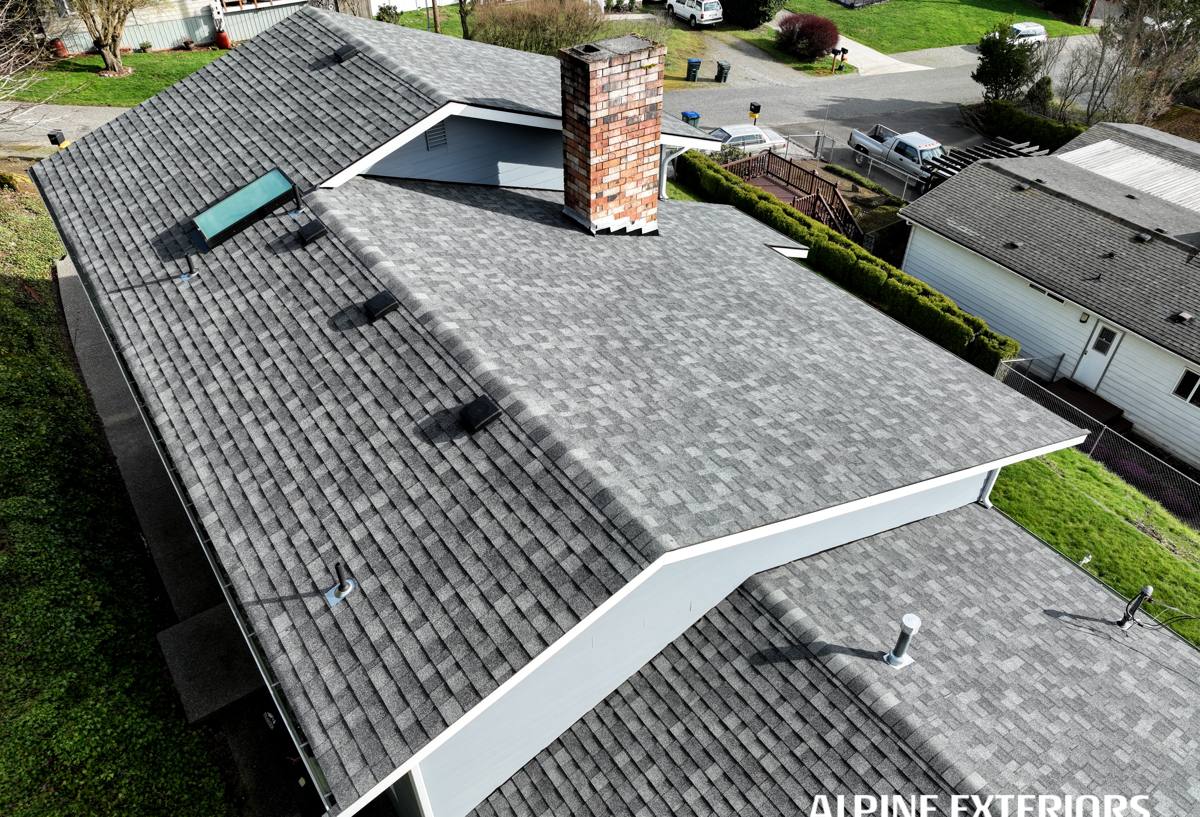
Signs a Birch Bay Roof Needs Replacement, Not Just a Repair
Plenty of roofs get patched when they should have been replaced, and a few get replaced when a repair would have done the job. The honest answer depends on age, condition, and how widespread the damage is. Here's what generally tips the scale toward full replacement:
- Shingles are curling, cupping, or losing granules across large sections of the roof, not just one spot
- The roof is original to a home built more than 20-25 years ago, even if it "looks okay" from the ground
- You've had two or more leak repairs in different areas within a few years
- Moss has been established long enough that it's lifting shingle edges, not just staining the surface
- Daylight is visible through the roof deck from the attic, or the decking feels soft underfoot
- Flashing around chimneys, vents, or skylights is rusted, cracked, or was never properly step-flashed to begin with
If a roof is showing one or two of these in isolation, a targeted repair is often the honest recommendation. When several show up together, patching becomes a short-term fix on a roof that's already telling you it's done.
What a Correct Roof Replacement Involves Here
Tear-Off and Deck Inspection
We don't install a new roof over a failing one. A full tear-off lets us actually see the decking, which is where hidden problems from moisture intrusion usually show up first. Soft or delaminated plywood gets replaced before anything new goes down — installing new roofing over a compromised deck just guarantees a shorter lifespan and a harder repair later.
Underlayment and Ice-and-Water Protection
This is the layer most homeowners never think about, and it's arguably the most important one in a climate like ours. A synthetic underlayment across the whole roof, with self-adhering ice-and-water shield at eaves, valleys, and around every penetration, is what actually keeps wind-driven rain from getting under the shingles during a winter storm. Skipping or skimping on this layer is the single most common reason a "new" roof still leaks.
Flashing Done Right
Flashing failure is behind more leaks than shingle failure. Every chimney, skylight, vent pipe, and wall intersection needs properly layered, corrosion-resistant flashing — not just a bead of sealant over the old metal. In a salt-air environment, the quality of the metal and how it's installed matters more than it would a few miles inland.
Ventilation
A roof deck that can't breathe traps moisture, which shortens shingle life from underneath and can lead to rot you won't see until it's advanced. Balanced intake and exhaust ventilation is part of a correct replacement, not an upsell.
Material Options for Birch Bay Homes
There's no single "best" roofing material — the right choice depends on your home's exposure, roof pitch, budget, and how long you plan to stay in the house. Here's how the common options stack up for a coastal Whatcom County property:
| Material | Salt-Air Durability | Moss Resistance | Maintenance |
|---|---|---|---|
| Architectural asphalt shingle | Good with quality flashing | Moderate — benefits from algae-resistant granules | Periodic moss treatment and gutter clearing |
| Standing seam metal | Very good with coated/coastal-rated panels | High — sheds moss more easily than textured surfaces | Low, but fasteners and coatings need occasional inspection |
| Cedar shake | Fair — needs regular treatment near salt air | Low without diligent upkeep | High — this is why we generally steer clients away from it here |
| Composite/synthetic shake | Good | Moderate to good | Low to moderate |
We're upfront that we don't push cedar shake for homes this close to the water. It's a beautiful material in the right setting, but the combination of salt exposure and near-constant moss pressure means it demands a maintenance schedule most homeowners don't want to keep up with, and the warranty terms on cedar reflect that reality. Architectural asphalt with algae-resistant granules or a coastal-rated metal panel gives you a longer, lower-maintenance service life for the same style of home.
Cost Factors on a Birch Bay Roof
We don't quote prices without seeing the roof, but these are the main things that move the number up or down, and it's worth understanding them before you get estimates:
| Factor | Impact on Cost | Why |
|---|---|---|
| Material choice | High | Metal and composite shakes cost more upfront than asphalt but often last longer |
| Roof pitch and access | Medium-High | Steeper roofs and difficult site access take longer and require more safety setup |
| Number of existing layers | Medium | Multiple old layers mean more tear-off labor and disposal |
| Deck condition | Variable | Rotten or soft decking found during tear-off adds material and labor |
| Roof complexity | Medium | Valleys, dormers, chimneys, and skylights each add flashing work |
Anyone quoting a firm number sight-unseen is guessing. A proper estimate involves getting on the roof and, where possible, checking the deck condition before finalizing a price.
Our Replacement Process
- On-site inspection. We walk the roof, check the attic for ventilation and moisture issues, and look at flashing points and problem areas up close.
- Written estimate. You get a clear scope of work and pricing — what's included, what materials, and what happens if we find deck damage during tear-off.
- Material selection. We talk through options based on your home's exposure and your budget, not just what's easiest to install.
- Tear-off and deck repair. Old roofing comes off, decking gets inspected and repaired as needed, and the site is protected throughout.
- Underlayment, flashing, and ventilation. This is where the long-term performance of the roof is actually decided.
- Final install and cleanup. New roofing goes on to manufacturer specs, and the property is cleaned up, including a magnetic sweep for nails.
- Walkthrough. We show you the finished work and go over care and warranty details before we consider the job done.
Moss and Long-Term Care in a Wet Marine Climate
Even a well-installed roof needs some ongoing attention in Birch Bay's climate. Moss doesn't just look bad — left alone, it holds moisture against the shingle surface and works its way under the edges over time, which is how a cosmetic issue becomes a leak. Keeping trees trimmed back for sunlight and airflow, clearing gutters and valleys of debris before the fall rains, and treating moss before it gets established all extend the life of any roof out here, regardless of material. We're happy to talk through a simple maintenance routine as part of any replacement, since a roof that's cared for reaches its full warranty life; one that's ignored usually doesn't.
Why a Crew That Already Works Birch Bay Matters
Roofing crews that mostly work inland don't always account for how much harder salt air and driving rain are on flashing, fasteners, and material choice. Working this stretch of Whatcom County coastline regularly means knowing which details actually hold up here — which flashing metals resist corrosion, where wind-driven rain tends to find weak points, and which materials handle the moss season without turning into a maintenance chore. That local pattern-recognition is the difference between a roof that's technically installed to code and one that's actually built for this specific stretch of coastline.
What to Check Before Hiring Anyone
Whoever you hire for a roof replacement, a few basics protect you regardless of who does the work:
- Current WA state contractor registration and proof of liability insurance
- A written estimate that specifies materials, underlayment type, and flashing approach — not just "new roof, $X"
- Clear terms on what happens if deck damage is found during tear-off
- A manufacturer warranty on materials and a separate workmanship warranty from the installer
- References or examples of similar work in coastal or high-moisture areas
If a roof replacement is on your radar for your Birch Bay home, we're glad to come take a look and give you a straight assessment — whether that means a full replacement or, honestly, a repair that buys you more time. Reach out below for a free, no-pressure estimate.