 Custer
 Storm Damage Roof Repair Built for a Waterfront Roof
Birch Bay sits right on the water in northern Whatcom County, and that location puts more stress on a roof than almost anywhere else in the area sees. Winter storms come off the bay with real wind behind them, and that wind drives rain sideways under shingles, into ridge and hip flashing, and through any gap a calmer inland roof would never have to deal with. A roof that takes storm damage out here isn't just missing a shingle or two — the wind and salt-laden air that caused the damage are usually still working on the rest of the roof, even in spots that look fine from the ground.
We repair storm-damaged roofs for homes in and around Birch Bay, and we treat every call as two jobs in one: fix the obvious damage, and check the rest of the roof for the kind of wind and water intrusion that doesn't show up until it's already inside the attic. That second part is where a lot of storm repair work falls short, and it's usually why the same roof ends up leaking again during the next storm.
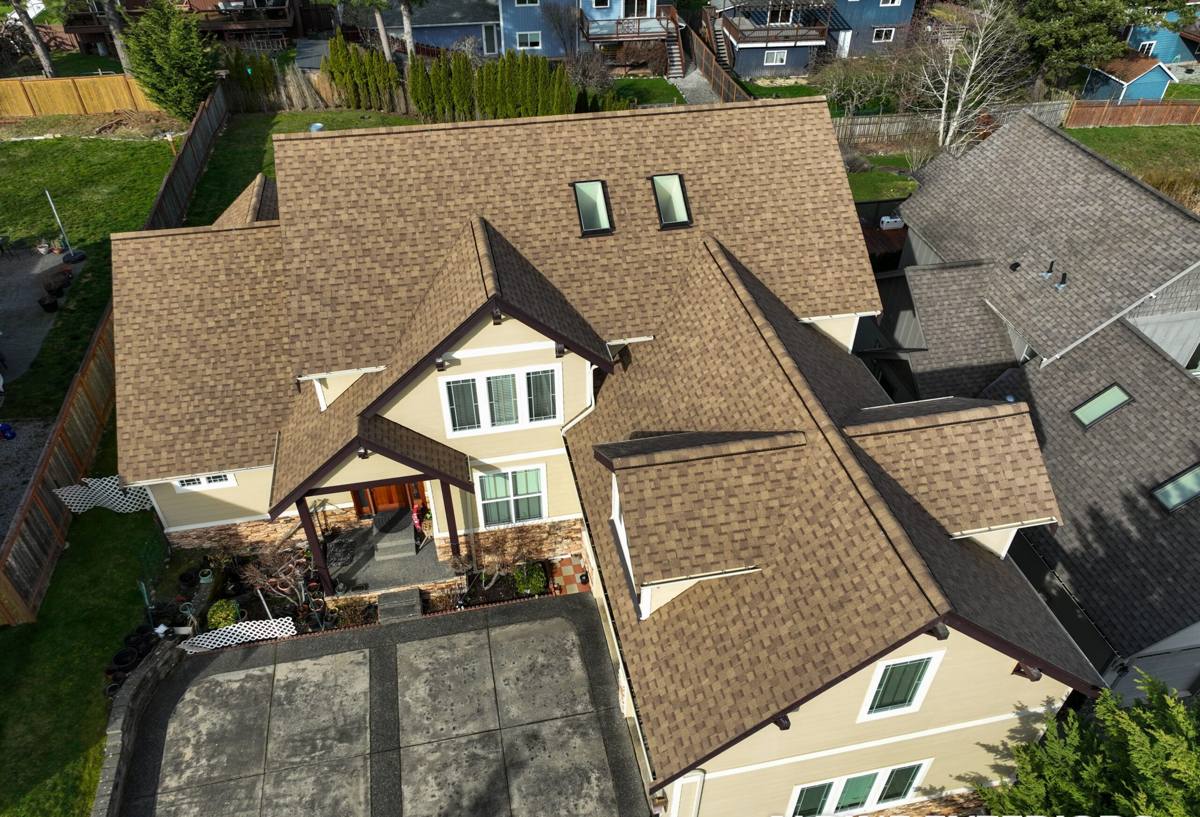
What Storms Actually Do to a Birch Bay Roof
Wind-Driven Rain and Uplift
Waterfront exposure means Birch Bay gets more sustained wind during winter storms than homes set back from the bay. That wind doesn't just push rain sideways under shingle edges and around flashing — it also creates uplift pressure that can loosen shingles, ridge caps, and flashing fasteners even when nothing visibly blows off. A roof can take real wind damage during a storm and look mostly normal until the next heavy rain finds the loosened seam.
Salt Air and Accelerated Fastener Corrosion
Direct salt exposure off the bay speeds up corrosion on exposed nails, flashing, and metal roof components in a way inland roofs simply don't experience at the same rate. A fastener or flashing seam that would hold for decades in a drier climate can weaken years earlier here, which means storm damage often reveals corrosion that was already underway before the wind ever hit.
Debris Impact
Storms strong enough to matter usually bring falling branches and wind-blown debris along with the rain, and Birch Bay's tree cover gives storms plenty of material to work with. Impact damage can crack or dislodge shingles, dent metal flashing, or puncture underlayment in ways that aren't always obvious without getting up on the roof.
Moss and Trapped Moisture
Whatcom County's long moss season means many roofs already carry moss and organic buildup going into storm season, especially on shaded or north-facing slopes. Moss holds moisture against the roofing material and can mask storm damage underneath it, and it also traps water at the exact seams and edges where wind-driven rain is already trying to get in.
Signs Your Roof Needs Storm Damage Attention
- Missing, cracked, or curled shingles anywhere on the roof, not just the most visible slopes
- Granules collecting in gutters or downspouts after a storm
- Water stains or discoloration on interior ceilings, especially near exterior walls or chimneys
- Lifted, bent, or separated flashing around chimneys, vents, skylights, or roof-to-wall transitions
- Visible daylight through the roof deck when viewed from inside the attic
- Damp insulation, musty odor, or new moss growth appearing in one area after a storm
- Dented or displaced metal flashing, gutters, or roof vents from debris impact
What a Correct Storm Damage Repair Actually Involves
A proper storm damage repair starts with more than patching the spot that's obviously leaking. We inspect the full roof surface, the attic side of the roof deck where accessible, and every flashing point and penetration, because wind-driven rain in this climate rarely limits itself to one tidy area. The goal is to find every point where water got in or is close to getting in, not just the one that's already dripping into the house.
Our Process
- On-site inspection: We walk the roof and check the attic where accessible, documenting damage to shingles, flashing, underlayment, and the roof deck itself.
- Water intrusion tracing: Interior water stains don't always sit directly under the exterior damage, so we trace the actual path water is taking through the roof assembly before deciding what needs to be opened up.
- Written scope: We put together a clear scope covering what's damaged, what needs to be repaired versus replaced, and what it involves — before any work starts.
- Repair or targeted replacement: Isolated damage gets repaired with matching materials and correctly integrated flashing. Widespread or repeated damage on an aging roof may call for replacing a full slope rather than patching around it repeatedly.
- Flashing and drainage check: Every repair includes checking that flashing laps correctly and water drains away from the repair rather than toward it, since a repair that ignores drainage tends to fail again in the next storm.
Repair vs. Replacement: How We Make the Call
Not every storm-damaged roof needs full replacement, and we don't default to recommending it. Isolated damage on a roof that's otherwise in good condition is usually a straightforward repair. Widespread damage, an aging roof already near the end of its service life, or a roof with a pattern of repeat storm damage is a different conversation.
| Situation | Repair Usually Makes Sense | Replacement Worth Discussing |
|---|---|---|
| A few missing or damaged shingles, roof otherwise sound | Yes | No |
| Isolated flashing failure at one penetration | Yes | Only if it recurs elsewhere |
| Roof already near or past typical service life | Short-term only | Yes |
| Storm damage spread across multiple slopes | Sometimes, case by case | Often, depending on extent |
| Repeated storm damage to the same areas over several seasons | Rarely a lasting fix | Yes |
| Heavy moss buildup masking underlying condition | Depends on what's under it | Sometimes, once assessed |
Materials and Flashing Detail for a Waterfront Roof
The roofing material matters less than most homeowners expect; the flashing and installation detail is what actually determines whether a repair holds up through the next few winters of wind off the bay. We match repair materials to the existing roof where possible so the finished work blends in and performs consistently with the rest of the roof, and we don't treat flashing as a place to save time.
- Fastener and flashing corrosion resistance: Given the salt air, we specify corrosion-resistant fasteners and flashing rather than standard-grade hardware that wasn't built for this exposure.
- Proper flashing lap and sealing: Flashing needs to lap correctly with the surrounding roofing material and underlayment so water is directed off the roof, not just covered over with sealant.
- Underlayment condition: If storm damage exposed the underlayment, we check its condition rather than assuming it's fine just because the shingles above it are being replaced.
- Ventilation: Proper attic ventilation reduces the trapped moisture that contributes to moss growth and accelerates roof aging in this climate, and it's worth checking any time a roof is opened up for repair.
A Checklist Before Hiring for Storm Damage Repair in Birch Bay
- Ask whether they'll inspect the full roof and attic, not just the spot that's actively leaking
- Confirm current Washington contractor licensing and active liability insurance
- Get a written scope of work before any repair begins, including materials and flashing details
- Ask how they handle insurance documentation if you're filing a storm damage claim
- Ask specifically how they address corrosion resistance given the salt air exposure this close to the water
- Get a clear answer on repair versus replacement and why, based on your roof's actual condition
Working With Insurance on Storm Damage
Many storm damage repairs in Birch Bay involve a homeowner's insurance claim, and a thorough inspection matters just as much for documentation as it does for the repair itself. We document the damage we find, including anything that isn't obvious from the ground, so homeowners have a clear record to work from with their insurance company. We're not a public adjuster and don't negotiate claims on a homeowner's behalf, but a detailed, honest assessment of what's actually damaged is something we can always provide.
Why a Local Crew Matters for Birch Bay Storm Repair
A contractor who works this stretch of the Whatcom County coastline regularly already knows how wind-driven rain behaves on a waterfront roof, how fast salt air corrodes standard hardware, and where moss tends to mask damage on shaded slopes. That knowledge shows up in the details that actually determine whether a repair lasts — how much flashing lap gets used, which fasteners get specified, whether the inspection goes past the obviously damaged spot. Those aren't judgment calls a crew unfamiliar with this exposure makes correctly by default.
If your Birch Bay roof took storm damage — or you're not sure whether what you're seeing is worth a closer look — we're happy to come out and give an honest assessment. Reach out below for a free, no-pressure estimate.