 Custer
 Board & Batten Siding in Birch Bay: A Different Kind of Coastal Exposure
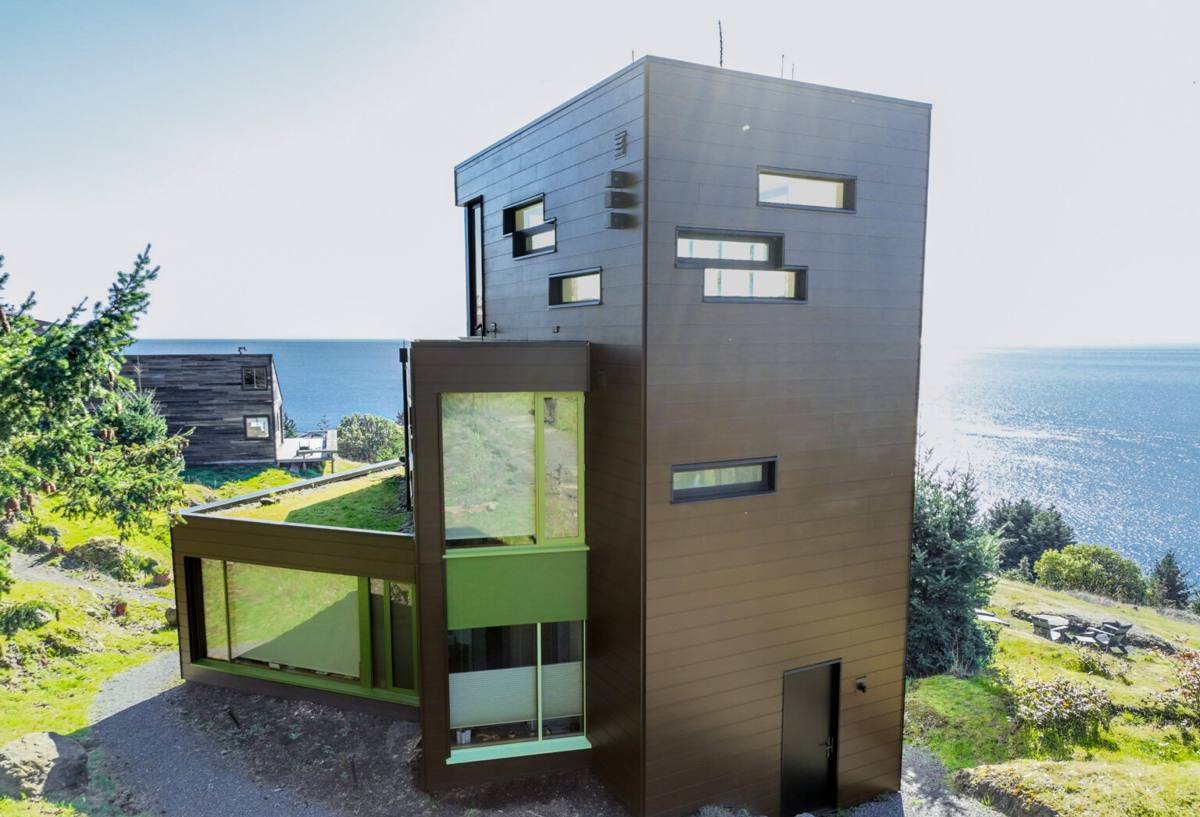
Birch Bay sits right on the water, and that changes what a siding job actually has to survive. A few miles inland in Custer, homes deal with Whatcom County's wet winters and long gray stretches. Out at the bay, you add salt-laden air, wind driving rain sideways off the water, and a longer moss and algae season on anything that stays shaded or damp. Board & batten siding — with its clean vertical lines and strong shadow reveal — is one of the most requested looks for Birch Bay homes, from waterfront cottages to newer builds up the hill. Done right, it holds that look for decades. Done wrong, the same design that makes it attractive becomes a place for water to sit.
This page is about that one job, in that one place: what board & batten siding needs to do differently in Birch Bay, what a correct installation involves, and why a crew that already works this stretch of coastline gets it right the first time.
Why Salt Air and Driving Rain Change the Job
Salt air
Airborne salt doesn't just sit on the surface of a house — it works into fasteners, hinges, and any exposed metal edge over time. On siding specifically, the risk isn't the panel itself (fiber cement doesn't corrode), it's everything holding the panel on: nails, screws, flashing, and trim fasteners. Standard fasteners rated for a typical inland install can start showing rust streaks within a few years this close to the water. That staining runs down the face of the siding and telegraphs through paint faster than most homeowners expect.
Driving rain
Birch Bay catches wind off the water that pushes rain horizontally into a wall assembly rather than letting it run straight down. Board & batten's vertical battens create dozens of extra seams compared to horizontal lap siding — every one of those seams is a spot where wind-driven rain can find a gap if the caulking, flashing, or batten spacing isn't handled correctly. This is the single biggest reason board & batten fails prematurely on coastal homes: not the material, the joints.
Moss and algae season
Whatcom County's damp season runs long, and Birch Bay's proximity to the water keeps humidity and shade-driven moisture around even longer on north-facing and tree-shaded walls. Board & batten's vertical battens create narrow shadow lines that hold moisture a beat longer than a flat lap profile. That's not a flaw in the siding — it's a detail that has to be accounted for in fastener choice, finish, and how tight the battens sit against the substrate.
What a Correct Board & Batten Job Requires Here
None of the issues above are reasons to avoid board & batten in Birch Bay — they're reasons to install it with the coastal environment in mind. A correct job includes:
- A drainage plane (weather-resistant barrier) installed and lapped correctly behind every panel and batten
- A rainscreen gap or furring strategy where wall conditions call for it, so any moisture that does get behind the siding can drain and dry instead of sitting against the sheathing
- Corrosion-resistant fasteners rated for coastal/marine exposure, not standard interior-grade fasteners
- Proper batten spacing and fastening pattern so panels aren't over-fastened, under-fastened, or fastened through the wrong layer
- Correct flashing and caulking at every horizontal transition — window heads, roof lines, deck ledgers, and the bottom starter course
- A factory-applied finish that's actually formulated to resist salt exposure and UV, not a field-applied paint that starts thinning out in year three
Skip any one of these and the failure shows up in a predictable place: rust streaking down the battens, cupping or swelling at panel edges, or moss establishing itself in the shadow line and never fully drying out between rains.
Why We Only Install James Hardie for This
We install James Hardie fiber cement exclusively, and board & batten siding in a location like Birch Bay is exactly the scenario that makes the case. Hardie's board & batten systems are engineered as fiber cement — non-combustible, dimensionally stable, and unaffected by the moisture cycling that causes wood-based or composite panels to swell, delaminate, or rot at cut edges over time. For homes in this climate zone, Hardie's HZ5 product line is engineered specifically for regions with cold, wet winters and significant moisture exposure — which describes Birch Bay well.
The other piece is the factory finish. Hardie's ColorPlus finish is baked on in a controlled factory environment, not brushed or sprayed on site. It's formulated to hold color and resist fading, chalking, and moisture intrusion at the surface far longer than field-applied paint — which matters more here than almost anywhere inland, because salt air and UV off the water accelerate the breakdown of ordinary paint films. Hardie's product also carries a strong transferable warranty, which matters to homeowners who may sell a waterfront or near-waterfront property down the road.
We don't install vinyl, LP SmartSide, primed wood, cedar, or other fiber cement brands like Allura or Cemplank. Vinyl board & batten looks the part from a distance but flexes, fades unevenly, and doesn't hold up structurally to the fastening precision this job needs near open water. Wood-based and primed-spruce products depend entirely on paint and caulking staying perfect indefinitely — a hard ask in a salt-air, high-moisture environment. Hardie's fiber cement gives us a material we can install to a coastal-grade spec and stand behind.
Board & Batten Material Comparison for a Birch Bay Home
| Factor | James Hardie Fiber Cement | Vinyl Board & Batten | Wood / Primed Spruce |
|---|---|---|---|
| Salt air resistance | Non-corrosive panel; factory finish resists fading and chalking | Panel won't corrode, but finish fades unevenly and can become brittle | Depends entirely on paint film integrity; salt accelerates breakdown |
| Driving rain / joint tightness | Engineered profiles, precise fastening spec, strong flashing detail options | Panels can flex and rack, opening seams over time | Swells and shrinks with moisture, opening joints seasonally |
| Moss-prone shadow lines | Dense material resists moisture absorption at the surface | Doesn't absorb moisture but traps it behind panel if ventilation is poor | Absorbs moisture readily; prone to rot at shaded, damp edges |
| Finish longevity | Factory ColorPlus finish, typically 15+ years before repaint consideration | Color molded in but fades; not repaintable in the same way | Field-applied paint, typically needs attention every 3-7 years in this climate |
| Fire performance | Non-combustible | Combustible, can deform under heat | Combustible |
Our Process for a Birch Bay Board & Batten Install
1. Walk the exposure, not just the walls
Before we talk product or price, we look at which sides of the house take direct wind off the water, which walls stay shaded and damp longest, and where the existing siding is already showing wear. That exposure map drives fastener choice, rainscreen decisions, and where we pay extra attention to flashing.
2. Tear-off and substrate check
We remove existing siding and inspect the sheathing and framing underneath for moisture damage before anything new goes up. Covering a wet or compromised substrate with new siding just hides a problem — we address what we find first.
3. Weather-resistant barrier and drainage
We install the water-resistive barrier correctly lapped, and build in drainage where the wall assembly and exposure call for it, so the whole system can shed and dry, not just resist water at the surface.
4. Install to Hardie's fastening and clearance spec
Correct fastener type and spacing, correct batten layout, correct clearance from grade, decks, and roof lines. This is where board & batten jobs succeed or fail, and it's not a place to cut corners to save an afternoon.
5. Flash and seal every transition
Windows, doors, roof-to-wall intersections, and the base of the wall all get flashed and sealed as part of the install, not as an afterthought once the panels are up.
6. Final walkthrough
We walk the finished job with the homeowner, point out how the system is built to drain and perform, and cover what little maintenance it actually needs going forward.
Why a Local Crew Matters Here Specifically
Birch Bay isn't a uniform climate zone — a house two blocks off the water takes a different beating than one set back with tree cover. A crew that already works this specific stretch of Whatcom County knows which walls in this neighborhood typically need the extra rainscreen detail, which exposures chew through standard fasteners fastest, and how Whatcom County's permitting and inspection process runs for exterior work. That local knowledge shows up in fewer callbacks and a job that's built for the actual conditions on your lot, not a generic spec sheet.
Signs Your Current Siding Is Losing the Fight
- Rust streaking running down from fastener heads or trim seams
- Persistent moss or dark staining in the batten shadow lines that doesn't clear even in dry stretches
- Soft or spongy spots when pressed near the base of walls or under windows
- Paint that's chalking, peeling, or has faded unevenly panel to panel
- Visible cupping, warping, or gaps opening at panel joints
- A noticeably musty smell near exterior walls, which can indicate moisture behind the siding
What This Typically Costs to Get Right
Board & batten pricing depends on wall square footage, how much tear-off and substrate repair is needed, trim and window detailing, and exposure-driven extras like rainscreen furring or upgraded fasteners. Rather than post a number that doesn't reflect your actual walls, we'd rather walk the house and give you a real figure based on what's there. What we can say honestly: fiber cement board & batten installed to a coastal-grade spec costs more upfront than vinyl, but it's priced to be the last siding job this house needs for a long time, not the first of several.
If you're in Birch Bay or nearby and thinking about board & batten siding, we're happy to walk the property, look at your specific exposure, and give you a straightforward, no-pressure estimate. There's a form below to get that started.