 Custer
 Birch Bay Roofs Work Harder Than Most
Birch Bay sits right on the water, and that location shapes everything about how a roof ages here. Salt-laden air off the bay accelerates corrosion on fasteners, flashing, and any exposed metal. Wind-driven rain off the Strait doesn't just fall straight down — it gets pushed sideways and up under laps, shingle tabs, and trim where a roof built for a drier climate would never see moisture. And because Whatcom County stays cool and damp for most of the year, moss and moisture-loving growth get a long runway to establish themselves on north-facing slopes and shaded valleys.
None of that means a Birch Bay roof is doomed to constant problems. It means the repair work has to account for those three things specifically — salt exposure, wind-driven rain, and moss — rather than treating every leak or worn spot the same way a contractor would in a drier inland town. We've done enough roof repair work along this stretch of Whatcom County to know which failure points show up first here, and that's what this page walks through.
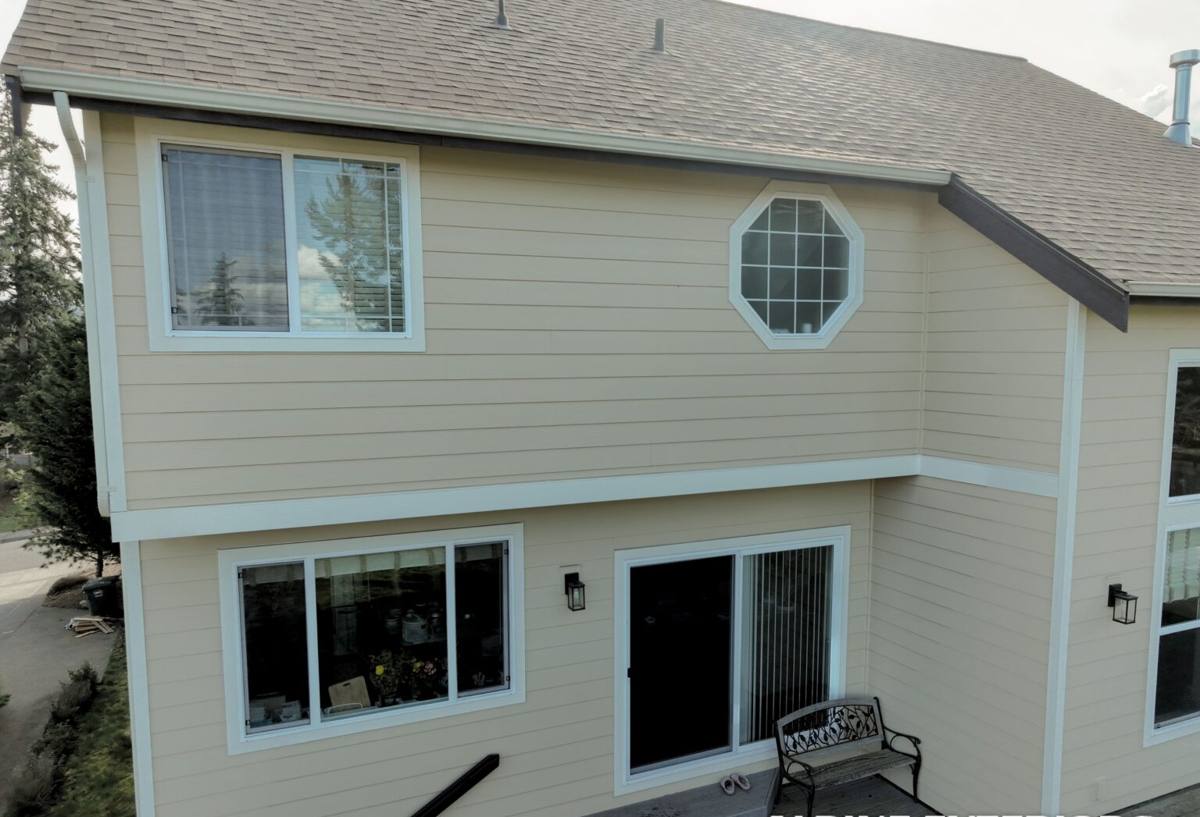
What Actually Fails First on Bay-Area Roofs
Metal Fasteners and Flashing
Salt air is hard on anything metal, especially exposed nail heads, drip edge, and step flashing around chimneys and dormers. Galvanized coatings that would last decades a few miles inland can start showing rust streaks and pinholing noticeably sooner this close to the water. Once flashing corrodes through, water finds a path behind it, and by the time a homeowner sees a stain on the ceiling, the damage has usually been happening for a while.
Wind-Driven Rain Intrusion
Storms off the bay don't respect the assumption that water only needs to shed downhill. Rain gets pushed under shingle tabs, into ridge vents, and around poorly sealed penetrations for plumbing stacks, skylights, and satellite mounts. A repair that only addresses the visible gap and ignores the direction the water was actually traveling tends to fail again in the next storm.
Moss and Sustained Moisture
Moss holds water against the roof surface far longer than the surface would otherwise stay wet, which softens shingle mat, degrades cedar shake, and rots the sheathing underneath if it's left unaddressed for a season or two. Whatcom County's moss season runs long — shaded, north-facing sections of a Birch Bay roof can stay damp for months at a stretch, which is exactly the environment moss needs to spread.
Signs a Birch Bay Roof Needs Repair Now
- Rust-colored streaking below flashing, vent stacks, or metal valleys
- Granule buildup in gutters or at downspout outlets, a sign shingles are wearing thin
- Ceiling stains that appear or worsen specifically during wind-driven storms, not steady rain
- Visible moss mats, especially on north- or west-facing slopes
- Curling, cupping, or lifted shingle tabs along roof edges exposed to bay wind
- Soft or spongy decking felt underfoot in the attic near a known leak point
- Daylight visible through roof boards from inside an unfinished attic
Any one of these on its own might be minor. Two or three together, especially near the same area of roof, usually means water has already gotten past the surface layer.
What a Correct Repair Actually Involves
A roof repair done right isn't just patching the spot where water showed up inside the house. Water travels along the roof deck and rafters before it drips somewhere visible, so the actual entry point is often several feet away from the stain. Our process starts with tracing the path, not just covering the symptom.
Depending on what we find, a proper repair can involve:
- Removing and replacing corroded or failed flashing at valleys, chimneys, and wall intersections — with material rated for coastal exposure
- Replacing damaged underlayment, not just shingles, since underlayment is the actual water barrier once shingles are compromised
- Checking and repairing sheathing where sustained moisture has softened the deck
- Re-sealing or replacing pipe boots and penetration flashing, which are common failure points regardless of roof age
- Correcting ventilation issues that trap moisture in the attic and accelerate deck rot from underneath
- Removing moss with methods that don't scrape or damage the shingle surface, then addressing the conditions that let it establish in the first place
Skipping any of these steps to save time on a quote usually means the same repair gets revisited within a year or two — often after the damage has spread.
Repair Approach by Roofing Material
| Roof Type | Common Bay-Area Issue | Repair Approach |
|---|---|---|
| Composition shingle | Wind-lifted tabs, granule loss, flashing corrosion | Re-secure or replace affected shingles, renew flashing with corrosion-resistant material |
| Cedar shake | Moss retention, splitting from repeated wet-dry cycles | Selective shake replacement, moss removal, improve airflow beneath the roof plane |
| Metal roofing | Fastener corrosion, seam movement | Fastener replacement with coastal-rated hardware, seam and sealant renewal |
| Low-slope / torch-down | Ponding water, membrane seam separation | Seam re-welding or patching, drainage correction |
Repair vs. Replacement: How We Help You Decide
Not every leak means a new roof, and not every roof past a certain age needs one either. We look at the whole picture before recommending either direction.
| Factor | Leans Toward Repair | Leans Toward Replacement |
|---|---|---|
| Roof age relative to material lifespan | Under roughly 60-70% of expected service life | Near or past expected service life |
| Extent of damage | Isolated to one section or penetration | Spread across multiple slopes or repeated past repairs |
| Decking condition | Solid, dry sheathing found on inspection | Widespread soft spots or rot |
| Moss/moisture history | Recent growth, caught early | Long-term moss retention with visible mat buildup over years |
| Underlying flashing system | Sound, just needs localized attention | Original flashing failing broadly across the roof |
We'll always tell you honestly when a repair is the right call, even if that's the less expensive job. If a roof is genuinely past the point where patching makes sense, we'll explain exactly why — not just recommend replacement by default.
Our Process for a Birch Bay Roof Repair
- On-site inspection. We walk the roof and the attic where accessible, tracing suspected leaks to their actual source rather than the point where water became visible.
- Written assessment. You get a clear explanation of what we found, what caused it, and what fixing it correctly requires — no vague line items.
- Scoped repair plan. We outline the specific materials and steps involved, matched to your roof type and its exposure to bay weather.
- The repair itself. Work is done to the same standard we'd want on our own homes — proper flashing, correct fastener choice for salt exposure, and attention to how water actually moves across your specific roof.
- Follow-up. We check that the fix holds through the next weather cycle and are available if anything needs a second look.
Ongoing Maintenance for Bay-Area Roofs
A repair holds longer when the roof around it is maintained. A few habits make a real difference in this climate:
- Clear gutters and downspouts each fall before the heavy rain season, so water isn't backing up under roof edges
- Have moss removed before it forms thick mats, not after — thin growth is far easier and less damaging to address
- Trim back overhanging branches that keep shaded roof sections wet longer than the rest of the roof
- Have flashing and fasteners checked periodically, since salt-air corrosion is gradual and easy to miss until it's already leaking
- Address small leaks as soon as they're noticed rather than waiting for a dry stretch to "see if it's still happening"
Why Local Roofing Experience Matters in Birch Bay
A contractor who mostly works inland can still do competent roofing work, but they haven't necessarily seen how quickly salt air corrodes an exposed nail head, or how long a shaded, moss-prone slope stays saturated through a Whatcom County winter. Working this specific stretch of coastline repeatedly means we're not guessing at what causes repeat failures here — we've seen the pattern enough times to know what actually needs upgrading during a repair versus what's fine to leave as-is. That translates into fewer surprises and a repair that's built to hold up against the conditions your roof actually faces, not generic textbook conditions.
If you're seeing signs of trouble on your roof — a stain, some moss, a shingle that's come loose after the last windstorm — we're happy to take a look and give you a straightforward, no-pressure estimate on what it would take to fix it right. Use the form below to get in touch.