 Custer
 Why Birch Bay Puts Ordinary Siding to the Test
Birch Bay sits right on the water, and that location is exactly what makes siding decisions here different from siding decisions ten miles inland. Homes along the bay take a steady diet of salt-laden air, wind-driven rain coming straight off the water, and long stretches of gray, damp weather that keep exterior surfaces wet far longer than they'd stay wet in a drier climate. Add in Whatcom County's shaded, tree-lined lots and you get a fourth factor: moss and algae that get a running start every fall and don't let up until late spring.
None of that is a problem for siding that's built for it and installed correctly. It is a serious problem for siding that isn't. Salt air accelerates corrosion on fasteners and trim metal. Driving rain finds every gap in flashing and caulk that a calmer climate would never expose. Constant moisture is what moss, mildew, and rot need to get established. A siding product and installation method that works fine in a dry inland town can fail years early on a Birch Bay lot facing the water.
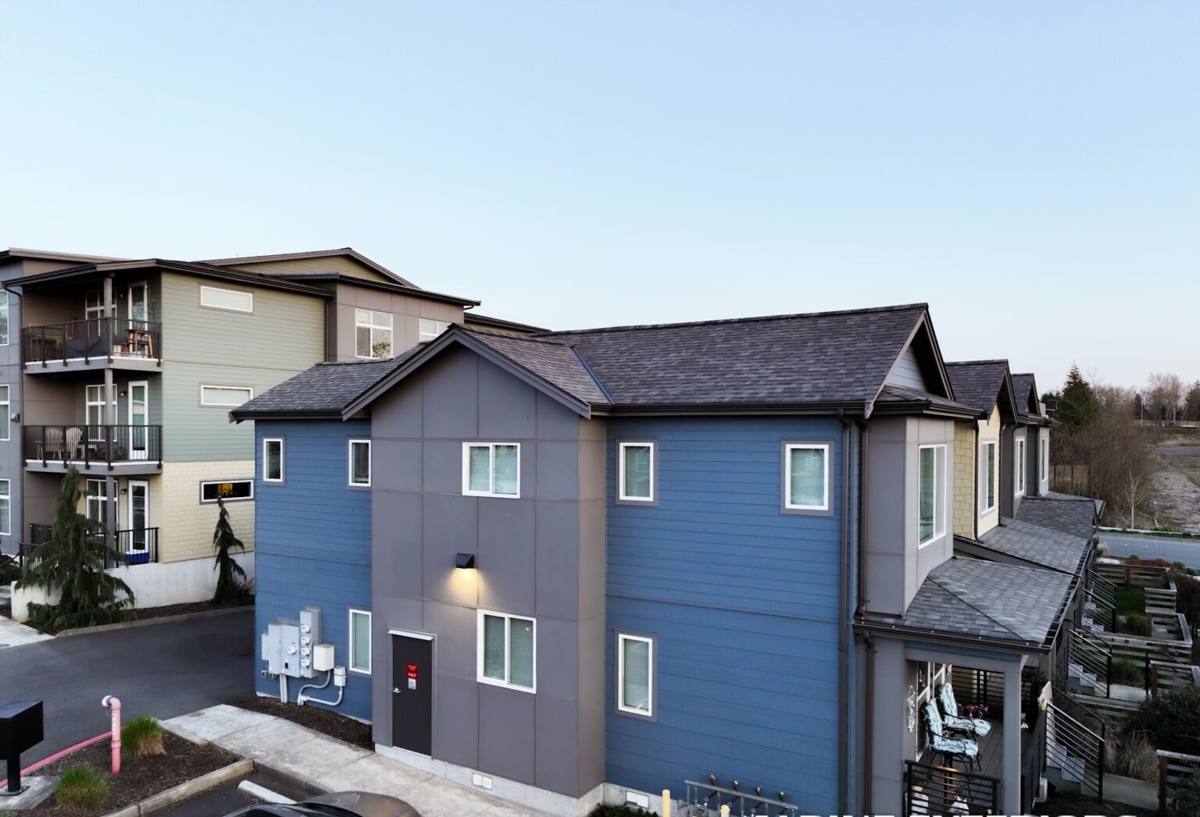
What "Correct" Fiber Cement Installation Means Here
Fiber cement itself is not a coastal specialty product — it's a general-purpose siding material. What makes it perform well in a place like Birch Bay is how it's detailed and installed. The material choice matters, but the workmanship matters just as much, and on a bay-front or near-bay lot, a few details are non-negotiable:
- Proper rainscreen or drainage gap behind the siding so water that gets past the surface has somewhere to go besides the wall sheathing
- Correct flashing at every window, door, and roof-to-wall intersection — the places wind-driven rain actually gets in
- Stainless or coated fasteners rated for coastal exposure, not standard interior-grade hardware that will rust and stain the face of the siding
- Factory-finished panels and trim so the protective coating is baked on, not brushed on in the field where salt air and rain hit it before it's fully cured
- Correct caulking and sealant at joints, using products rated for the movement and moisture cycling a coastal wall actually sees
Skip any one of these and you can end up with siding that looks fine at handoff but starts showing streaking, staining, or soft spots at seams within a few winters. That's not usually a material failure — it's an installation shortcut that a milder climate might have hidden for longer.
Why We Install Only James Hardie
We standardized on James Hardie fiber cement and don't install vinyl, LP SmartSide, Cemplank, Allura, primed spruce, or cedar. That's not a marketing position — it's a decision based on what holds up under the conditions Birch Bay homes actually face. Hardie's HZ5 product line is engineered specifically for climates with heavy moisture exposure, its ColorPlus factory finish is baked on and warrantied against fading and peeling in a way field-applied paint isn't, and the material itself is non-combustible fiber cement rather than a wood-based composite or a plastic that expands and contracts with temperature swings.
Vinyl siding can work loose or warp under sustained wind, and its seams and J-channels give wind-driven coastal rain more paths to find a way behind the panel. Wood-based products like cedar or primed spruce need consistent maintenance to keep moisture out, and a marine-influenced climate with a long wet season is an unforgiving place to fall behind on that upkeep. We'd rather put a product on a Birch Bay home that's built for the exposure than sell a product that needs the homeowner to fight the climate every year to keep it looking right.
Our Process on Birch Bay Projects
Assessment Before Anything Gets Ordered
We start by looking at the specific exposure of your home — which walls face the water and prevailing wind, where moss and algae are already established, where the existing siding shows staining or soft spots, and whether the wall assembly underneath has a drainage plane or needs one added during the tear-off.
Tear-Off and Wall Prep
Old siding comes off and we inspect the sheathing and framing underneath for moisture damage before anything new goes up. This is the point where problems that have been hidden behind old siding for years actually get found and fixed, rather than sealed back in.
Drainage and Weather Barrier
A correctly installed weather-resistant barrier and drainage gap go on before the Hardie panels do. This is the layer that does the real work of keeping bulk water away from the structure, and it's the layer that gets skipped most often on rushed jobs.
Installation to Manufacturer Spec
Panels, fasteners, and flashing go in following James Hardie's published installation requirements, not a generic approach borrowed from vinyl or wood siding practice. Fastener spacing, clearances at grade and roof lines, and joint treatment all follow the manufacturer's spec, which is also what keeps the product warranty valid.
Finish Details
Trim, caulking, and touch-up all get finished with coastal-rated products, and we walk the completed job looking specifically at the details that fail first in this climate — flashing laps, corner joints, and anywhere two materials meet.
Fiber Cement Compared to Other Siding Choices for a Bay-Front Lot
| Factor | James Hardie Fiber Cement | Vinyl | Cedar / Primed Wood |
|---|---|---|---|
| Salt air resistance | Strong — non-combustible cement composite, factory-sealed finish | Moderate — can become brittle and discolor with UV and salt exposure over time | Weak without diligent maintenance — wood absorbs moisture |
| Wind-driven rain performance | Strong when installed with proper flashing and drainage | Depends heavily on seam and J-channel quality | Moderate — finish and caulking need regular renewal |
| Moss and algae resistance | Good — dense material resists moisture uptake that feeds growth | Fair — surface growth is common but doesn't penetrate | Poor — organic material is what moss and algae prefer |
| Maintenance in this climate | Periodic wash-down; factory finish reduces repainting | Low but limited repair options if damaged | High — regular sealing, painting, and rot inspection |
| Fire resistance | Non-combustible | Combustible, can melt/deform near heat sources | Combustible |
Living With Fiber Cement Siding in Birch Bay's Climate
Correctly installed Hardie siding is low-maintenance, not no-maintenance. In a moss-prone, salty, wet environment like this one, a few habits go a long way:
- Rinse the siding down once or twice a year, especially on shaded or north-facing walls where moss and algae take hold first
- Keep gutters clear so overflow doesn't run down the siding face and stay wet longer than it should
- Keep vegetation and sprinklers from holding moisture against the wall
- Have caulking and trim joints checked periodically — sealant is the one component that ages faster than the siding itself and is cheap to renew before it fails
- Watch for any staining at fastener heads, which usually signals the wrong hardware was used and is worth addressing early
None of this is unusual upkeep — it's the same kind of seasonal attention any coastal Whatcom County home needs, and it's a lot less than what wood siding or a poorly detailed vinyl job would demand in the same location.
What Drives Cost on a Birch Bay Fiber Cement Job
| Factor | Why It Matters Here |
|---|---|
| Existing wall condition | Moisture-damaged sheathing found at tear-off adds repair scope before new siding goes on |
| Exposure and elevation | Walls facing the water or prevailing wind may need additional flashing and drainage detailing |
| Trim and detail complexity | Corners, dormers, and multiple roof-to-wall intersections all add flashing and labor |
| Product line and finish | HZ5 panels and ColorPlus finish options vary in cost from standard lines |
| Access | Multi-story sections, tight side yards, or landscaping near the foundation affect labor time |
We won't quote a Birch Bay job off a general square-footage number without seeing the actual walls — the exposure and existing condition swing the real cost more than the size of the house does.
What to Check Before You Hire Anyone for This Job
- Do they install to James Hardie's published spec, including fastener type and flashing detail, or are they treating it like generic siding?
- Have they worked on homes with direct bay or coastal exposure, not just inland Whatcom County jobs?
- Will they inspect and address sheathing condition during tear-off, not just cover over what's there?
- Do they use coastal-rated fasteners and sealants, or standard hardware that will show rust streaks in a few years?
- Can they explain their drainage plane and flashing approach in plain terms, without vague answers?
Why Local Experience in Birch Bay Matters
A crew that's done siding work up and down the bay knows which walls on a given lot take the worst of the wind and rain before they even walk the site. That's not something you learn from a manual — it's what you pick up from seeing how houses in this specific stretch of Whatcom County actually age. It shows up in small decisions: where to add extra flashing attention, which corners of the lot need a closer look at drainage, and how aggressive the moss and algae pressure is going to be based on tree cover and sun exposure. Those judgment calls are the difference between siding that looks good at installation and siding that still looks good after five wet winters on the water.
If you're weighing a siding project on a Birch Bay home, we're glad to walk the property, look at what your walls are actually facing, and put together a straightforward, no-pressure estimate using the form below.