 Custer
 Siding Installation Built for Birch Bay's Waterfront Exposure
Birch Bay sits right on the water in northern Whatcom County, and that changes what a siding installation actually has to do compared to a similar job a few miles inland. Homes here take on salt-laden marine air, sustained wind-driven rain through the fall and winter, and a moss season that can run most of the year on shaded or north-facing walls. A siding job done to a generic standard can look fine at handoff and still start showing problems within a few years once that combination of exposures gets to work on it. A siding job done right for Birch Bay specifically is a different thing, and it starts with understanding what the site is actually up against before the first piece of siding goes on the wall.
This page is about one service in one place: new siding installation for homes in and around Birch Bay. We install James Hardie fiber cement exclusively, and everything below explains what that looks like in this specific coastal environment — what the climate demands, what a correct installation involves, how our process runs from estimate to final walk-through, and why local experience matters as much as the product choice itself.
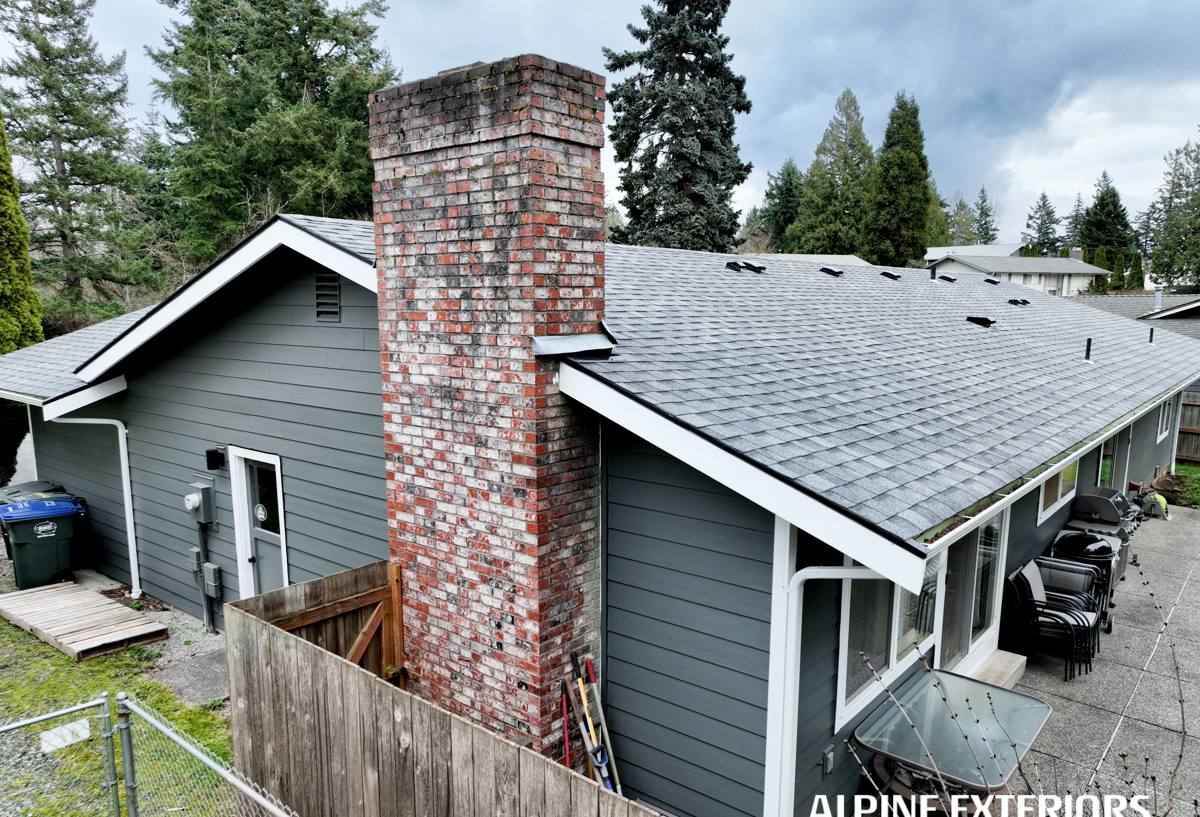
What Birch Bay's Climate Demands From a Siding Installation
Salt Air and Corrosion
Being directly on the bay means Birch Bay homes get more consistent salt exposure than most of Whatcom County, including plenty of properties that don't feel like "waterfront" but still sit close enough to catch it on prevailing winds. Salt accelerates corrosion in fasteners, flashing, and any exposed metal trim, and it can shorten the service life of a lower-grade factory finish. An installation has to account for that from the material and hardware selection stage, not patch it in later.
Driving, Wind-Pushed Rain
Waterfront exposure also means more wind, and wind-driven rain doesn't fall straight down onto a roof — it gets pushed sideways into wall assemblies, window and door flashing, and every horizontal transition on the exterior. That's a heavier moisture load on those details than a simple annual rainfall total suggests, and it's exactly where a rushed or generic installation shows its weak points first, usually years later when the damage is already behind the wall.
A Long Moss and Mildew Season
Mild temperatures and near-constant moisture add up to a moss and mildew season that runs across most of the year in this part of Whatcom County, especially on shaded walls and anything under tree cover. Any siding installation that traps moisture against the substrate, whether through poor drainage detailing or a porous material, gives that organic growth a surface to establish on. Correct installation manages moisture actively instead of hoping the material outruns it.
Why We Install Only James Hardie Fiber Cement
We don't install LP SmartSide, vinyl siding, Cemplank, Allura, primed spruce, or cedar. That's a deliberate professional standard, not a supply limitation, and it came out of what we've seen on service calls and tear-offs in exactly this kind of salt-air, high-moisture climate.
- Non-combustible core: Fiber cement doesn't feed a fire the way wood-based products can, which matters for safety and often for insurance.
- Factory-applied ColorPlus finish: The color is baked on under controlled conditions rather than applied on site, so it holds up longer against fading and moisture than field-applied paint.
- HZ5 formulation: Hardie's HZ5 product line is engineered for regions with heavy moisture and freeze-thaw cycling, which describes coastal Whatcom County well.
- Dimensional stability: Fiber cement doesn't swell, cup, or warp the way engineered wood can after repeated wet-season moisture cycles.
- Transferable warranty: Hardie's warranty is one of the stronger structures in the industry when the installation follows their published spec.
Every one of those products has a legitimate place in the market, and plenty of homeowners are satisfied with them in other climates. We made a professional call that on an exposure like Birch Bay's, we'd rather stand fully behind one system than offer a cheaper option that shifts long-term maintenance risk onto the homeowner.
What a Correct Installation Actually Involves
Fiber cement only delivers on its engineering when it's installed to spec. On a Birch Bay property, that means paying particular attention to the details that this climate stresses hardest.
Water Management Behind the Siding
Correct drainage detailing behind the panels — house wrap, flashing, and where called for, a rain-screen gap — gives any water that does get past the surface a way out instead of a place to sit. This matters more here than in a drier market because wind-driven rain reaches seams and terminations that straight-down rain rarely touches.
Fastener and Hardware Selection
Given the salt exposure, fastener type and coating matter as much as fastener spacing. Corrosion-resistant hardware installed at the correct spacing keeps the panels secure and keeps rust streaking from becoming a cosmetic problem down the line.
Clearance and Grade Details
Proper clearance from grade, decks, patios, and roof lines keeps siding out of standing water and away from the kind of splash-back moisture that accelerates wear at the bottom courses, which is often the first place problems show up on a poorly installed job.
Joint and Trim Work
Factory-mitered corners where possible, correctly caulked field joints where not, and trim details that shed water rather than collect it. Sloppy joint work is invisible on installation day and obvious three winters later.
Comparing Installation Approaches for a Coastal Property
| Installation Factor | Generic/Inland-Standard Approach | Birch Bay-Specific Approach |
|---|---|---|
| Fastener hardware | Standard-grade fasteners | Corrosion-resistant hardware selected for salt exposure |
| Drainage detailing | Minimal or code-minimum | Full rain-screen or drainage plane behind panels |
| Product line | Whatever's in stock | Hardie HZ5, engineered for moisture and freeze-thaw |
| Joint and trim finishing | Basic caulk-and-go | Mitered corners, detailed flashing at every transition |
| North-facing wall treatment | Same spec as sun-facing walls | Extra attention to drainage where moss and moisture linger longest |
How Our Process Works
1. On-Site Assessment
We walk the property and look at the specific exposure — how close to the water, how much wind and sun the walls actually get, where moss is already established, and what condition the sheathing and trim are in underneath the existing siding.
2. A Straight Estimate
You get a clear scope and price based on what we actually find, not a generic square-footage number. If we spot signs of hidden moisture damage during the walk-through, we'll flag it upfront rather than surprise you with it mid-job.
3. Tear-Off and Sheathing Check
Once the old siding comes off, we check the sheathing underneath for rot or moisture damage before anything new goes on. Covering up a compromised substrate with new siding just delays the problem and makes it worse.
4. Installation to Spec
House wrap, flashing, drainage detailing, correct fasteners, and Hardie panels installed to the manufacturer's published specification — the details covered above, done in the order they need to happen.
5. Final Walk-Through
We walk the finished job with you, point out what was done and why, and make sure you know what maintenance, if any, to expect going forward.
Why Local Experience Matters for This Job
A siding installer who's worked mostly inland can install a technically competent job that still isn't right for Birch Bay, simply because they haven't seen what this specific combination of salt air, wind-driven rain, and a long moss season does to a wall assembly over a decade. Crews that already work this area know which details get skipped on lower-exposure jobs and can't be skipped here — where to add drainage capacity, which fastener grade actually holds up, and which walls on a given lot are going to need more attention than the rest of the house. That local pattern recognition is hard to get from a spec sheet alone.
A Few Things Worth Confirming Before You Hire Anyone
- Ask whether the crew is manufacturer-certified for the specific Hardie product line being proposed.
- Ask what drainage or rain-screen detailing is included behind the panels, not just what siding brand is on the quote.
- Ask how they handle it if they find rot or moisture damage once the old siding is off.
- Ask what fastener type and grade they use, given the salt exposure this close to the water.
- Ask for a clear written scope, not just a per-square-foot number.
Get a Free, No-Pressure Estimate
If you're planning a siding installation for a home in Birch Bay, we're glad to come look at the property, talk through what we'd recommend and why, and give you a straight answer with no pressure attached. Reach out using the form below to schedule a free estimate.