 Custer
 Birch Bay's Siding Has a Harder Job Than Most
Birch Bay sits right on the water, and that changes what siding has to deal with day to day. Homes a mile inland in Whatcom County are dealing with rain and moisture cycles. Homes in Birch Bay are dealing with that same rain, plus salt-laden air coming off the bay, plus wind that drives rain sideways into wall assemblies instead of letting it run off. None of that is dramatic on any single day. It's the accumulation over years that separates siding that holds up from siding that doesn't.
When we're asked to look at a Birch Bay home for a siding replacement, we're not evaluating it the same way we'd evaluate a house on drier, more sheltered ground. We're looking at which walls face the water, how exposed the home is to prevailing wind, how much moss and organic buildup has accumulated on north-facing and shaded sections, and whether the existing siding and the water-resistive barrier behind it have actually been keeping water out or just hiding the fact that they haven't.
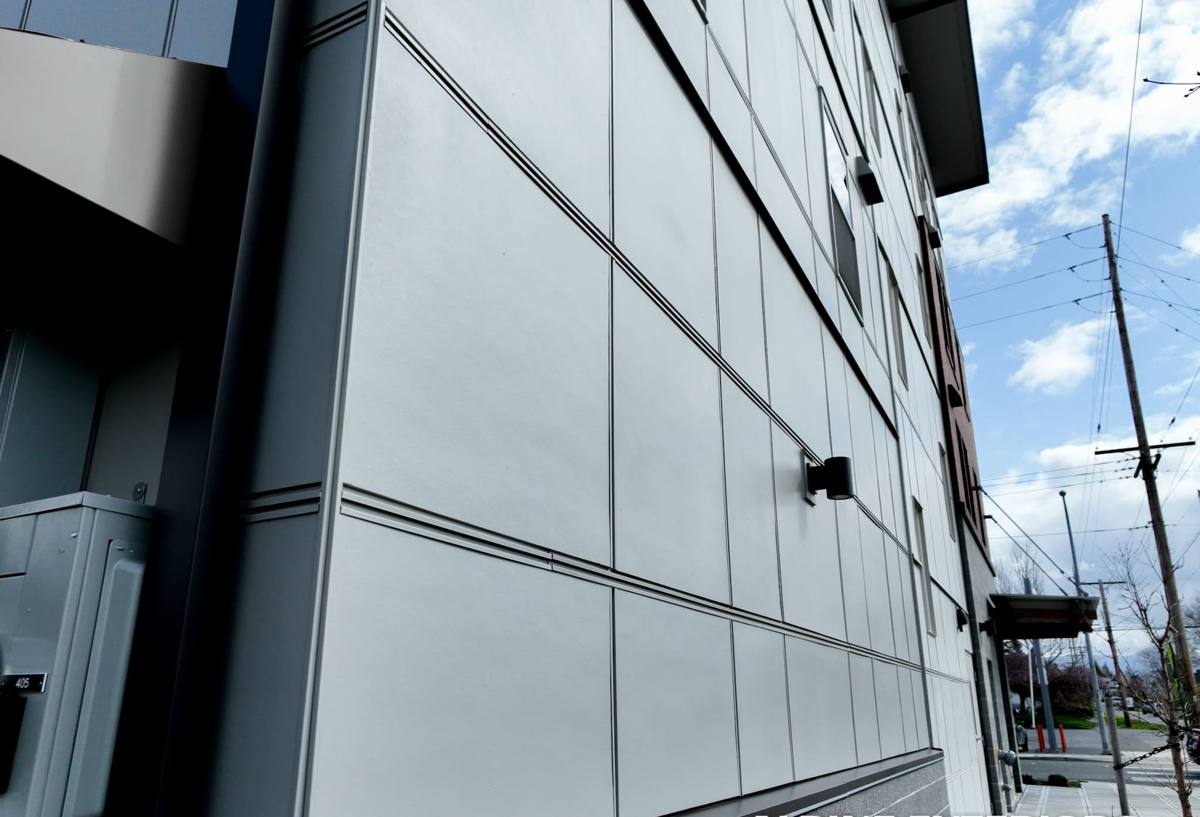
What Salt Air, Driving Rain, and Moss Actually Do to a Wall
Salt Air
Airborne salt doesn't just sit on the surface of siding — it works into seams, fastener heads, and any place paint or factory finish has thinned or cracked. On materials that aren't engineered to resist it, that leads to corrosion of fasteners and trim, and it accelerates the breakdown of finishes that weren't built for a marine-influenced environment. Over enough seasons, that shows up as rust streaking, chalky or degraded paint, and soft spots where moisture has found a way in.
Wind-Driven Rain
On a still day, rain runs down siding and off. In wind-driven rain, water gets pushed up and under laps, into butt joints, and around penetrations like hose bibs, vents, and light fixtures. Siding systems and flashing details that would be fine on a sheltered lot can fail on an exposed Birch Bay wall simply because they were never asked to resist rain moving sideways and upward.
Moss and the Long Wet Season
Whatcom County's wet season runs long, and shaded or north-facing walls in Birch Bay often stay damp for extended stretches. Moss and algae take hold on surfaces that don't dry out, and once established, they hold moisture directly against the siding surface — which is worse for the wall than open rain, because that moisture doesn't run off, it sits there. Materials and finishes that resist moss growth, or at least don't feed it, hold up noticeably better here than ones that don't.
What a Correct Siding Replacement Involves
Replacing siding isn't just pulling off old panels and nailing up new ones. Done right, in a location like Birch Bay, it's really a wall-assembly job with siding as the visible finish layer. The steps that actually determine how the job performs over the next 30+ years happen underneath what you see:
- Full tear-off and inspection — removing the old siding to check the sheathing, framing, and water-resistive barrier for hidden rot or moisture damage before anything new goes up.
- Repair of any compromised sheathing or framing — new siding over damaged substrate just hides a problem, it doesn't fix it.
- A correctly lapped, continuous water-resistive barrier — this is the actual waterproofing layer; the siding is the weather and impact layer over it.
- Proper flashing at every penetration and transition — windows, doors, roof lines, deck ledgers, hose bibs, and vents are where wind-driven rain finds its way in if flashing is skipped or done wrong.
- Correct fastening pattern and spacing — for the specific siding product being installed, following the manufacturer's installation instructions, not a generic pattern.
- Proper clearances — siding held up off decks, patios, and grade so it isn't sitting in standing moisture.
Skip or shortcut any one of those steps and the new siding can look great for a couple of years while the wall behind it is still vulnerable. In a coastal-influenced spot like Birch Bay, shortcuts show up faster than they would somewhere drier.
Why We Only Install James Hardie Fiber Cement
We made a decision a while back to standardize on James Hardie fiber cement siding for every install we do, including here in Birch Bay, and not offer vinyl, LP SmartSide, primed wood, or cedar as alternatives. That's a real trade-off for us — it means we can't chase every price point — but it's the standard we're willing to put our name behind.
Why It Fits This Climate
Fiber cement is engineered from cement, sand, and cellulose fiber. It doesn't feed moss and algae growth the way untreated wood can, it doesn't corrode, and it's dimensionally stable in a way that matters when a wall is cycling through wet and dry, warm and cold repeatedly through a Whatcom County winter. Hardie's ColorPlus factory finish is baked on under controlled conditions and backed by its own finish warranty, which matters in an environment where field-applied paint on other materials tends to need attention sooner. Hardie also makes climate-engineered HZ product lines built specifically for wetter, harsher regions like the Pacific Northwest — that's the line we spec for Birch Bay work.
A Fair Look at the Alternatives
We're not going to tell you other materials are junk — plenty of them are reasonable products used correctly in the right setting. But here's how the common options actually hold up against Birch Bay's specific conditions, which is why we don't offer them:
| Material | How It Handles Salt Air & Wind-Driven Rain | How It Handles Moss/Long Wet Season |
|---|---|---|
| Vinyl | Doesn't corrode, but seams and fasteners can allow water intrusion behind the panel in sustained wind-driven rain; can become brittle over time | Doesn't feed moss itself, but growth on the surface is hard to fully remove without damaging the finish |
| Cedar / primed wood | Attractive but needs consistent refinishing to resist moisture intrusion near the coast; fasteners can corrode | Organic material — most vulnerable of the group to moss, rot, and insect damage in a long wet season |
| LP SmartSide (engineered wood) | Treated to resist moisture, but any breach in the factory finish or field cuts exposes wood substrate to swelling | Better than raw wood, but still an organic-core product in a climate that stress-tests that seam |
| James Hardie fiber cement | Non-combustible, doesn't corrode, holds paint/finish well in salt-air exposure | Doesn't feed organic growth; surface can be gently cleaned without damaging the substrate |
Our Process, Start to Finish
1. On-Site Assessment
We walk the exterior with you, note which elevations take the most weather (usually the water-facing and prevailing-wind sides), and check for soft spots, moss buildup, and trim or flashing issues that point to what's happening underneath.
2. Written Estimate
You get a clear scope of work — what's being torn off, what substrate repair is anticipated, what Hardie product and profile we're recommending and why, and the price. No pressure, no scare tactics about problems we haven't actually confirmed.
3. Tear-Off and Substrate Repair
Old siding comes off, we inspect what's underneath, and any rot or damaged sheathing gets addressed before anything new goes up.
4. Weather Barrier and Flashing
This is the step that determines how the wall performs in wind-driven rain — done carefully, lapped correctly, and flashed at every penetration.
5. Hardie Installation
Installed to James Hardie's published specifications for fastening, clearances, and joint treatment — not a generic approach.
6. Final Walkthrough
We go over the finished job with you before we consider it done.
Signs a Birch Bay Home May Need Siding Replacement Soon
- Persistent moss or algae staining that returns quickly after cleaning
- Soft or spongy spots when you press on the siding, especially near the bottom courses or window trim
- Visible cracking, warping, or separation at seams and joints
- Paint that's chalking, peeling, or failing faster than it used to
- Rust streaking near fasteners or trim
- Rising heating or cooling bills that can't be explained by anything else, which can point to a compromised wall assembly
- Interior signs — musty smell, staining, or bubbling paint on interior walls that back up to exterior siding
Why It Matters That Your Crew Already Works Birch Bay
A crew that only occasionally works this close to the water can miss things that are obvious to one that's out here regularly — which elevations actually take the brunt of the wind, how fast moss reestablishes on shaded walls in this specific stretch of Whatcom County, and how Whatcom County's permitting and inspection process works for exterior replacement. We're a Custer-based crew, and Birch Bay is inside our regular service area, not a special trip. That means we're not guessing at what this coastline does to a wall assembly — we're accounting for it in the estimate before the first panel comes off.
After the Job: Keeping Hardie Siding Performing in a Coastal Climate
Fiber cement is low-maintenance compared to wood or vinyl, but "low-maintenance" isn't "no-maintenance," especially this close to the bay. A periodic gentle rinse to keep salt residue and organic buildup from accumulating, prompt attention to any caulking or trim that starts to separate, and keeping gutters and downspouts clear so water isn't sheeting down the wall unnecessarily will go a long way toward getting the full service life out of the installation.
If you're seeing any of the warning signs above, or you're just planning ahead for a home on the water, we're happy to come take a look. Estimates are free, there's no pressure, and you'll get a straight answer about what your siding actually needs — use the form below to get started.