 Custer
 Birch Bay Sits in a Tougher Climate Than Most of Whatcom County
Birch Bay's location on the water sets it apart from siding jobs a few miles inland. Homes here take on salt-laden air rolling off the bay, wind-driven rain that hits siding sideways instead of straight down, and a long, damp moss season that can stretch for most of the year. Any one of those factors will shorten the life of the wrong siding material. Together, they're a serious test — and it's why we treat a Birch Bay siding job differently than a standard replacement a few miles east.
This page is specifically about installing James Hardie fiber cement siding on Birch Bay homes: what the climate demands, what a correct installation looks like, and how our process is built around this stretch of coastline.
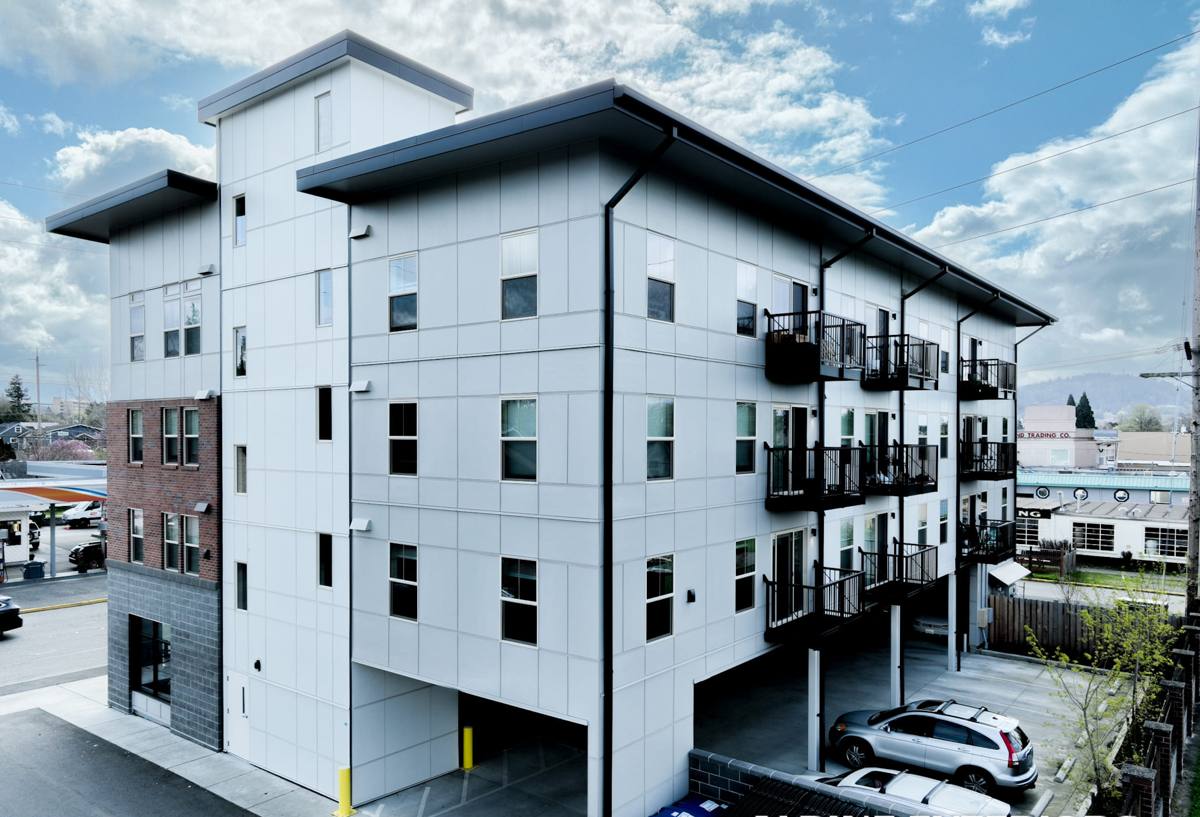
What Salt Air, Driving Rain, and Moss Actually Do to Siding
Salt Air
Airborne salt is corrosive to metal fasteners, trim, and flashing, and it accelerates the breakdown of paint films and lower-grade composite materials. Siding that isn't formulated or finished to resist that exposure tends to fade, chalk, or degrade faster near the water than the same product would inland.
Wind-Driven Rain
Storms off the bay don't just fall on a home — they push water horizontally against walls, up under laps, and into any gap in the siding system. A siding job that relies on caulk and paint alone to keep water out, rather than a properly built drainage plane, is the kind of job that looks fine for a year or two and then starts showing problems at seams, corners, and penetrations.
Moss and Constant Moisture
Whatcom County's damp, shaded, mild-winter climate is close to ideal for moss and algae growth. On wood-based or absorbent siding materials, that moisture-holding growth can trap water against the substrate long-term, which is where rot and swelling start. Moss is mostly a cosmetic problem on a stable, non-absorbent surface — it's a structural problem on a surface that softens when it stays wet.
Why We Standardized on James Hardie for This Coastline
We install James Hardie fiber cement siding exclusively — not vinyl, not LP SmartSide, not Cemplank, not Allura, not primed spruce or cedar. That's a deliberate standard, not a sales preference, and Birch Bay's exposure is a good illustration of why.
Hardie's fiber cement is non-combustible and dimensionally stable, meaning it doesn't swell, cup, or absorb water the way wood-based products can when they're exposed to repeated wetting. The factory-applied ColorPlus finish is baked on and engineered to hold color and resist fading better than field-applied paint, which matters in an environment where UV, salt, and moisture are all working against a painted surface at once. Hardie also builds specific product lines engineered for different climate zones — for a wet, coastal Pacific Northwest exposure like Birch Bay, that climate-specific engineering is exactly the kind of detail that pays off over 20 or 30 years, not just in the first five.
None of this means other materials are junk — vinyl, engineered wood, and cedar all have legitimate uses. It means that after weighing how each performs against sustained coastal exposure, maintenance burden, and long-term warranty support, we decided we could only stand behind one system on the homes we build.
How Common Siding Materials Hold Up in a Coastal, Moss-Prone Climate
| Material | Behavior in Salt Air / Driving Rain | Behavior in Moss / Constant Damp |
|---|---|---|
| James Hardie fiber cement | Non-combustible, dimensionally stable; factory finish resists fading and chalking | Doesn't swell or absorb moisture like wood; surface growth cleans off without damaging the substrate |
| Vinyl siding | Can warp or become brittle with UV and temperature swings; seams are a common water entry point | Resists rot itself, but traps moisture behind it if the wall assembly isn't ventilated |
| Cedar / primed spruce | Attractive but requires ongoing sealing and refinishing to resist water intrusion | Absorbent surface holds moisture, which is exactly what accelerates rot under sustained moss and damp |
| LP SmartSide / engineered wood | Engineered strand product is more stable than raw wood but still wood-based at its core | Any breach in the factory coating exposes wood fiber to moisture and decay risk |
This isn't a claim that any of these products will fail on your home — installation quality, ventilation, and maintenance matter as much as the material itself. It's why we look at all four factors together and why fiber cement, specifically Hardie's system, is what we've chosen to build our business around.
What a Correct James Hardie Installation Involves in Birch Bay
The material is only half the equation. A Hardie installation that's rushed or done to a lower standard can still let water into the wall assembly — and in a wind-driven-rain environment, that shows up faster than it would inland. On every Birch Bay job we build in these details:
- A continuous weather-resistant barrier behind the siding, with all seams and penetrations properly lapped and sealed against wind-driven rain
- A drainage plane or rainscreen gap where the wall assembly calls for it, so any water that gets past the siding has somewhere to go instead of sitting against the sheathing
- Corrosion-resistant fasteners and flashing appropriate for salt-air exposure, driven per Hardie's fastening specification rather than "close enough"
- Correct clearance between the bottom of the siding and grade, decks, roof lines, and other transitions, so standing water and splash-back don't sit against the material
- Properly caulked and painted field-cut edges, since factory ColorPlus protection only extends to factory-finished surfaces
- Tight, consistent reveals and butt joints, both for weather performance and so the finished wall actually looks like a Hardie installation, not a patchwork one
Skip any one of these steps and the siding can still look right for a while. In Birch Bay's climate, the gaps show up as staining, soft spots, or paint failure well before they would on a sheltered, inland wall.
Our Process, Start to Finish
- On-site assessment. We look at your home's exposure — how much direct weather it takes off the water, existing moisture or moss issues, and the condition of the wall assembly underneath the current siding.
- Product and color selection. We walk through Hardie's relevant product lines and ColorPlus color options for your home and exposure.
- Tear-off and inspection. Once old siding is off, we inspect sheathing and framing for hidden water damage before anything new goes on — this is often where a coastal home's real condition becomes clear.
- Weather barrier and drainage plane installation. This is the layer that does the real work of keeping water out, and it's built before a single piece of Hardie board goes up.
- Siding installation to spec. Fastening, flashing, clearances, and reveals installed to Hardie's requirements for this climate zone.
- Trim, caulking, and touch-up painting. Field cuts and trim are sealed and finished to match the factory surface.
- Final walkthrough. We go over the finished work with you before calling the job complete.
Living With Hardie Siding in a Salt-Air, Moss-Season Climate
One of the practical advantages of fiber cement in this environment is how little upkeep it asks for compared to wood-based siding. It doesn't need re-staining or re-sealing. Moss and algae that develop on the surface — which is common on any exterior surface in this climate, siding included — can generally be rinsed off with a garden hose and a soft wash approach rather than pressure-washed, which helps protect the factory finish and any caulked joints. Periodically checking caulking at trim, corners, and penetrations for cracking is worth doing on any home near the water, since that's the seal doing the most work against wind-driven rain.
What Hardie doesn't need is the annual or biennial refinishing cycle that keeps wood siding watertight. In a climate where that maintenance window is already tight — decent-weather months in Whatcom County aren't unlimited — that's a real, practical difference over the life of the siding.
Why It Matters That We Already Work in Birch Bay
A crew that's installed siding elsewhere in Washington but hasn't dealt with sustained coastal exposure can still do competent work — but they're solving for a milder set of conditions than Birch Bay actually presents. Knowing how hard the wind and rain come off the water here, how quickly moss establishes itself on a shaded wall, and how salt air treats fasteners and trim over time changes decisions on the job: fastener selection, flashing details, where extra sealant attention goes, and where a rainscreen gap is worth the added step rather than an optional upgrade.
We work throughout Whatcom County, including Birch Bay and the surrounding Custer area, and we build every Hardie installation to the same standard regardless of exposure — but on a home taking direct weather off the bay, that standard is doing more work than it would three miles inland.
Questions to Ask Before You Sign a Siding Contract
Whether you talk to us or another contractor, these are worth asking on any coastal Whatcom County siding job:
- Will you install a drainage plane or rainscreen behind the siding, or rely on the siding and caulk alone to stop water?
- What fastener and flashing materials will you use, and are they rated for salt-air exposure?
- How will field-cut edges and trim be sealed and finished to match the factory surface?
- What clearance will you leave between the siding and grade, decks, and roof transitions?
- What does the manufacturer's warranty actually cover, and does it depend on installation to their written specification?
If a contractor can't give you clear, specific answers to those questions, that's worth factoring into your decision as much as price is.
Get a Straight Answer for Your Home
Every Birch Bay property takes weather a little differently depending on tree cover, elevation, and how exposed it is to the water — the right approach for your home is worth looking at in person rather than guessing from a general page like this one. If you'd like a free, no-pressure estimate on James Hardie siding for your Birch Bay home, use the form below and we'll take a look.