 Custer
 Board & Batten in Blaine's Coastal Climate
Blaine sits right on the water — Semiahmoo Bay and Drayton Harbor put homes here closer to salt air than almost anywhere else in Whatcom County. That changes what a board & batten siding job needs to survive. Salt-laden air accelerates corrosion on fasteners and trim, wind-driven rain off the Strait finds every gap in a wall assembly, and the long gray moss season keeps north- and west-facing walls damp for weeks at a stretch. Board & batten's vertical lines and exposed seams look great on the coastal and craftsman-style homes common in this area, but that same design — narrow battens over a flat panel, lots of vertical joints — is exactly the profile that punishes a rushed or under-flashed install. Get it right and it's one of the more durable, low-maintenance looks you can put on a Blaine home. Get it wrong and you're chasing rot and stains behind the battens within a few winters.
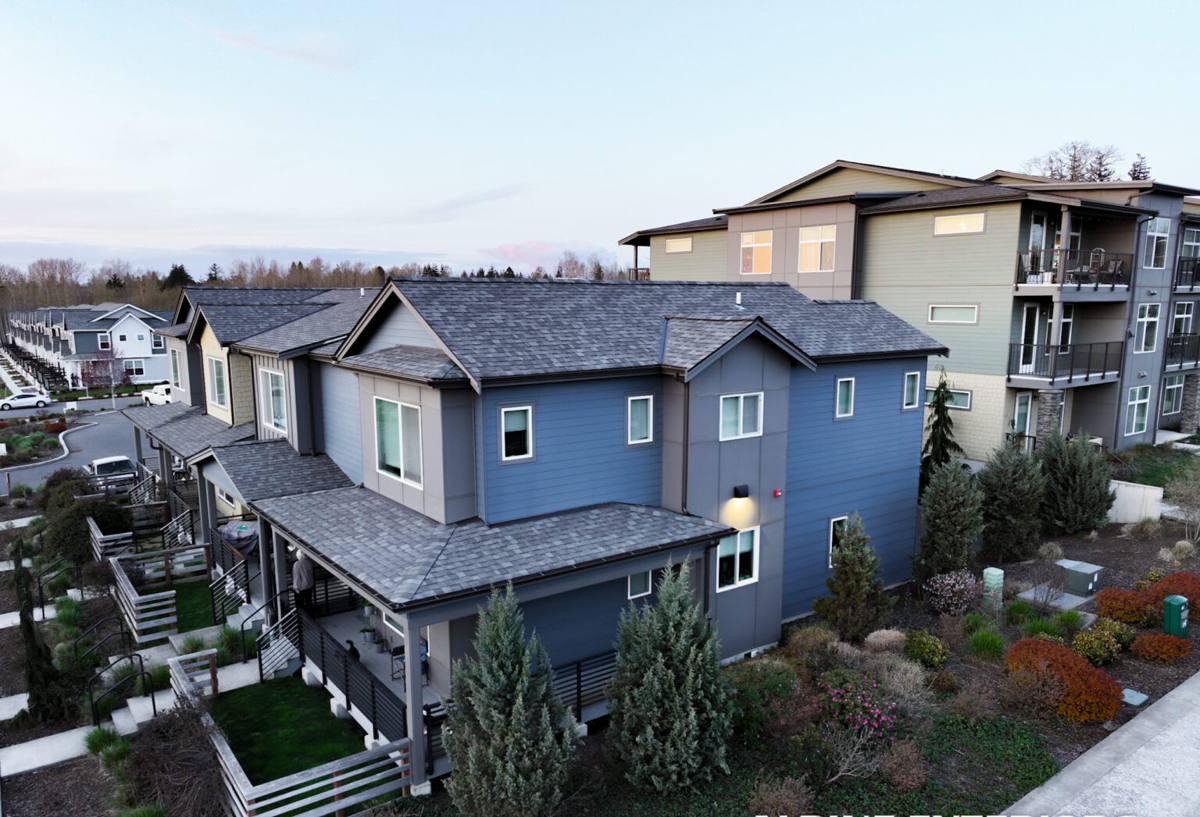
What Board & Batten Siding Actually Is
Board & batten is a vertical siding pattern — wide flat panels or boards with narrow battens covering the seams between them, creating a rhythm of raised vertical lines. It's a classic look for farmhouse, craftsman, and modern coastal exteriors, and it shows up a lot on accent walls, gables, and porch elements even on homes that are otherwise lap-sided.
We build it exclusively with James Hardie fiber cement — either HardiePanel vertical siding with cedar-textured or smooth battens over it, or individual HardieTrim boards set up in a board-and-batten pattern over a Hardie panel base. We don't offer this style in vinyl, LP SmartSide, primed spruce, or real cedar. Those are common ways to do board & batten elsewhere, but each comes with a trade-off — vinyl board & batten reads as plastic up close and telegraphs waviness in the sun; wood battens (cedar or primed spruce) need repainting and are the first thing to cup or split when they take direct weather. Fiber cement holds the crisp shadow lines the style depends on without that upkeep.
Why the Vertical Pattern Matters for Water
Every vertical joint in a board & batten wall is a place water can travel if it's not detailed correctly. Unlike lap siding, where gravity naturally sheds water down and off each course, board & batten relies on the batten overlap and the wall assembly behind it — not the panel face — to keep water out. That makes the installation details more important than the material choice, though the material choice still matters: fiber cement doesn't swell, delaminate, or wick water the way wood-based products can when a joint eventually does let moisture through.
What a Correct Installation Involves
A board & batten job that holds up in Blaine's climate isn't just nailing boards to a wall. The parts that matter most are the ones you can't see once it's finished:
- A continuous weather-resistive barrier (WRB) behind the panel, lapped correctly top-over-bottom and sealed at every penetration
- Rainscreen furring or a drainage mat behind the panels so any water that does get past a seam has somewhere to go besides sitting against the sheathing
- Flashing integrated at every window, door, deck ledger, and roofline intersection — not caulk substituting for flashing
- Battens fastened per the Hardie spec, with fastener spacing and edge distance that won't split the panel or work loose in wind
- Corrosion-resistant fasteners throughout — coastal salt air will find any weak spot in ordinary fasteners within a few seasons
- Proper clearance at the bottom of the wall — siding held up off decks, patios, and grade so it isn't sitting in standing water or snow
- Caulked and painted (or factory ColorPlus-finished) cut edges, since any exposed raw fiber cement edge is a moisture entry point
Skip any one of these and the siding can look fine for a year or two while water is already working its way behind it. This is where board & batten separates a good installer from a fast one — the pattern hides a lot of sins in the first season and reveals all of them by year three or four.
Our Process for a Blaine Board & Batten Project
We start with a walkthrough of the specific walls involved — full elevation, accent wall, gable, or porch detail — and look at what's actually happening behind the current siding before we quote anything. On coastal properties like Blaine's, we pay particular attention to whatever's facing the water and prevailing wind, since that's the wall that will see the most driving rain over the life of the siding.
| Stage | What Happens |
|---|---|
| Assessment | Check existing sheathing, framing, and any moisture damage behind current siding before quoting |
| Removal | Strip old siding and trim, address any rot or water damage found underneath before it's covered up again |
| WRB & drainage plane | Install or repair the weather-resistive barrier and add rainscreen furring for drainage behind the panels |
| Flashing | Integrate flashing at windows, doors, and roof intersections to Hardie's published details |
| Panel & batten install | Set panels, then battens, to manufacturer fastening spec — proper spacing, clearance, and fastener type |
| Finish | Seal cut edges, caulk per spec, final inspection of every seam and penetration |
We're not the only siding crew that will quote a board & batten job in Blaine, but we're one that's already done the coastal detailing here — the rainscreen gaps, the flashing at deck ledgers, the fastener choices that matter twenty feet from saltwater. That's not something you can fully verify from a bid sheet; it shows up in how the crew talks about the job before they've started it.
Common Problems We Find on Existing Board & Batten Walls
When we're called out to look at board & batten siding that's failing early in Blaine, it's rarely the material — it's almost always one of a handful of installation shortcuts:
- Battens face-nailed with no room to move, cracking the panel underneath as the wall assembly shifts seasonally
- No rainscreen gap, so the panel sits flat against a soaked WRB with nowhere for moisture to dry out
- Caulk used in place of flashing at window heads — fine for a season, failed by the third wet winter
- Bottom edge of the siding sitting too close to a deck or grade, wicking moisture from below
- Ordinary fasteners that have started to bleed rust streaks down the panel face from salt air corrosion
None of these are visible on install day. They show up as staining, soft spots, or streaking a couple of years later — which is exactly why the install details matter more than the finished look on day one.
Cost Factors for Board & Batten in Blaine
Board & batten generally runs a bit more than plain lap siding for the same wall area, mainly because of the extra batten material and labor, plus the added time for proper flashing and rainscreen detailing on a pattern with more seams. Rough factors that move the number:
| Factor | Why It Matters |
|---|---|
| Wall exposure | Walls facing prevailing wind and water need more careful flashing and drainage detail |
| Existing sheathing condition | Rot repair found during removal adds cost but prevents covering up a bigger problem |
| Panel vs. accent-only | Full-elevation board & batten costs more than an accent wall or gable feature |
| Trim & batten complexity | Tighter batten spacing and more corners/openings mean more cuts and seams to detail |
| Finish choice | Factory ColorPlus finish costs a bit more upfront than field-painted but skips a repaint cycle |
We give exact numbers after seeing the walls, not before — a board & batten quote that doesn't account for what's behind the existing siding isn't a real quote yet.
Maintenance in a Salt Air, High-Moss Climate
James Hardie board & batten with a factory ColorPlus finish needs very little upkeep in Blaine — no repainting cycle, no caulking every panel joint every few years like wood battens require. What it does need is the same seasonal attention any siding needs here: keeping gutters clear so runoff doesn't sheet down a wall, knocking back moss and organic growth on shaded north walls before it holds moisture against the surface, and a periodic look at caulk lines around windows and penetrations. None of that is heavy work, but skipping it in a climate with this much moisture and moss pressure is how small issues turn into bigger ones.
Why a Crew That Already Works Blaine Matters
Board & batten's failure points are all in the details you can't see after the job is done — the rainscreen gap, the flashing sequence, the fastener choice. A crew that's installed this pattern on other homes near the water in Whatcom County has already made and corrected those judgment calls in this specific climate. That's different from a crew installing their first board & batten wall on your house and hoping the general spec covers a site twenty feet from saltwater. We'd rather walk your walls and tell you plainly what a correct job looks like here than sell you a pattern that looks good for one dry summer.
If you're considering board & batten siding for a home in Blaine, we're happy to take a look and put together a free, no-pressure estimate — no obligation, just a straight assessment of what your walls actually need.