 Custer
 Why Blaine Homes Wear Out Their Siding Faster
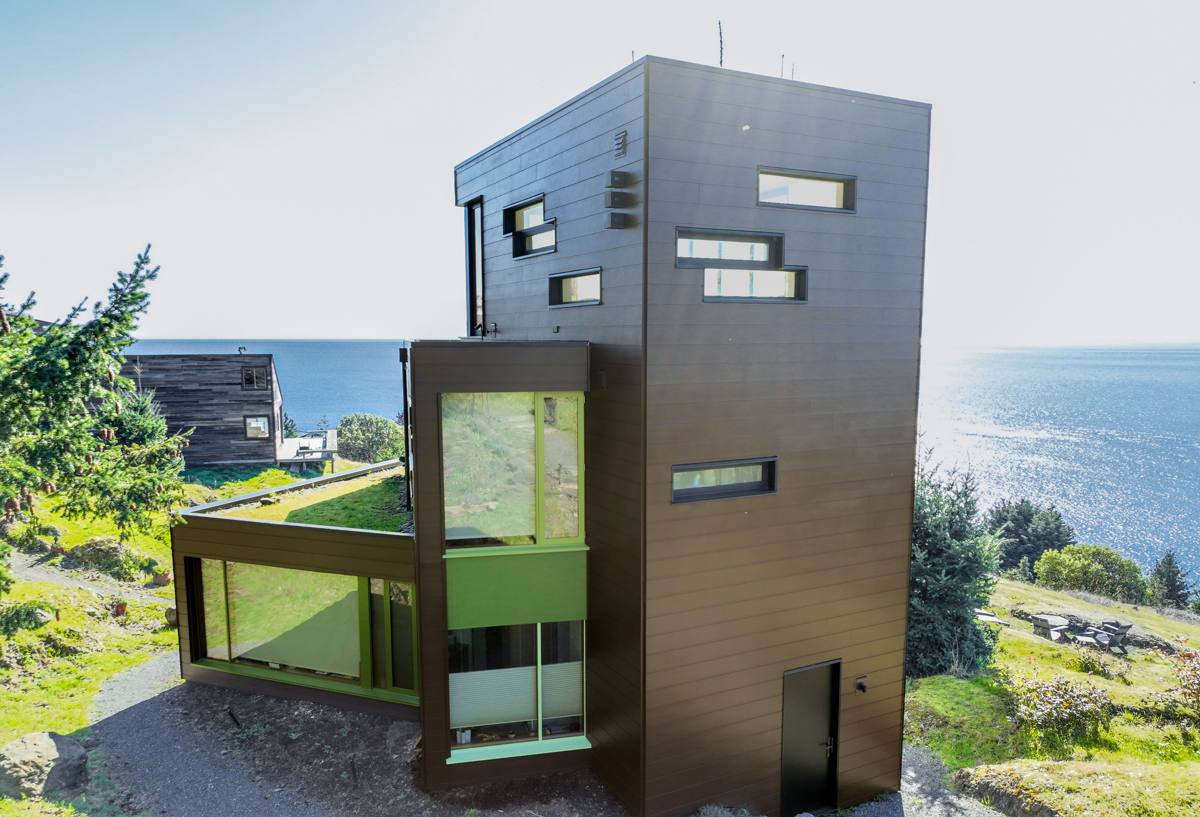
Blaine sits close enough to Semiahmoo Bay and the Strait of Georgia that salt-laden air is a daily fact of life, not an occasional weather event. Add Whatcom County's long, wet winters and the shoulder-season fog that lingers over low-lying areas near the water, and you get a climate that is genuinely harder on exterior siding than most of the state. Homes a few miles inland in Custer see some of this, but properties in and around Blaine typically take the brunt of it first.
Three things drive siding failure here more than anywhere else in our service area: salt air working into seams and fastener points, driving rain that hits west- and south-facing walls at an angle instead of straight down, and a moss season that can run eight months or longer on shaded or north-facing elevations. None of these problems show up overnight. They show up as slow, cumulative damage that homeowners often don't notice until paint is peeling, boards are soft at the bottom edge, or moss has worked its way under trim.
What Salt Air and Driving Rain Actually Do to Siding
Salt Air
Airborne salt is corrosive to metal fasteners and flashing, and it also draws moisture. Salt residue on a wall surface holds humidity longer than a clean surface would, which keeps siding damp even on days when it isn't actively raining. Over years, that constant low-grade moisture exposure breaks down paint films, softens wood-based products, and accelerates rust at nail heads and trim fasteners.
Driving Rain
Storms coming off the water don't fall straight down — wind pushes rain sideways into wall assemblies, which puts far more stress on laps, seams, and butt joints than a calm rain would. If those joints aren't installed and caulked correctly, water finds its way behind the siding and into the sheathing, where it can sit for months before anyone sees a sign of it on the exterior.
Moss and Prolonged Dampness
Moss doesn't just look bad — it holds water directly against the siding surface for weeks at a time. On wood-based or poorly finished products, that constant contact accelerates rot at the exact points where moss tends to collect: bottom courses, under eaves, and anywhere airflow is limited by fencing, landscaping, or a neighboring structure.
Signs Blaine Homeowners Should Watch For
- Paint that's chalking, bubbling, or peeling faster than the rest of the neighborhood, especially on water-facing walls
- Soft or spongy siding near the bottom of walls, around hose bibs, or below window sills
- Persistent moss or algae staining that comes back within a season of cleaning
- Nail heads bleeding rust streaks down the face of the siding
- Visible gaps, warping, or cupping at panel seams and butt joints
- Musty smell or discoloration on interior walls that share an exterior with damaged siding
Any one of these on its own might just mean a repaint or a caulking touch-up. Several of them together, especially on a home that's 15-20+ years old, usually means the siding system itself has reached the end of its useful life and repair would just be delaying a replacement that's already needed.
What a Correct Siding Replacement Involves
A siding replacement isn't just swapping old boards for new ones. Done right, it's an opportunity to fix the underlying moisture management of the wall, not just the surface appearance. For a Blaine property, that means paying close attention to details that matter more here than they would somewhere drier and further from the coast.
Tear-Off and Inspection
Once the old siding is off, the sheathing and framing underneath get inspected for rot, soft spots, or prior water intrusion. This is the one point in the project where hidden damage is fully visible, and it's the wrong place to cut corners — any compromised sheathing needs to be addressed before new siding goes up, not covered over.
Weather-Resistive Barrier and Flashing
A correctly installed weather-resistive barrier (house wrap) and properly integrated flashing at windows, doors, and penetrations is what actually keeps driving rain out of the wall assembly. This layer does more long-term work than the siding material itself, and it's frequently where corners get cut on lower-quality installs.
Fastener Selection
Given the salt air exposure around Blaine, fastener quality and placement matter more than they would inland. Corrosion-resistant fasteners installed to the manufacturer's specified pattern and depth reduce the rust streaking and loosening that shows up early on homes with cut-rate installs.
Proper Clearances
Siding needs the right clearance from grade, roof lines, decks, and other siding planes to let water drain and surfaces dry out between rain events. In a climate with this much sustained moisture, clearance mistakes are one of the most common causes of premature rot — and one of the easiest to get right the first time.
Why We Install Only James Hardie Fiber Cement
We've made a deliberate decision not to install vinyl, LP SmartSide, Cemplank, Allura, primed spruce, or cedar siding. That's not a knock on every use case for those products — it's a reflection of what holds up specifically in a salt-air, high-moisture, moss-heavy environment like Blaine's, and what we're willing to stand behind.
Wood-based products, even engineered ones, are organic material — moisture and rot resistance depends heavily on the factory treatment staying intact, and any cut, gap, or installation error creates a point where water can get in and wood can start to break down. Vinyl handles moisture fine on its own but is prone to warping and fading under strong UV and temperature swings, and it doesn't offer the same fire performance as fiber cement. Cedar looks great when new but requires ongoing maintenance to keep its finish and rot resistance intact — maintenance that's harder to keep up with in a climate this wet.
James Hardie fiber cement is non-combustible, dimensionally stable, and engineered specifically for demanding climates through its HZ5 product line, which is built for exactly the freeze-thaw and moisture conditions the Pacific Northwest coast produces. The factory-applied ColorPlus finish resists fading and chipping far longer than field-applied paint, which matters a great deal on a home getting direct salt spray and UV off the water. It's backed by a strong transferable warranty when installed to Hardie's specifications, which is a meaningful protection for buyers if the home ever sells.
Cost Factors for a Blaine Siding Replacement
| Factor | Why It Matters Here |
|---|---|
| Home size and wall complexity | More corners, dormers, and wall planes mean more seams and flashing detail — and more labor |
| Extent of hidden damage | Rot or moisture damage found during tear-off adds sheathing repair before new siding goes on |
| Trim and accessory scope | Fascia, soffits, and trim boards often need replacing alongside siding for a uniform, weathertight result |
| Siding profile and color | Lap width, shingle-style panels, and premium ColorPlus finishes vary in material cost |
| Site access | Fencing, landscaping, decks, or tight setbacks near the water can add labor time |
We don't publish blanket pricing because these factors genuinely change the scope from one Blaine property to the next — a straightforward single-story home and a multi-level home with several wall planes facing the water are different projects. A walk-through and written estimate is the only honest way to price it.
Our Process for a Blaine Siding Replacement
- On-site inspection of existing siding, trim, and any visible moisture damage
- Written estimate outlining scope, product selection, and timeline
- Careful tear-off with inspection of sheathing and framing before covering anything back up
- Repair of any compromised sheathing or framing found underneath
- Installation of weather-resistive barrier and flashing at all penetrations and transitions
- James Hardie fiber cement installation to manufacturer spec, including fastener pattern and clearances
- Final walk-through so you can see the completed work and ask questions before we consider the job done
Why Local Experience in Blaine Matters
A crew that already works this stretch of Whatcom County understands things a general contractor coming in from further south might not think to check — how much clearance a wall needs given how long moss season really runs here, which elevations catch the worst of the driving rain off the water, and how much salt exposure changes fastener and flashing choices. That's not something you pick up from a manual. It comes from doing this work, on homes like yours, in this specific climate, repeatedly.
It also means we're not guessing at what "normal" wear looks like for a Blaine home versus a home in a drier part of the state. We know what premature failure looks like here, and we know what a correctly installed system needs to hold up against it for the long haul.
If your Blaine home's siding is showing early wear, or you're simply due for a replacement and want it done right the first time, we're happy to take a look. Reach out for a free, no-pressure estimate — the form below gets you started.