 Custer
 Composite Decking for Nooksack Homes: Built for the Weather We Actually Get
Nooksack sits in the wetter, greener stretch of Whatcom County, close enough to the water and the Nooksack River bottomland that homes here deal with a specific mix of conditions: salt-tinged air moving in off the Strait, long stretches of driving rain in the fall and winter, and a moss season that seems to start earlier and last longer every year. A deck built for a dry-climate spec sheet does not hold up the same way out here. Composite decking can be an excellent long-term choice for this area, but only when it is installed with the local climate in mind — not just snapped together to the manufacturer's minimum instructions.
This page covers what composite decking specifically needs to succeed in Nooksack, what a correct installation actually involves, and how we approach the job when we build one here.
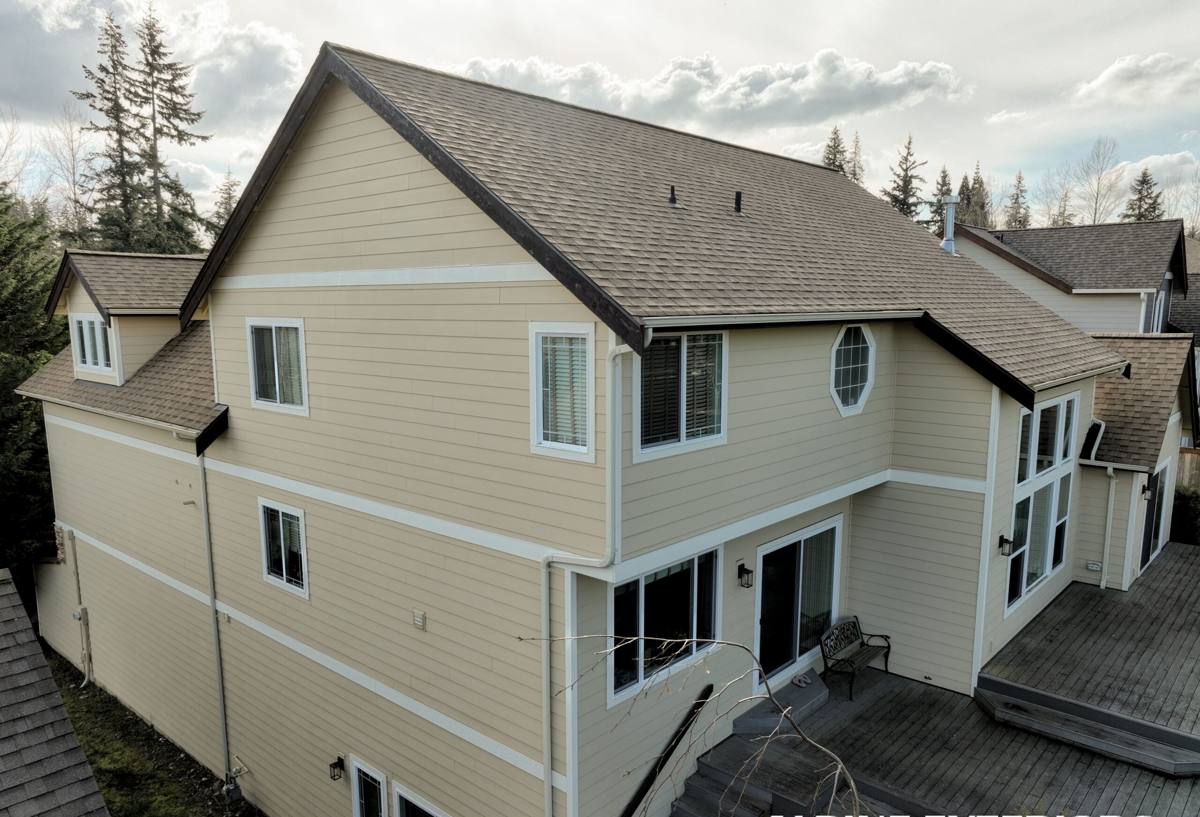
Why Whatcom County Weather Is Hard on Decks
Salt Air and Corrosion
Even a few miles inland, coastal air carries enough salt to accelerate corrosion on the wrong fasteners and hardware. Composite boards themselves don't rust, but every deck has metal in it somewhere — joist hangers, structural screws, ledger bolts, post bases. Standard zinc-coated hardware degrades faster here than it would in a dry inland climate. Over a few seasons that shows up as rust streaks bleeding through the decking, weakened connections, or a ledger board that's quietly corroding where you can't see it.
Driving Rain and Standing Moisture
Whatcom County doesn't just get rain — it gets sideways rain, and plenty of it, for months at a stretch. Composite decking sheds surface water fine, but the real risk is what happens underneath and between boards: water that gets trapped against the substructure, pools in low spots, or wicks into end cuts that weren't properly sealed or capped. That's where rot in the framing and swelling at board ends actually originates, even though the composite boards themselves are moisture-resistant.
Moss and Algae Season
Shaded, damp decks in this area can start growing moss and algae within a single wet season, especially on the north or east side of a house or under tree cover. It's not a defect in the material — it's biology finding a foothold anywhere organic debris and moisture sit undisturbed. The board surface, the gap spacing, and airflow underneath the deck all affect how fast that happens and how easy it is to keep clean.
What a Correct Composite Deck Install Involves
Composite decking is often marketed as low-maintenance, and the boards themselves are. But "low-maintenance boards" is not the same thing as "install it any way you want." Most composite deck problems we get called out to fix in this area trace back to shortcuts in the parts you don't see once the deck is finished.
Substructure and Framing
The joists, beams, and ledger connection carry the deck. In a climate this wet, we favor pressure-treated or naturally rot-resistant framing lumber, correctly spaced joists (composite generally needs tighter joist spacing than wood decking — check your product's span tables, don't assume wood spacing works), and a ledger connection that's properly flashed where it meets the house so water can't migrate behind the siding.
Fasteners and Hardware
We use corrosion-resistant, coastal-rated fasteners and hardware throughout — not just at the visible surface, but at every hanger, bolt, and bracket in the structure. This matters more in Nooksack than it would twenty miles inland.
Drainage and Ventilation Underneath
A deck that can't breathe underneath stays damp longer after every rain, which speeds up moss growth on the surface and increases rot risk in the framing below. Proper grading under the deck, gaps that allow airflow, and keeping the structure clear of trapped debris all matter more here than in a drier climate.
Board Ends and Cut Edges
Every cut end of a composite board is a place water can get in if it's not capped or sealed per the manufacturer's spec. On a job with stairs, picture-frame borders, or custom angles, that's a lot of cut ends — and it's an easy place for a rushed crew to skip a step that never shows up as a problem until year two or three.
Composite vs. Wood vs. PVC Decking: An Honest Comparison for This Climate
| Factor | Composite | Cedar / Pressure-Treated Wood | PVC / Capped Polymer |
|---|---|---|---|
| Moisture behavior | Resists rot and swelling; core is moisture-resistant, not moisture-proof | Needs regular sealing to resist our rain; untreated end grain rots fastest | Fully moisture-resistant surface; some products less rigid in temperature swings |
| Moss/algae resistance | Better than bare wood; still needs periodic cleaning in shaded, damp spots | Prone to moss and mildew without regular treatment | Smooth surface resists organic growth well but isn't immune |
| Maintenance | Occasional wash; no staining or sealing required | Annual or biannual sealing/staining recommended | Occasional wash; no staining or sealing |
| Upfront cost | Mid to upper-mid range | Lowest upfront cost | Highest upfront cost |
| Long-term cost | Lower over 15-20 years due to reduced maintenance | Higher over time from repeated sealing and board replacement | Lowest maintenance cost, higher initial investment |
| Fastener/hardware sensitivity | Moderate — coastal-rated hardware still recommended | High — treated wood is corrosive to standard fasteners | Moderate — same coastal-rated hardware standard applies |
We install composite decking often in this area because, for most Nooksack homeowners, it strikes the right balance: better moisture and moss resistance than untreated wood, without the top-tier cost of full PVC systems. That said, it's not automatically the right call for every project — a shaded, low-airflow site or a very tight budget can change the math, and we'll tell you honestly if that's the case for yours.
Our Process for a Nooksack Composite Deck
- On-site assessment. We look at sun/shade exposure, drainage slope, existing structure (if it's a deck rebuild), and how close the site is to salt air exposure or standing tree cover.
- Framing plan. We spec joist spacing to the actual composite product being installed, not a generic wood layout, and plan ledger flashing and drainage before any decking goes down.
- Structure and hardware install. Framing, ledger connection, and coastal-rated fasteners go in first, with attention to grading and airflow underneath.
- Decking install. Boards are laid to the manufacturer's gap and expansion specs — composite expands and contracts with temperature more than people expect, and gap spacing that's wrong in July can mean buckling or gaps that are wrong in December.
- Finish details. Board ends are capped or sealed per spec, fascia and stair details are completed, and the site is cleaned up.
- Walkthrough. We go over basic care with you before we consider the job done — what to expect from the boards through a wet Whatcom County winter, and what routine cleaning actually looks like.
What Affects the Cost of a Nooksack Composite Deck
| Cost Factor | Why It Matters |
|---|---|
| Composite product tier | Capped composite and premium lines cost more upfront but generally hold up better to moisture and UV than base-tier composite |
| Substructure condition | A rebuild on an existing footprint with sound framing costs less than a full tear-out and new structural build |
| Site accessibility and grading | Sites needing extra drainage work, grading, or footing adjustments for proper airflow underneath add labor |
| Deck size and complexity | Stairs, railings, picture-frame borders, and angled cuts all add labor and increase the number of cut ends needing proper sealing |
| Hardware and fastener spec | Coastal-rated hardware costs modestly more than standard-grade, but it's not the place to cut corners in this climate |
We'll walk through these factors with you directly rather than quoting off a generic per-square-foot number — a straightforward rebuild on solid existing framing and a full new structural build with stairs and a picture-frame border are genuinely different jobs.
Keeping a Composite Deck Looking Good Through a Whatcom County Winter
- Sweep off leaves, needles, and organic debris regularly, especially in fall — trapped debris holds moisture against the board surface and speeds up moss growth
- Wash the deck surface a few times a year with plain water and a stiff (non-metal) bristle brush, more often in shaded or low-airflow spots
- Keep gutters and downspouts near the deck clear so runoff isn't dumping directly onto the deck surface or framing
- Check underneath periodically for standing water, blocked drainage, or debris buildup against the joists
- Address any moss growth early with a gentle deck-safe cleaner — it's much easier to remove when it's a light film than after it's established
- Inspect railings, stair connections, and ledger flashing once a year for anything loose or showing early rust
Why Hiring a Crew That Already Works in Nooksack Matters
Composite decking specs look the same on paper everywhere in the country, but how a deck actually performs depends heavily on how it's built for the site it's on. A crew that works this area regularly already knows which fastener grade holds up to the salt air here, how much airflow a deck needs underneath to fight off moss through a Whatcom County winter, and where drainage tends to be a problem on this kind of terrain. That's not something you get from a manufacturer's install manual alone — it comes from building and repairing decks in these exact conditions, season after season.
It also means when something does need attention down the road — a hardware check, a drainage adjustment, a board replacement — you're calling a crew that's local, knows the area's building patterns, and isn't traveling in from out of the region.
Get a Straightforward Estimate
If you're considering a new composite deck or replacing an aging one in Nooksack, we're happy to come take a look, walk the site with you, and give you a straightforward, no-pressure estimate — including an honest read on what your specific site needs given its sun exposure, drainage, and shade. Use the form below to get started.