 Custer
 Deck Repair Built for Nooksack's Weather
Nooksack sits in a part of Whatcom County where weather off the Strait of Georgia and the Nooksack River bottom combine to keep everything wet for most of the year. Homes here deal with driving rain that gets pushed sideways into ledger boards and stair stringers, a long stretch of low sun angle that keeps decks shaded and damp well into the afternoon, and a moss season that can run from October through May. Add in occasional salt-tinged air moving inland off the coast, and you have a set of conditions that are hard on wood, hard on fasteners, and hard on anything installed without drainage in mind. A deck that would last two decades in a dry climate can show real problems in Nooksack in half that time if it wasn't built or repaired correctly the first time.
This page is about deck repair specifically — not new builds, not decking replacement as a whole-project sale, but the actual work of diagnosing what's failing on an existing deck and fixing it right so the rest of the structure isn't compromised.
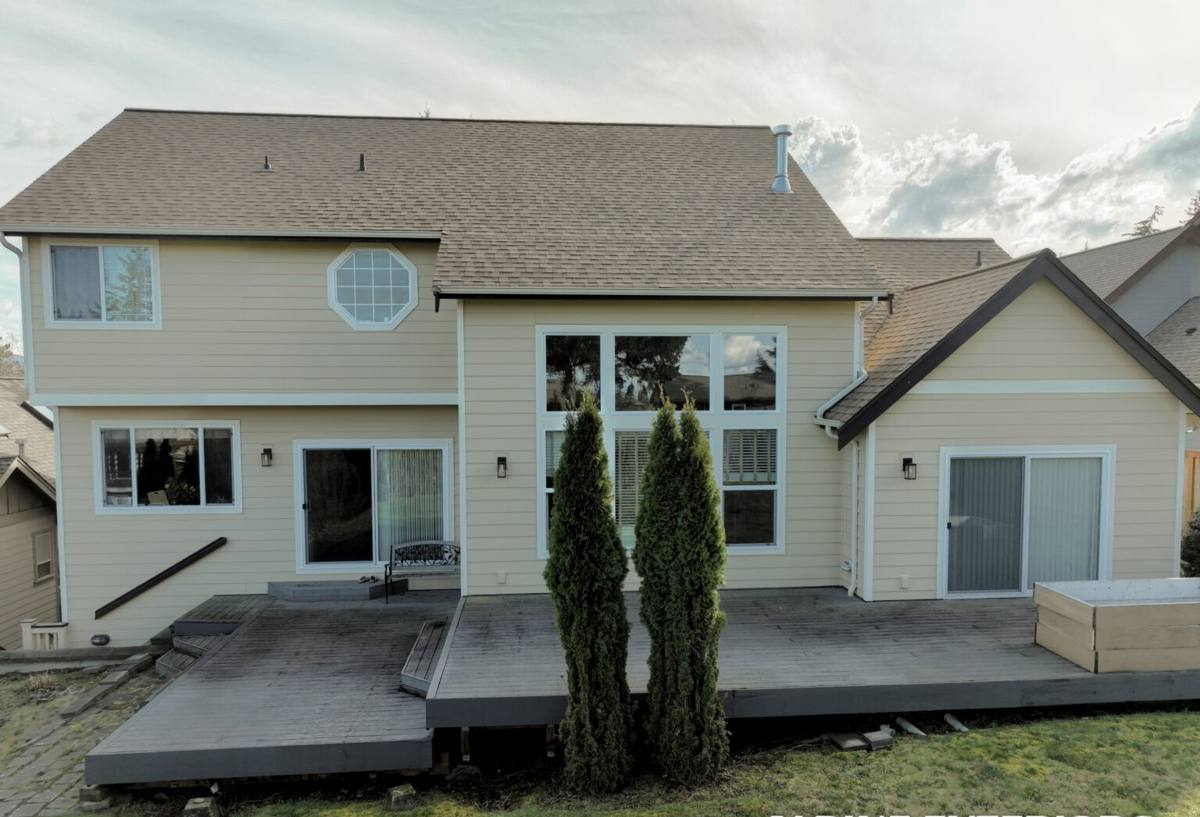
What Nooksack's Climate Actually Does to a Deck
Moisture Finds the Weak Points
Almost every deck repair call we get in this area traces back to water sitting somewhere it shouldn't. The most common failure points are the ledger board connection to the house, joist ends, stair stringers, and any spot where two pieces of wood meet without a gap for water to escape. In a climate with this much sustained rainfall, even a well-built deck needs those joints to shed water — not hold it.
Moss and Algae Aren't Just Cosmetic
A mossy deck surface looks bad, but the real issue is what moss does underneath: it holds moisture against the wood surface long after the rain has stopped, which accelerates rot in decking boards and makes the surface slick and unsafe. Shaded decks, north-facing decks, and decks under trees are the worst affected — and a lot of Nooksack properties have at least one of those conditions.
Fastener and Hardware Corrosion
Nails, screws, and joist hardware that aren't rated for wet, coastal-influenced exposure will corrode faster here than in a drier inland climate. Corroded fasteners lose their holding strength long before they look bad enough to worry a homeowner, which is why a deck can feel "solid" right up until it isn't.
Signs Your Deck Needs Repair, Not Just Cleaning
- Soft or spongy spots underfoot, especially near the house or at stair landings
- Boards that have visibly cupped, split, or pulled away from fasteners
- Railings or posts that wiggle when pushed — this is a safety issue, not cosmetic
- Rust streaks running down from screw heads or joist hangers
- A ledger board area that stays damp long after the rest of the deck has dried
- Stair stringers with visible checking, splitting, or soft wood at the base
- Persistent moss or algae that returns within weeks of cleaning
- Gaps opening up between the deck and the house siding or trim
If you're seeing more than one or two of these, it's worth having someone look at the structure, not just the surface.
What a Correct Repair Actually Involves
Diagnose Before You Replace
The biggest mistake in deck repair is replacing what's visible and leaving the actual problem in place. A board that's rotted on top might be reacting to a joist underneath that's already compromised, or a ledger flashing detail that's letting water behind the house's siding. We check the substructure — joists, beams, posts, and the ledger connection — before deciding what actually needs to come off and what can stay.
Fix the Water Path First
Any repair that doesn't address how water is getting into the structure is a temporary fix. That means proper flashing at the ledger board, gaps between decking boards for drainage, and hardware placed so water doesn't pool against it. In a climate like this one, drainage detailing matters as much as the materials themselves.
Match Materials to the Exposure
Fasteners and structural hardware should be rated for coastal or wet exposure — not the cheapest option available. For decking and framing repairs, we match species and treatment to what's already there when it makes sense, or recommend an upgrade where the original material clearly wasn't suited to this climate.
Structural Repairs Get Inspected, Not Guessed At
Posts, beams, and ledger connections carry load. When we're repairing anything structural, we're checking it against what a deck actually needs to hold safely — not just making it look fixed.
Common Nooksack Deck Repairs, Compared
| Repair Type | Typical Cause Locally | What's Involved |
|---|---|---|
| Deck board replacement | Sun/moisture cycling, moss retention, splitting | Remove affected boards, check joists underneath, install new boards with proper spacing |
| Ledger board repair | Poor original flashing, driving rain intrusion | Remove decking near house, inspect for rot, correct flashing, reattach per code |
| Railing and post repair | Loose fasteners, post-base rot from splash-back | Reinforce or replace posts, upgrade hardware, re-secure railing sections |
| Stair stringer repair | Ground-level moisture, poor original drainage | Assess stringer integrity, replace or sister damaged sections, check footing contact |
| Joist hanger/hardware upgrade | Corrosion from wet, coastal-influenced air | Replace with coastal-rated hardware, correct any improper original installation |
Repair vs. Replace: How We Help You Decide
Not every deck with problems needs to be torn out. The decision usually comes down to three things: how much of the substructure is actually compromised, how old the decking material is relative to its expected life, and whether the original build had the drainage and flashing details right in the first place. A deck with solid framing and a few bad boards is a straightforward repair. A deck where the ledger connection has been letting water in for years, or where multiple joists show rot, often makes more sense to address more comprehensively rather than patching around a structural problem repeatedly. We'll tell you honestly which situation you're in — our goal is a deck that's safe and lasts, not the biggest possible invoice.
Our Process for Nooksack Deck Repair
- On-site assessment. We look at the deck surface, substructure, railings, stairs, and the ledger connection to the house, and identify what's cosmetic versus what's structural.
- Honest scope and estimate. You get a clear picture of what needs to be repaired now, what to watch, and roughly what it will cost — no pressure to over-scope the job.
- Correct the water path. Before any cosmetic work, we address flashing, drainage gaps, and any spot where moisture has been getting trapped.
- Repair with climate-appropriate materials. Fasteners, hardware, and lumber are chosen for what actually holds up in this environment, not just what's cheapest.
- Final check. We walk the deck with you when it's done so you know what was fixed and why.
Why a Crew That Already Works Nooksack Matters
Deck repair done by someone unfamiliar with this specific climate often misses the real cause of failure — they'll replace a rotted board without checking why it rotted, or use standard hardware that corrodes again within a few seasons. A crew that works Whatcom County regularly has already seen how moss builds up in shaded yards along the Nooksack River corridor, how driving rain hits ledger boards on homes facing certain directions, and which fastener and flashing choices actually hold up here versus which ones fail early. That local pattern recognition is the difference between a repair that lasts and one you're calling about again in two years.
Maintaining Your Deck Between Repairs
- Clean moss and algae off the surface at least once a year, ideally before the wet season sets in
- Keep gutters and downspouts clear so water isn't dumping directly onto or near the deck
- Trim back vegetation that's shading the deck and keeping it damp longer than necessary
- Check railings and stair treads for looseness a couple times a year — it's an easy thing to catch early
- Reseal or refinish per the manufacturer's recommended schedule if you have a stained or sealed deck
None of this replaces a proper inspection when something feels off, but it slows down the rate at which Nooksack's climate wears a deck down.
If your deck has soft spots, loose railings, persistent moss, or you're just not sure what condition it's really in, we're happy to take a look. Fill out the form below for a free, no-pressure estimate — we'll tell you honestly what needs attention and what can wait.