 Custer
 Windows Built for the Nooksack Climate
Nooksack sits close enough to the water and low enough in the valley that homes here take a specific kind of weather beating: salt-laden air drifting in off the Strait, driving horizontal rain that hits siding and window frames straight on for months at a time, and a moss season that can run from October clear through April. None of that is unusual for Whatcom County, but it does mean windows chosen for a subdivision in Spokane or a catalog photo in Arizona are the wrong windows here. A window that performs well in Nooksack has to handle constant moisture cycling, resist corrosion from airborne salt, and seal tight enough that wind-driven rain doesn't find its way behind the trim.
We've been doing exterior work in this corner of the county long enough to know which materials sulk after a few winters and which ones just keep working. This page is about one job, done right, in one place: custom window installation and replacement for homes in and around Nooksack.
What "Custom" Actually Means Here
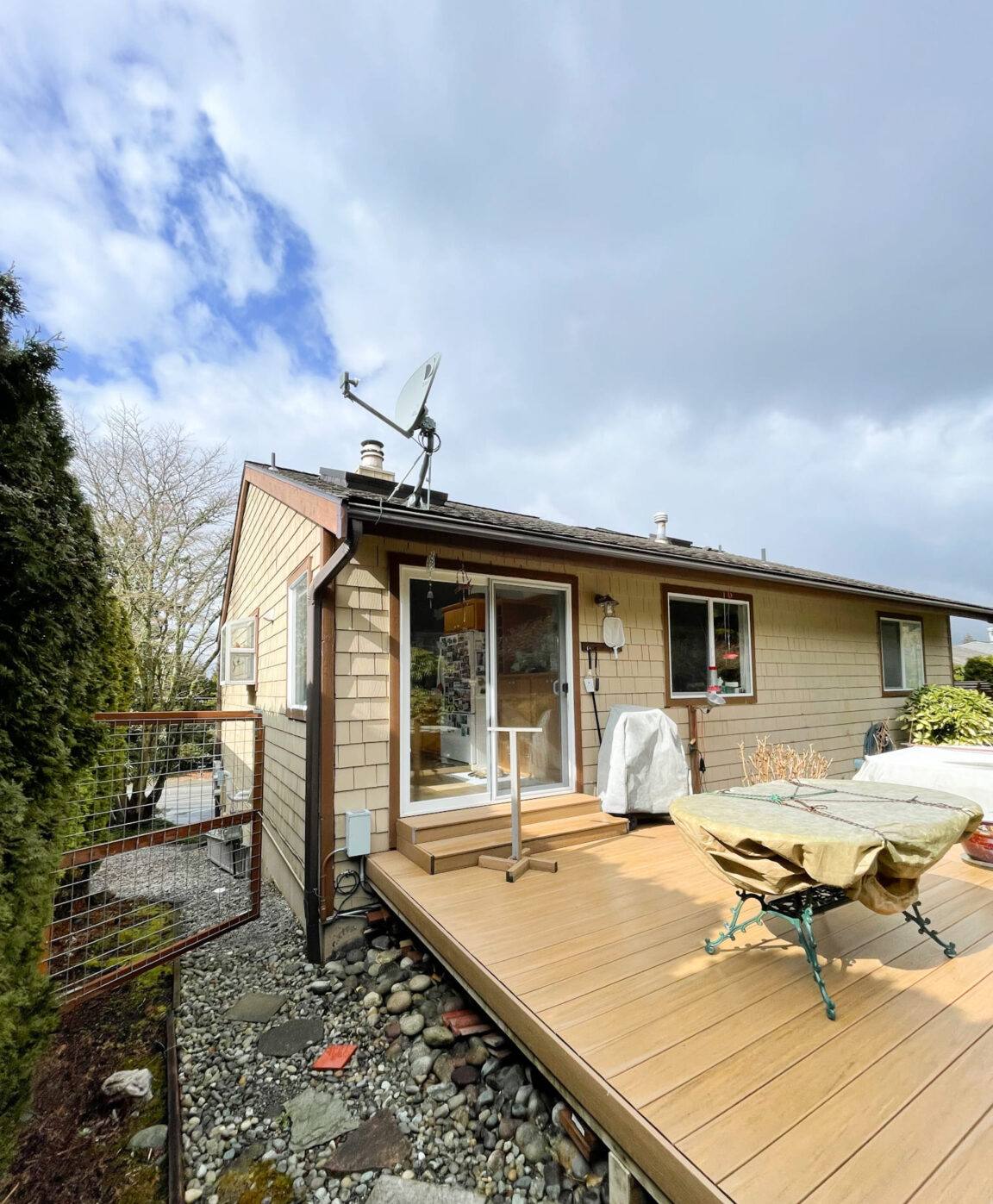
Custom doesn't mean expensive or fancy. It means the window is built to the actual opening and the actual house, instead of forcing the house to accept a stock size. Most homes in this area were built or added onto in stages, and it's common to find openings that are slightly out of square, framed a half-inch off from what a big-box store's standard sizing assumes, or trimmed out in a style that a generic replacement window won't match cleanly.
Custom sizing and detailing matters more here than in a dry climate, because every gap or mismatch is a place for wind-driven rain to work its way in. A window that's caulked to "make it fit" instead of built to fit is a callback waiting to happen once the fall storms start.
- Exact frame dimensions taken from the actual opening, not assumed from a plan set
- Sill and flashing details matched to how water actually moves on that specific wall
- Trim profiles that match the rest of the house instead of standing out as an obvious patch
- Glass and hardware selected for the wall's sun and wind exposure, not a one-size default
Why Stock Sizing Falls Short on Older Nooksack Homes
A lot of the housing stock in this area predates modern window sizing standards. When a stock replacement window gets forced into an opening that's a little too big or too small, installers end up either shimming heavily or cutting into the framing — both of which create weak points. Custom-built windows avoid that problem entirely by starting from the opening's real measurements.
The Three Things That Wreck Windows Around Here
Salt Air
Homes closer to the water deal with airborne salt that settles on hardware, screens, and metal components. Over years, that accelerates corrosion on lower-grade fasteners, hinges, and cranks. We spec hardware and frame materials that are rated to hold up against coastal exposure rather than the standard inland hardware that ships on cheaper window lines.
Driving Rain
Rain in this part of Whatcom County rarely falls straight down — it comes in sideways off the Strait, which means water gets pushed against and under trim in a way that vertical-rain climates never test for. The flashing and sealant details at the head, jambs, and sill of a window matter more here than the window unit itself. A beautiful window with a lazy flashing job will leak; a modest window with correct flashing won't.
Moss and Sustained Moisture
A long moss season means wood trim, sills, and any organic debris sitting against a window stay damp for extended stretches. That sustained moisture is what actually causes rot — not a single rainstorm, but weeks of trim that never fully dries out. Detailing that keeps water moving away from the frame, rather than pooling or wicking into end grain, is what prevents this over the long run.
Material and Frame Options
There's no single "best" window material — there's a best fit for a given wall, budget, and exposure. Here's how the common options actually perform in this climate, in plain terms:
| Frame Material | Moisture & Salt Resistance | Maintenance | Typical Use Case |
|---|---|---|---|
| Vinyl | Good — won't rot or corrode, but color and seals can degrade with UV/weather over decades | Low | Budget-conscious replacements, rental or spec-grade work |
| Fiberglass | Very good — dimensionally stable, handles moisture cycling well, doesn't corrode | Low | Homes wanting durability without wood upkeep |
| Aluminum-clad wood | Good exterior protection, but any breach in the cladding exposes wood to rot | Moderate | Homeowners who want a wood interior look with exterior protection |
| Solid wood | Poor without diligent upkeep — most vulnerable to this area's sustained moisture and moss exposure | High | Historic or period-accurate restorations only |
We don't push solid wood exteriors on homes in this area as a general standard, not because wood windows are bad, but because the maintenance burden of keeping bare exterior wood sealed against Nooksack's rain and moss season is a lot to ask of a homeowner who isn't planning to repaint and reseal every few years. If a homeowner wants that look and understands the upkeep, we'll build it — but we'll say so plainly up front rather than let it be a surprise five years in.
What Correct Installation Looks Like
The window unit itself is maybe a third of what determines whether it performs well. The rest is installation detail, and it's where most of the long-term problems actually start.
- Opening inspection — checking the existing framing, sill, and sheathing for rot or prior water damage before anything new goes in. A new window installed over hidden rot just delays the problem.
- Flashing sequence — sill pan flashing first, then jamb flashing, then head flashing, layered so water is always directed outward and downward, never trapped behind a layer.
- Air and water sealing — a continuous seal between the window frame and the rough opening, using materials rated for this climate's temperature and moisture swings, not a bead of caulk as an afterthought.
- Shimming and leveling — the unit set plumb, level, and square, shimmed at the correct load points so the frame doesn't rack or bind over time.
- Interior and exterior trim — finished to match the home's existing style, with attention to how the trim itself sheds water rather than collecting it.
Our Process for a Nooksack Window Project
1. On-Site Assessment
We look at each opening individually — not just the window itself but the surrounding siding, trim, and any signs of past moisture intrusion. This tells us whether it's a straightforward swap or whether there's framing or flashing work that needs addressing first.
2. Honest Scoping
We'll tell you plainly if we find rot, undersized flashing, or other issues that need fixing before new windows go in. Installing a new window over a compromised opening just hides a problem instead of solving it.
3. Custom Measurement and Ordering
Every opening gets measured on-site, not estimated from a floor plan. Windows are ordered to those exact dimensions.
4. Installation
Old units are removed carefully to protect surrounding siding and trim, the opening is prepped and flashed correctly, and the new window is set, sealed, and finished.
5. Walkthrough
We walk the finished work with the homeowner, operate every window, and confirm everything seals and functions the way it should before we call the job done.
Signs It's Time to Replace, Not Just Repair
- Visible gaps, cracked glazing, or trim that's soft to the touch when pressed
- Condensation forming between panes on double- or triple-glazed units — a sign the seal has failed
- Windows that are difficult to open, close, or lock, especially after damp weather
- Noticeable drafts or cold spots near the frame during winter storms
- Visible mold or discoloration on interior trim near the window, which often points to a moisture path from outside
- Moss or persistent green growth building up on exterior sills or trim
Why Hire a Crew That Already Works in Nooksack
Window installation isn't just a product decision — it's a set of judgment calls about flashing sequence, sealant selection, and framing details that change based on how exposed a given wall is to wind and rain. A crew that works this specific area regularly has already seen how the local weather finds the weak points in a bad installation, and builds around that from the start rather than learning it later on a callback. That's the difference between a window that looks right on install day and one that still performs correctly five wet winters later.
We're not a national franchise cycling through a territory — we're a local siding and exterior crew, and windows are part of the same weather-tight envelope we build around every home we work on in Whatcom County.
Get a Free, No-Pressure Estimate
If you're dealing with drafty, foggy, or hard-to-operate windows on a Nooksack home, we're happy to take a look and give you a straight assessment — no obligation, no pressure. Fill out the form below and we'll get in touch to schedule a time.