 Custer
 Building a Deck That Actually Holds Up in Lynden
Lynden homeowners ask for a lot of things in a deck — more outdoor living space, a place to grill without dodging rain, somewhere the kids or the dog can go straight out the back door. What most people don't ask about, until it's too late, is whether the deck underneath all that is actually built for Whatcom County weather. A deck that would be fine in Spokane or Boise can start failing here in five or six years if it's framed and fastened like it's going somewhere dry.
We build and repair custom decks for homes around Lynden and the surrounding Custer area, and the pattern we see on failing decks is almost always the same: the wood or composite on top looks fine, but the framing, flashing, and fasteners underneath were never built for a climate with this much sustained moisture. This page is about what a deck actually needs to hold up here — not a generic list of deck features.
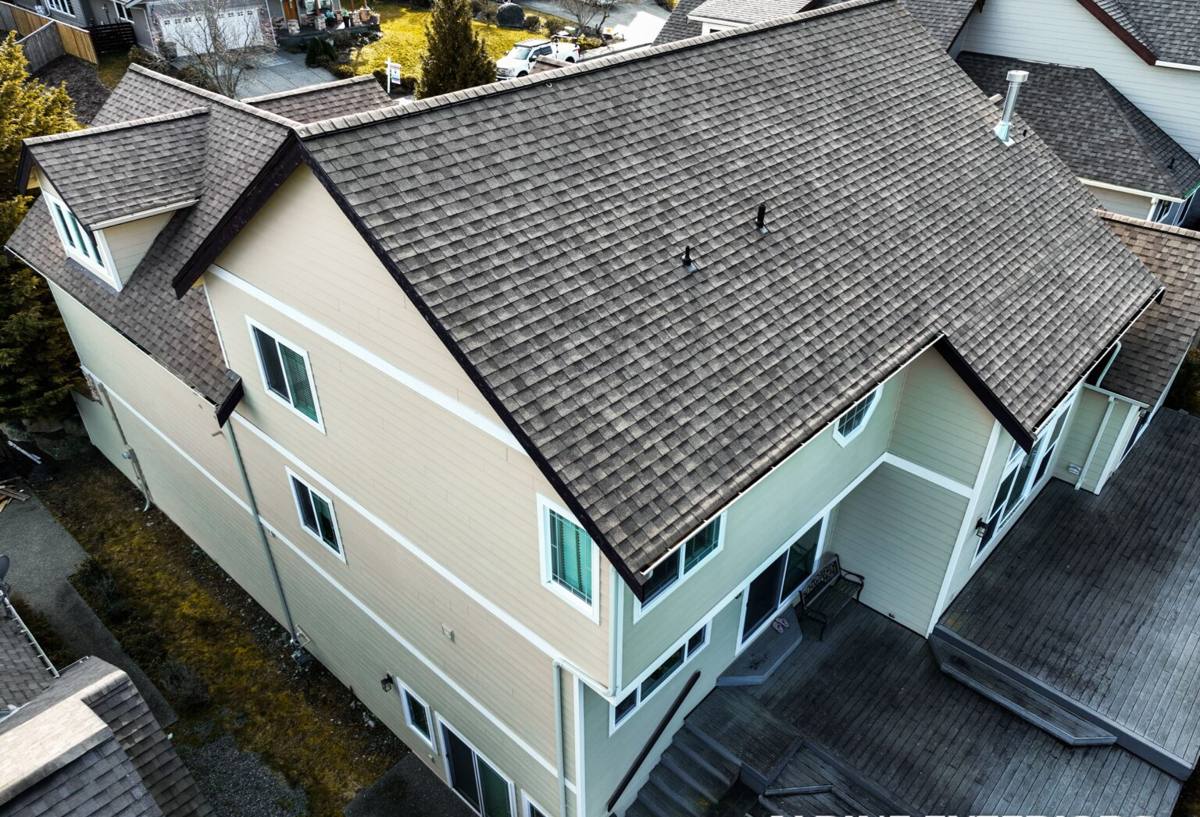
What Salt Air, Driving Rain, and Moss Season Do to a Deck
Whatcom County sits close enough to the Salish Sea that airborne salt is a real factor for exterior metal, even well inland from the water. Combine that with our long wet season — rain that doesn't just fall straight down but gets driven sideways against ledger boards and rail posts by wind off the water — and you get two separate problems working on a deck at once: corrosion and rot.
Then there's moss. Anyone who's owned a home here for more than a season knows moss doesn't wait for a north-facing roof — it'll take hold on any shaded, damp horizontal surface, decking included. Moss and algae hold moisture against the wood or composite surface long after the rain stops, which is exactly the condition that shortens a deck's life. A deck built without that in mind will look tired years before it should.
- Fasteners rust and stain the decking around them within a few seasons if they're not rated for coastal exposure
- Ledger boards and rim joists rot from the inside out when flashing details are skipped
- Moss buildup on boards creates a slip hazard and traps moisture against the wood
- Untreated end grain on cut boards wicks water and splits over winter freeze-thaw cycles
- Footings poured too shallow can heave slightly with frost, throwing framing out of level over time
Ledger Board and Flashing: The Detail That Decides a Deck's Lifespan
If a deck attaches to the house, the ledger board connection is the single most important detail on the whole project — and it's the one detail a homeowner can't see once the deck is finished. Water that gets behind an improperly flashed ledger board doesn't just rot the ledger; it can work its way into the house's rim joist and wall framing, which turns a deck problem into a structural repair.
A correct ledger installation uses proper flashing that directs water out and away from the house, a gap or drainage path so the ledger isn't sitting flush against wet siding, and structural fasteners rated for the load — not just deck screws. In a climate that gets as much sustained rain as ours, this is not a place to save time.
Common ledger mistakes we see on older decks
- No flashing at all, or flashing tucked behind siding incorrectly so water drains behind it instead of over it
- Ledger bolted tight against the house with no drainage gap, trapping moisture against both the ledger and the siding
- Lag screws instead of through-bolts on a deck that should have been engineered for through-bolt connections
- Old caulk used as the only water barrier, which fails long before the wood does
Choosing Decking Material for a Lynden Property
There's no single "best" decking material — there's a best material for your budget, your maintenance appetite, and how much shade and moisture your specific yard holds onto. We walk every material trade-off honestly rather than pushing whatever has the best margin.
| Material | How it handles our climate | Maintenance | Typical lifespan here |
|---|---|---|---|
| Cedar | Naturally rot- and insect-resistant, but still needs to shed water well and be finished regularly | Annual or biennial cleaning and re-staining/sealing | 15-20 years with upkeep |
| Pressure-treated fir/pine | Treatment resists rot, but cut ends and fasteners need care; can cup or check in wet-dry cycling | Regular sealing, especially first few years | 15-20 years with upkeep |
| Composite/PVC decking | Doesn't rot or need staining; some products can be slicker when wet and mossy without a textured surface | Periodic washing to keep moss/algae from taking hold | 25-30+ years, warranty-backed |
Composite has gotten better at shedding moss buildup than it used to be, but "low maintenance" doesn't mean "no maintenance" here — any decking surface in a shaded Lynden backyard will need an occasional wash to stay ahead of algae. Cedar and pressure-treated wood give you a more traditional look and lower upfront cost, but they ask for real upkeep in return. We'll tell you honestly which fits your yard's sun exposure and how much time you actually want to spend maintaining it.
Framing, Footings, and Frost Depth
Framing is where a deck's real durability gets decided, long before anyone picks decking boards. Footings need to be poured to the correct depth for our local frost line so they don't heave or shift over a wet winter. Joists need proper spacing for the decking material chosen — composite generally wants tighter joist spacing than solid wood — and every joist should be protected with a joist tape or cap to keep water from soaking into the top of the framing lumber where screws penetrate it.
We also pay close attention to slope and drainage in the framing stage. A deck surface needs a slight pitch away from the house so water doesn't pool against the ledger or sit under low areas where debris and moss can build up. It's a small detail in the plans that makes a large difference five years later.
Fasteners and Hardware: Why It Matters More Near the Coast
This is one of the most overlooked line items on a deck build, and one of the cheapest to get right upfront. Standard fasteners can start staining and corroding within a few seasons in our air, especially anywhere with salt exposure carried inland by coastal wind. That corrosion isn't just cosmetic — a weakened fastener is a weakened structural connection.
On our builds, structural hardware — joist hangers, post bases, ledger bolts — gets specified to match the treated lumber and coastal exposure, and visible fasteners get chosen to resist streaking and rust so the deck still looks clean years in.
Living With Moss and Algae on a Deck
Even a well-built deck in a shaded Lynden yard will see some moss and algae growth during our long wet season — that's the climate, not a construction defect. What changes the outcome is whether the deck was built to make that growth easy to deal with: a surface texture and gap spacing that lets water drain and dry quickly, and a finish or material that tolerates the occasional cleaning without damage.
A quick seasonal wash — before moss gets a real foothold — is the single most effective thing a homeowner can do to extend any deck's life here, regardless of material.
Permits and Code for Decks in Whatcom County
Most decks attached to a house, and many freestanding decks above a certain height, require a building permit and inspection in Whatcom County. Guardrail height, baluster spacing, and stair requirements are all governed by code, and inspectors here pay particular attention to ledger attachment and footing depth for exactly the reasons above — they're the details most likely to fail quietly in our climate. We handle permitting and scheduling inspections as part of the job so you're not tracking down paperwork yourself.
Our Deck-Building Process
The process is straightforward, but we don't skip steps to move faster:
- On-site visit to look at grade, drainage, sun/shade exposure, and how the deck will tie into the house
- Design and material discussion, including honest trade-offs between wood and composite for your specific yard
- Permit drawings and submission where required
- Footings and framing, built to local frost depth with coastal-rated hardware and joist protection
- Ledger flashing and decking installation, with attention to drainage slope and fastener choice
- Final walkthrough and inspection sign-off
Before you sign a contract with anyone for a Lynden-area deck, it's worth knowing what a properly built job should include:
- A specific plan for ledger flashing, not just "we'll seal it up"
- Footing depth appropriate to local frost conditions, confirmed in writing
- Coastal-rated or corrosion-resistant fasteners and structural hardware
- Joist protection under the decking, not bare cut lumber
- A permit pulled and inspected where the project requires one
- A clear answer on maintenance expectations for whichever material you choose
Why a Local Crew Matters for a Lynden Deck
Lynden and the Custer area share the same weather pattern — the same driving rain, the same salt-carrying wind off the water, the same long moss season — and a crew that works here regularly builds to that reality without having to think twice about it. We're not adapting a deck design built for a drier region; every footing depth, flashing detail, and fastener choice on a Lynden job reflects what we've seen actually go wrong on decks in this county over time. That local familiarity is part of what you're paying for, even if it never shows up as a line item.
If you're planning a new deck or replacing one that's showing its age, we're happy to come take a look and give you a straightforward, no-pressure estimate — just fill out the form below.