 Custer
 Why Lynden Homes Need Siding Built for This Climate
Lynden sits inland from the coast, but that doesn't mean the coast doesn't reach it. Marine air moves across Whatcom County's lowlands most of the year, carrying moisture and, closer to the water, salt that works its way into the region's rain and fog. Add long stretches of driving rain off the Pacific, short winter daylight, and shaded north- and east-facing walls that never fully dry out, and you get a siding environment that punishes anything not built for sustained dampness. Moss doesn't need standing water to take hold — it needs shade, moisture, and time, and Whatcom County gives it all three for months at a stretch.
Homes around Lynden tend to sit on larger lots with mature trees, windbreaks, and outbuildings that create exactly the kind of shaded, still-air pockets moss and mildew prefer. Combine that with the area's exposure to wind-driven rain during fall and winter storms, and siding gets tested on two fronts at once: constant moisture exposure and repeated wetting-and-drying cycles that stress seams, fasteners, and paint film. Siding that's marginal in a drier climate often fails outright here — cupping, delaminating, or growing moss within a few seasons of installation.
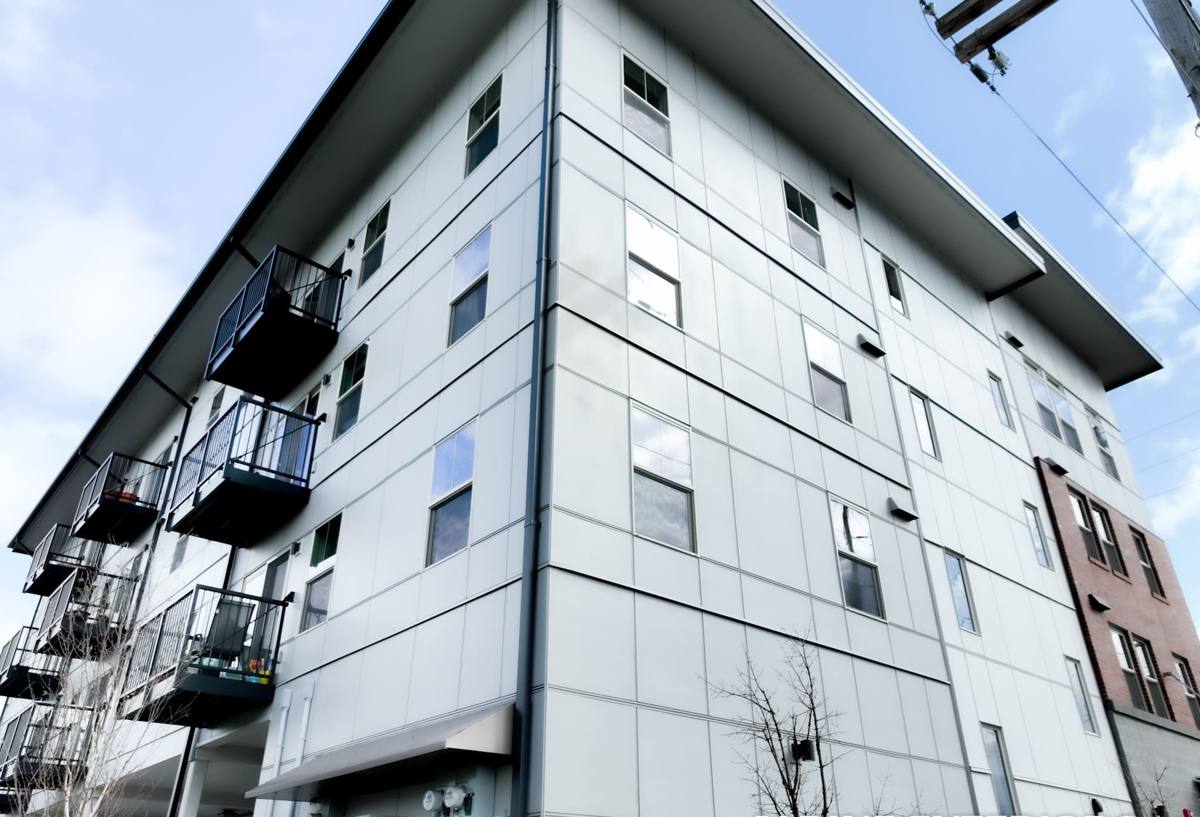
What a Correct Fiber Cement Installation Actually Involves
Fiber cement siding has a strong reputation, but that reputation only holds when the installation matches the product's engineering. A lot of the failures we get called out to inspect aren't material failures — they're installation shortcuts that let moisture in behind siding that was never designed to manage bulk water on its own. In this climate, that gap between "installed" and "installed correctly" shows up faster than it would somewhere drier.
The details that matter most here
- Correct water-resistive barrier and flashing details at every window, door, and penetration — this is where most moisture intrusion actually starts
- Proper starter strip and clearance at the foundation so siding never sits in standing water or wicks moisture from grade
- Manufacturer-specified fastener type, spacing, and penetration depth — under- or over-driven nails are a common cause of premature cracking
- Correct panel gaps and caulking at butt joints, sized for the region's temperature swings so the material can expand and contract without splitting the seal
- Rainscreen or drainage gap where wall assembly and exposure call for it, so any moisture that does get behind the cladding has somewhere to go
- Factory-primed or factory-finished cut edges sealed in the field, not left raw and absorbent
None of this is exotic. It's the kind of work that's straightforward to do right and easy to skip when a crew is moving fast. The skipped steps don't usually show up as a problem in year one — they show up in year four or five, as a soft spot at a window corner or moss creeping up from a J-channel that was never sealed.
James Hardie: The Only Fiber Cement We Install
We install James Hardie fiber cement exclusively — not as a brand preference, but because it's the product we're confident holds up to what Whatcom County weather does to a house. Hardie's HZ5 formulation is engineered specifically for climates with sustained moisture exposure, which describes Lynden for a good part of the year. The board is non-combustible, dimensionally stable across wet and dry cycles, and doesn't absorb water the way wood-based or wood-fiber composite sidings can.
The ColorPlus finish matters just as much as the substrate. It's baked on at the factory under controlled conditions, which gives it better fade and moisture resistance than field-applied paint — and it means touch-ups and repaints happen far less often over the life of the siding. In a climate where field-painted surfaces are fighting rain for half the year before they've even cured properly, a factory finish is a real practical advantage, not a marketing point.
We don't install LP SmartSide, vinyl, Cemplank, Allura, or unfinished wood siding, and we're upfront about why: each of those products asks a homeowner to accept some combination of higher maintenance, more moisture sensitivity, or a weaker long-term warranty than we're willing to stand behind on a Lynden roofline. Hardie isn't perfect for every budget, but it's the product we trust to actually deliver on its expected lifespan here.
Choosing the Right Hardie Line for a Lynden Home
| Product Line | Best For | Notes for This Climate |
|---|---|---|
| HardiePlank Lap Siding | Most homes, traditional look | Widest color range in ColorPlus; workhorse choice for full re-sides |
| HardieShingle | Accent gables, dormers | Good for breaking up large wall planes without adding maintenance |
| HardiePanel | Modern/board-and-batten styles | Popular on shops, additions, and contemporary remodels |
| HardieTrim | Corners, fascia, window trim | Matches lap siding durability instead of mixing in wood trim that rots first |
Our Process for Lynden Projects
Every project starts with a walk-around inspection, not a quote pulled from a square-footage estimate. We're looking at wall orientation, tree cover, roofline details, and existing moisture damage — the things that determine whether a wall needs extra flashing attention or a drainage gap versus a standard install.
- Site assessment — full exterior walkthrough, moisture check on existing siding and sheathing, photos of problem areas
- Scope and estimate — line-item breakdown of siding, trim, flashing, and any sheathing repair, with product line and color options
- Tear-off and sheathing check — old siding removed, sheathing inspected and repaired before anything new goes up
- Water-resistive barrier and flashing — installed to manufacturer spec at every penetration before a single board is hung
- Hardie installation — correct fastening, gapping, and caulking per the manufacturer's installation guide for this climate zone
- Final walkthrough — joint-by-joint check with the homeowner before we call it done
We don't sub the flashing and moisture-barrier work out to whoever's cheapest that week — it's done by the same crew doing the siding, so there's one point of accountability if something needs a second look.
What Drives Cost on a Lynden Siding Project
| Factor | Why It Matters Here |
|---|---|
| Existing sheathing condition | Moss-season moisture intrusion often means rot repair before new siding can go on |
| Wall complexity | Dormers, bump-outs, and multiple gables add flashing detail and labor time |
| Product line and finish | Lap vs. shingle vs. panel, plus ColorPlus color selection |
| Trim scope | Full HardieTrim package vs. reusing sound existing trim |
| Access and site conditions | Larger lots, outbuildings, and landscaping can affect staging and scaffolding needs |
We won't quote a number without seeing the house — anyone who does hasn't accounted for what's actually behind the existing siding, which on an older Lynden home is often the biggest variable in the whole project.
Signs Your Current Siding Is Already Losing the Fight
- Moss or dark green streaking on north- or shade-facing walls that comes back within a season of cleaning
- Soft, spongy spots when you press on siding near window sills or the bottom courses
- Peeling or bubbling paint that keeps recurring in the same spots year after year
- Visible gaps, cracking, or warping at butt joints and corners
- Musty smell or visible staining on interior walls that share an exterior wall with a problem area
- Siding that was caulked over repeatedly instead of having the underlying flashing addressed
Any one of these on its own might be minor. Two or three together, especially on an older home, usually means moisture has been getting behind the cladding for a while — worth a proper inspection before it turns into sheathing or framing repair.
Why Hiring a Crew That Already Works in Lynden Matters
Siding installation isn't one-size-fits-all across Whatcom County. A crew that mostly works drier inland sites or comes from outside the region doesn't always account for how aggressively moss and driving rain work on shaded rural walls, or how much flashing detail a Lynden property's tree cover and lot layout actually demand. Local experience means we've already seen how these houses fail and what it takes to prevent it — not guessing from a generic installation manual.
It also means straightforward accountability. We're not driving in from out of the area for a one-off job — we're doing work in the same communities we live and operate in, which is exactly the kind of arrangement that keeps a contractor honest about callbacks and warranty follow-up.
After Installation: What Upkeep Actually Looks Like
Correctly installed Hardie siding is low-maintenance, not no-maintenance. A yearly rinse to knock back moss before it establishes, a quick look at caulking around windows and trim every couple of years, and prompt attention to any gutter or downspout issue that's dumping extra water onto a wall will keep the siding performing for decades. That's a far lighter workload than wood siding demands, and it avoids the cracking and moisture absorption issues that show up on lower-grade fiber cement or composite products installed without the right details.
If you're planning a re-side, an addition, or you're just seeing early signs of trouble on a Lynden property, we're happy to take a look and give you a straight answer about what's actually going on. Reach out for a free, no-pressure estimate using the form below.