 Custer
 Lynden Decks Face a Specific Kind of Wear
Lynden sits inland from the Salish Sea in Whatcom County, but it still gets the same weather pattern that soaks the rest of the county: long stretches of steady rain from fall through spring, humid air that never fully dries out, and just enough salt-tinged breeze rolling in off nearby coastal areas to accelerate corrosion on anything metal. Add in the moss and algae that thrive in shaded, damp yards, and a deck here works harder than one in a drier climate ever would.
None of that means a deck is doomed. It means a deck needs to be built and repaired with that climate in mind, not just patched with whatever's on hand. When we go out on a deck repair call in Lynden, we're not troubleshooting stains and creaks in a vacuum — we're accounting for how many wet seasons this deck has already survived and how many more it needs to.
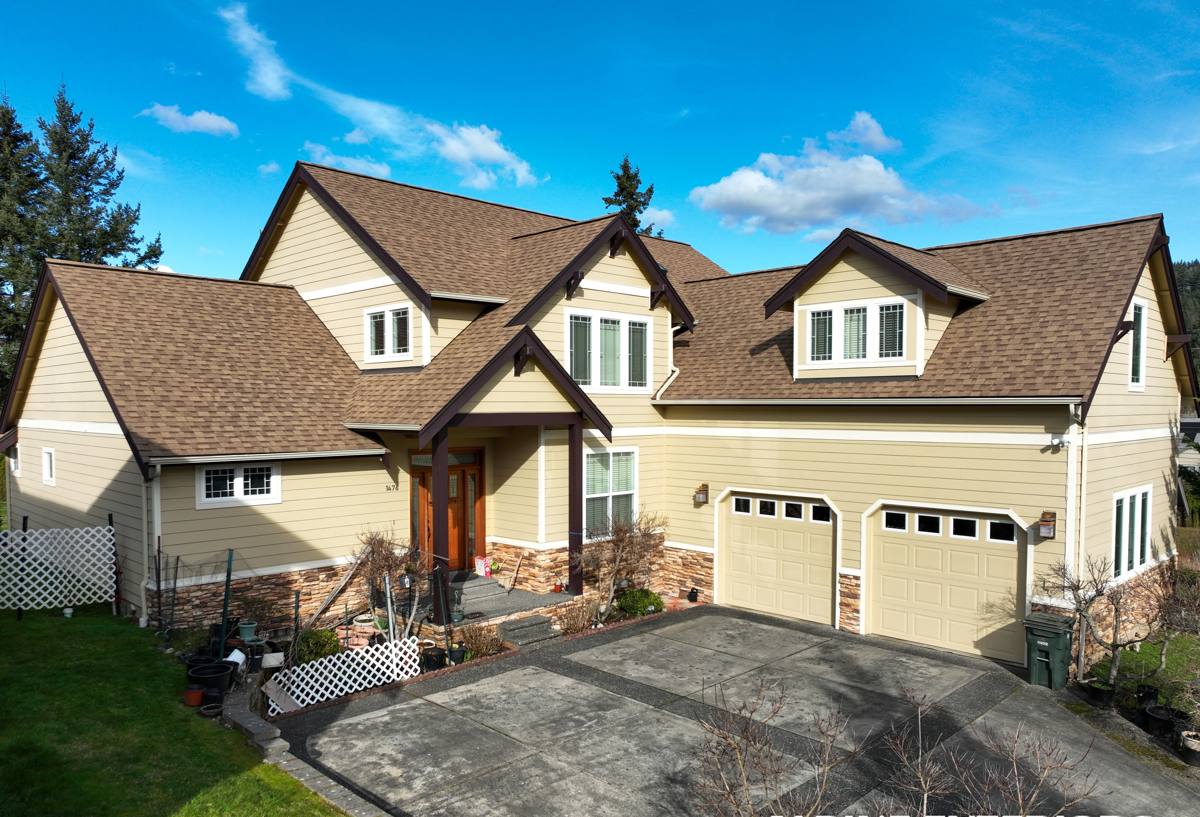
What Whatcom County Weather Does to a Deck Over Time
Moisture That Never Fully Leaves
Wood decking dries out between rain events in drier climates. In Lynden, the gap between rain events is often too short for that. Boards stay damp longer, fasteners sit in moisture longer, and any spot where water can pool or get trapped — under a board that's cupped, behind a ledger board, around a post base — becomes a slow-motion rot problem.
Moss and Algae Growth
A long moss season isn't just a cosmetic nuisance. Moss holds moisture against the wood surface, and its root structure works into the grain and fastener holes, which speeds up softening and decay in spots that would otherwise dry out fine. Shaded decks, north-facing decks, and decks under trees see this the worst.
Corrosion from Salt Air and Humidity
Fasteners, joist hangers, and structural hardware take the brunt of this. Once a nail, screw, or bracket starts rusting, it loses holding strength well before it looks obviously bad. A deck can look solid on the surface while its connections are quietly failing underneath.
Freeze-Thaw Cycling
Whatcom County doesn't get brutal winters, but it does get enough freeze-thaw swings to open up small cracks in wood and concrete footings a little more each year. Combined with constant moisture, that's a slow but steady path to structural weakness if it's never addressed.
Signs a Lynden Deck Needs Repair — Not Just a Wash
Homeowners often power-wash a deck and assume that solves the problem. Sometimes it does. Other times it just makes a deteriorating deck look better for a season. Here's what actually points to a repair need:
- Boards that feel soft, spongy, or flex noticeably when you step on them
- Visible gaps, splits, or cupping in individual deck boards
- Rust streaks running down from screws or nail heads
- A railing or guardrail that wobbles or shifts under light pressure
- Stairs that feel less solid than the rest of the deck
- Any spot where the deck meets the house (the ledger board area) that looks discolored, swollen, or separated
- Persistent moss or dark staining that comes back within weeks of cleaning
- Visible sagging between joists, even if it's minor
Any one of these can be a simple, contained fix. Several at once, especially around the ledger board or support posts, usually means it's worth having someone look at the structure, not just the surface.
What a Correct Deck Repair Actually Involves
A repair that only replaces what's visibly damaged on top can leave the real problem underneath untouched. We look at a deck in layers:
Structural Framing
Joists, beams, and posts are the part homeowners can't see and often don't think about, but they're what everything else depends on. If a joist has softened from years of trapped moisture, replacing the decking boards above it without addressing the joist just resets the clock on the same failure.
The Ledger Board Connection
This is the board that attaches the deck to the house, and it's one of the most common failure points in our climate because it's a spot where water can get trapped between two surfaces with nowhere to drain. Proper flashing and fastening here matters as much as anything else on the deck.
Fasteners and Hardware
We don't reuse corroded fasteners or hangers just because the surrounding wood is fine. Mismatched or degraded hardware is a common reason a "repaired" deck develops new problems within a couple of years.
Decking Boards and Railings
This is the visible part — replacing individual boards, resecuring or rebuilding railings, and addressing stair treads. It's also the part that gets the most attention from homeowners, even though it's rarely the most important structurally.
Repair or Replace? What Actually Drives That Decision
| Factor | Leans Toward Repair | Leans Toward Replacement |
|---|---|---|
| Framing condition | Joists and posts are solid, damage is isolated | Multiple joists or the ledger board show rot |
| Age of the deck | Under 15-20 years, built to a reasonable standard | Older deck nearing the end of its practical life |
| Extent of damage | A handful of boards, a section of railing | Damage spread across most of the surface |
| Footings and posts | Stable, no visible cracking or heaving | Settling, cracked, or undersized for current code |
| Budget goals | Extend usable life for a lower cost now | Want a longer-term reset and possibly a different material |
Most decks we're called out to in Lynden fall on the repair side of this table. Full replacement is sometimes the right call, but it's not the default — we'd rather fix what's genuinely wrong than sell a full rebuild a deck doesn't need.
How We Approach a Deck Repair
- Full inspection first. We check the surface, but we also get underneath the deck where possible to look at joists, posts, and footings — that's where the real answers are.
- Identify the source of the problem, not just the symptom. If boards are rotting because of a drainage issue or a flashing gap at the ledger board, we address that cause so the same spot doesn't fail again in a couple of years.
- Replace only what needs replacing. Sound wood stays. Compromised framing, boards, or hardware come out.
- Use fasteners and hardware rated for our climate. Corrosion-resistant hardware costs more upfront and saves the homeowner from repeating this work early.
- Check railings and stairs for code-relevant stability, since these are the parts of a deck most tied to everyday safety.
- Leave the deck with a clear picture of what was found — including anything worth watching over the next few years, so there are no surprises.
Materials: What We Use and the Trade-Offs Involved
For deck board and railing repairs, homeowners in Lynden generally choose between treated wood and composite material, and both have a place depending on the situation.
Pressure-treated lumber is affordable, easy to match to an existing deck's look, and simple to replace board-by-board later. Its trade-off is that it needs periodic sealing or staining to perform well in a wet climate — skip that maintenance for a few years and it starts absorbing moisture faster than it should.
Composite decking costs more upfront and resists moisture and moss growth better with less maintenance, which appeals to homeowners tired of yearly upkeep. Its trade-off is that it can't always be seamlessly patched into an older wood deck, and installation needs to be done correctly the first time since composite doesn't forgive gaps or improper spacing the way wood sometimes does.
We don't push one material as universally better. We'll walk through what fits the existing deck, the budget, and how much upkeep the homeowner actually wants to do going forward.
Keeping a Lynden Deck in Good Shape Between Repairs
- Sweep off leaves and debris regularly — trapped organic matter holds moisture and feeds moss
- Rinse or lightly clean the deck surface a few times a year, especially shaded areas
- Check fasteners and railing connections at least once a year for rust or looseness
- Reseal or restain wood decking on the manufacturer's recommended schedule, not just "when it looks dry"
- Keep gutters and downspouts clear so runoff isn't draining directly onto or under the deck
- Trim back vegetation that's shading the deck and keeping it damp longer than necessary
Why Hire a Crew That Already Works in Lynden
Deck repair done right depends on understanding how a specific climate treats a specific structure over time, and that's something you learn from doing the work locally, not from a general checklist. A crew that's already repairing decks around Lynden and the surrounding Whatcom County area knows which failure points show up here repeatedly — the ledger board connections, the corroded fasteners, the shaded corners where moss takes hold first — and inspects for them as a matter of habit, not an afterthought.
That local familiarity also means a more honest assessment. We're not guessing at how this deck will hold up against another Whatcom County winter — we've seen how decks like it actually perform, and we'll tell you plainly what's worth fixing now versus what can reasonably wait.
Get a Straightforward Look at Your Deck
If your deck in Lynden is showing soft spots, rust stains, a wobbly railing, or just feels less solid than it used to, it's worth having someone take a real look before those small issues turn into a bigger project. Fill out the form below for a free, no-pressure estimate — we'll tell you honestly what we find and what it would take to fix it right.