 Custer
 Why Siding Installed in Lynden Has to Work Harder
Lynden sits inland from the Salish Sea but close enough that salt-laden air still reaches homes here, especially during winter storms that push moisture off Bellingham Bay and up through Whatcom County's low-lying farmland. Add to that the region's long, wet fall-through-spring stretch of driving rain, and a moss season that can run eight months or more on north-facing walls and shaded elevations, and you have a climate that punishes siding that isn't installed correctly. This isn't a coastal-only problem. Wind-driven rain finds its way into laps, seams, and fastener points on any exterior wall, and Whatcom County's persistent cloud cover keeps siding damp for days at a time after a storm passes. Siding here doesn't just need to look good — it needs to shed water fast, resist moss and mildew growth, and hold its finish through repeated freeze-thaw and wet-dry cycles without cupping, swelling, or rotting.
Homeowners in Lynden often don't notice the toll until it shows up as a soft spot near a downspout, a stretch of siding that's gone spongy behind a shrub line, or paint that's peeling faster on the north wall than anywhere else on the house. By the time those signs are visible, moisture has usually been working behind the siding for a while. The fix isn't a different color or a quick recoat — it's a siding system and installation method built for exactly this kind of weather.
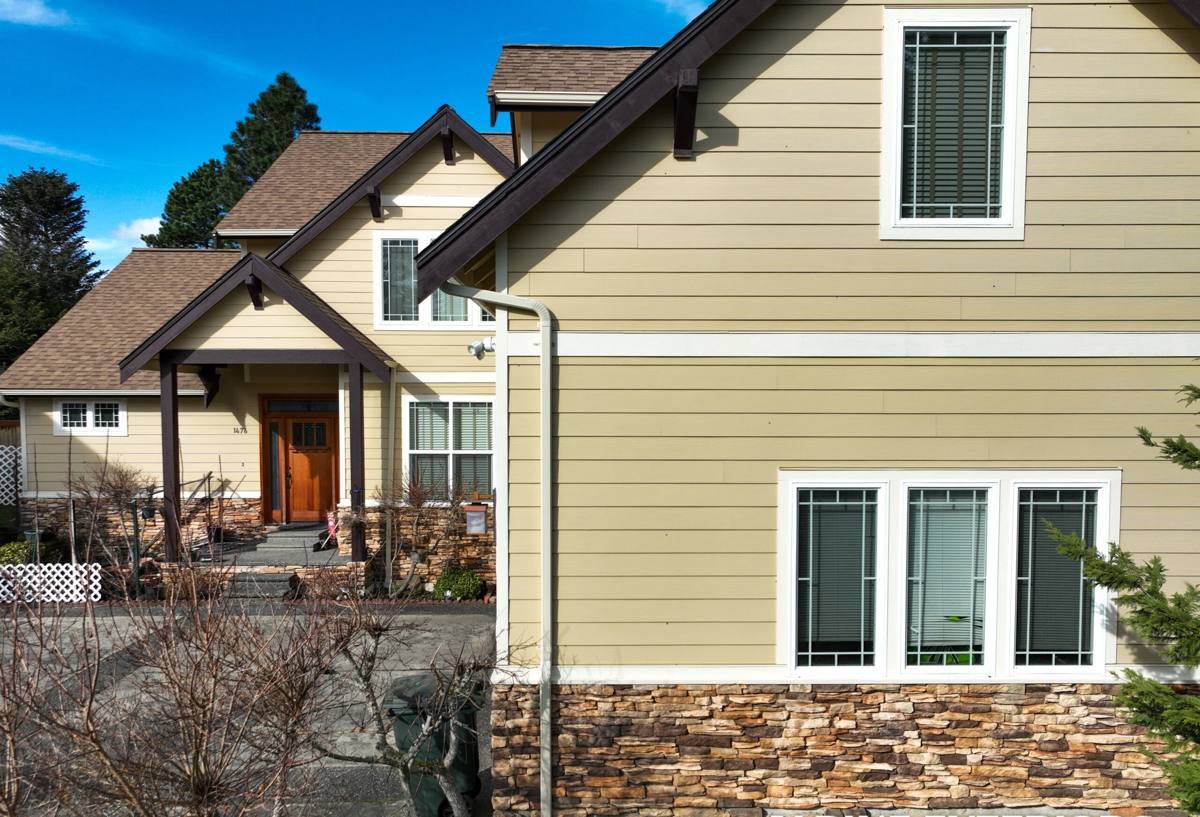
What "Correct" Siding Installation Actually Means Here
A siding job can look finished and still fail within a few years if the details underneath aren't right. In a climate like Lynden's, the installation details matter more than the product label. A correct install includes:
- A continuous weather-resistive barrier behind the siding, lapped correctly so water is directed outward and down, not trapped against the sheathing
- Properly flashed windows, doors, and any wall penetrations — the single most common failure point on older Lynden homes we inspect
- Correct fastener type, spacing, and depth for the specific siding product, matched to local wind exposure
- Minimum clearance from grade, decks, patios, and roof lines so siding isn't sitting in standing water or splash-back
- Caulked and sealed joints only where the manufacturer specifies — over-caulking traps moisture just as badly as under-caulking
- Ventilation behind the cladding so any incidental moisture can dry out instead of sitting against wood framing
Skip any one of these and you're not really buying "new siding" — you're buying a new façade over the same moisture problems, just delayed. This is why we treat installation technique as seriously as the product choice itself.
Why We Only Install James Hardie Fiber Cement
We don't install vinyl, LP SmartSide, Cemplank, Allura, primed spruce, or cedar. That's a deliberate standard, not a sales preference, and it's worth explaining honestly rather than just stating it.
Vinyl is affordable and low-maintenance in mild climates, but it expands and contracts significantly with temperature swings, and in wind-driven rain it relies almost entirely on a well-executed weather barrier behind it — the panel itself isn't doing much to stop water. Wood-based composite sidings like LP SmartSide perform well when kept dry and coated on schedule, but any breach in that factory coating opens the door to the exact moisture absorption that swells and delaminates wood substrate — a real risk given how many wet days Lynden gets in a typical year. Cedar is a beautiful, time-tested material, but it demands ongoing refinishing, and in a climate with this much sustained dampness and moss pressure, that maintenance schedule is unforgiving. Primed spruce lap siding needs a field-applied topcoat almost immediately or it starts absorbing moisture at the primer layer. Cemplank and Allura are also fiber cement, and reputable products in their own right — but we've standardized our crews, flashing details, and warranty process around one system rather than switching between products, and James Hardie's regional engineering and factory finish is the one we trust for what this area throws at a house.
James Hardie fiber cement is non-combustible, dimensionally stable across our wet winters and dry summer stretches, and available in HZ5 formulations engineered for exactly the freeze-thaw, moisture-cycling climate found throughout the Pacific Northwest. The factory-applied ColorPlus finish is baked on under controlled conditions — not brushed on at the jobsite — which means better adhesion and a finish that resists the fading and peeling that field-applied paint struggles with under Whatcom County's cloud cover and moisture. It also carries a strong, transferable warranty, which matters to homeowners who plan to sell in Lynden's active local market.
How Our Installation Process Works
Every Lynden project follows the same sequence, because skipping steps is where siding jobs go wrong.
- Site and wall assessment. We check existing sheathing, look for hidden rot around windows and penetrations, and assess drainage, grade clearance, and roof-to-wall transitions before any material is ordered.
- Weather barrier installation or repair. Any compromised house wrap is replaced. Laps are corrected and taped where needed so water sheds outward, not into the wall cavity.
- Flashing at every penetration. Windows, doors, hose bibs, vents, and light fixtures all get proper flashing before siding goes on — this step alone prevents most of the callbacks we see on homes sided by other crews.
- Hardie panel or lap installation to manufacturer spec. Correct fastener pattern, blind- or face-nailed per product line, with clearances maintained at grade, roofline, and any attached structures.
- Trim, caulking, and finish detailing. Only sealing the joints that should be sealed, leaving designed drainage paths open.
- Final walkthrough. We review clearances, finish quality, and any transition details with the homeowner before calling the job complete.
This process doesn't change based on budget or house size — it's the same sequence whether we're doing a single elevation repair or a full re-side.
Choosing the Right Hardie Line for a Lynden Home
James Hardie makes several distinct product lines, and the right choice depends on the home's architecture and exposure, not just aesthetics.
| Hardie Product | Best Use in Lynden | Why It Fits |
|---|---|---|
| HardiePlank Lap Siding | Most homes, all elevations | Traditional lap profile, strong moisture resistance, wide color range |
| HardieShingle | Accent walls, gables, farmhouse-style homes | Cedar-shake look without the maintenance burden of real cedar |
| HardiePanel | Modern builds, board-and-batten accents | Clean vertical lines, holds up well under sustained rain exposure |
| HardieTrim | Corners, fascia, window and door surrounds | Matches panel expansion rate, prevents mismatched weathering at edges |
North- and west-facing walls — the sides that catch the most driving rain and stay shaded longest — are where product choice and detailing matter most. We often recommend the same product family across all elevations for consistency, but pay closer attention to flashing and clearance on those exposed sides regardless of which line is used.
What Drives Cost on a Lynden Siding Project
Every home is different, but the same handful of factors move the price up or down on most jobs we quote in this area.
| Factor | Why It Matters |
|---|---|
| Existing wall condition | Hidden rot or sheathing damage found during tear-off adds repair scope |
| Home size and wall complexity | More corners, dormers, and roof intersections mean more flashing and trim labor |
| Product line and profile | Lap, shingle, and panel siding all price differently, and reveal width affects material quantity |
| Number of penetrations | Windows, vents, and fixtures each require individual flashing detail |
| Access and site conditions | Tight lot lines, landscaping, or multi-story walls affect staging and labor time |
We give honest, itemized estimates rather than a single flat number, so homeowners can see exactly what they're paying for and where the money is going.
Signs a Lynden Home May Need New Siding
Because moisture damage often starts behind the siding, it's worth checking for these signs before a small problem becomes a structural one:
- Soft or spongy spots when pressing on siding, especially near ground level or downspouts
- Persistent moss or dark streaking that returns quickly after cleaning
- Paint or finish peeling unevenly, particularly on shaded or north-facing walls
- Visible gaps, warping, or cupping in existing lap boards
- Rising energy bills that may point to compromised insulation behind damaged siding
- Cracking or bubbling around window and door trim
Any one of these is worth a professional look. Several together usually mean water has been getting behind the cladding for some time.
Why Local Experience in Lynden Matters
Siding crews that haven't worked much in this specific corner of Whatcom County tend to under-detail flashing and clearances because they're used to drier or milder conditions elsewhere. A crew that regularly works Lynden and the surrounding Custer area already knows which elevations take the worst weather, how fast moss establishes on shaded walls, and how much clearance grade and hardscaping actually need in a climate this wet. That local pattern recognition shows up in fewer callbacks and siding that's still performing well a decade later, not just siding that looks good on installation day.
After Installation: Keeping Hardie Siding Performing
One advantage of James Hardie's factory finish is how little upkeep it needs compared to wood-based alternatives, but "low-maintenance" isn't "no-maintenance." A yearly rinse to knock down moss and pollen buildup, prompt attention to any caulking that cracks or separates, and keeping gutters clear so water isn't overflowing onto wall sections all go a long way toward getting the full lifespan out of the system. We walk every homeowner through this at project completion so there are no surprises down the road.
If your Lynden home's siding is showing wear, or you're planning ahead for a re-side, we're happy to take a look and give you a straightforward, no-pressure estimate — just fill out the form below.