 Custer
 Decks in the Sumas Area Take a Beating Most Homeowners Underestimate
A deck in this part of Whatcom County doesn't fail the way a deck does in a dry climate. It doesn't crack from sun exposure or dry out and split from heat. It fails quietly, from underneath, because of moisture that never fully goes away. Between the salt-tinged air moving in off the coast, driving rain that comes in sideways more often than straight down, and a moss season that can stretch from October well into May, wood and fasteners here are under near-constant low-grade attack. Most homeowners don't notice until a board flexes underfoot, a railing post wiggles, or moss has turned the walking surface into something genuinely dangerous to stand on in the wet.
We work decks throughout the Custer and Sumas area regularly, and the pattern is consistent: decks built to a generic national spec, without extra attention to drainage, ventilation, and fastener corrosion resistance, start showing real structural problems years before they should. Replacement done right for this climate isn't about upgrading to a nicer-looking product. It's about correcting the parts of the build that a wetter, saltier environment punishes hardest.
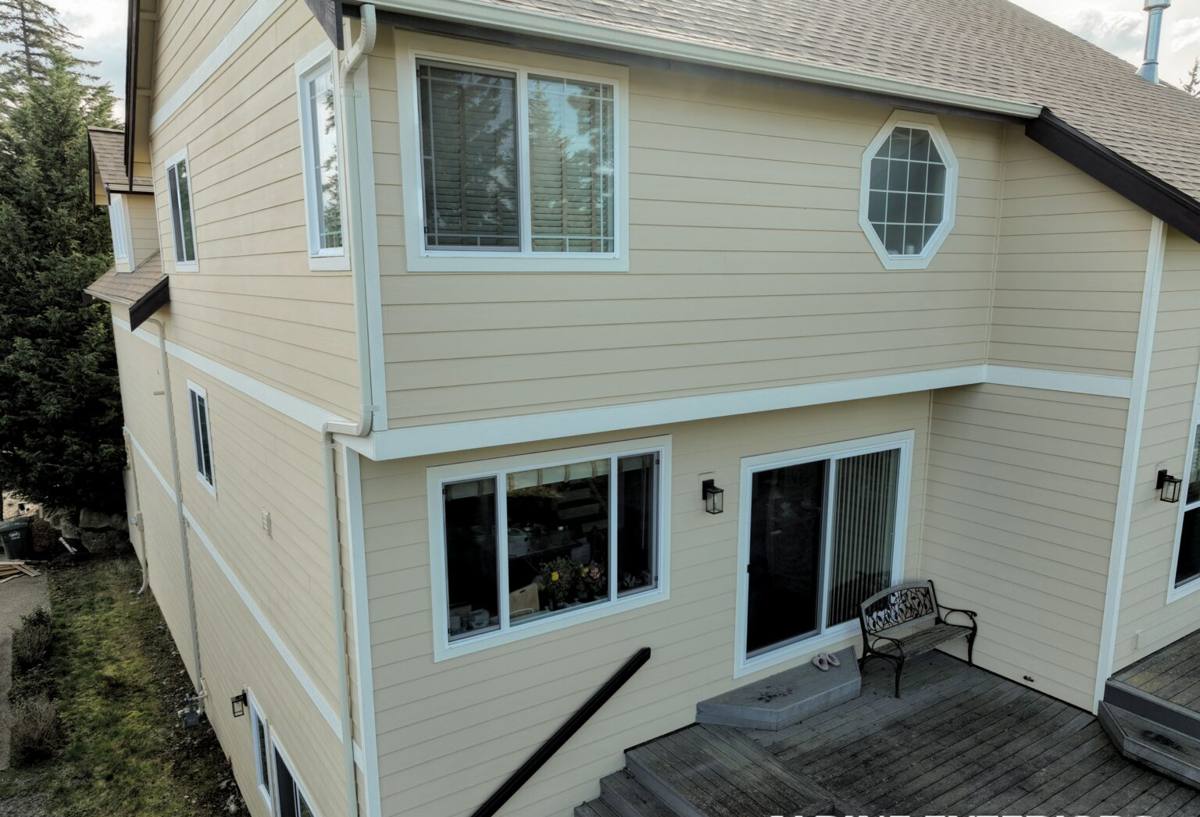
Signs a Sumas Deck Needs Replacement, Not Another Repair
Not every tired-looking deck needs a full teardown. But there's a point where patching boards is just delaying a bigger, more expensive failure. We look for a few specific things when we're deciding whether repair is honest advice or replacement is:
- Soft, spongy, or spongy-feeling decking boards, especially near the house or around post bases
- Visible moss or algae staining that keeps coming back within weeks of cleaning
- Rust streaking or bleeding around fastener heads and joist hangers
- A ledger board (where the deck attaches to the house) that shows staining, gaps, or soft wood
- Railings or posts that move or flex when you push on them
- Persistent standing water or slow-draining spots after rain
- Structural framing more than 15-20 years old, particularly if it was never properly flashed at the house connection
Any one of these on its own might be a repair. Two or three together, especially involving the ledger or main framing, usually means the deck's working life is over and it's time to talk replacement.
What a Correct Deck Replacement Involves
The Substructure Is the Part That Actually Matters
The decking boards are what you see and walk on, but the framing underneath is what determines whether the deck lasts eight years or thirty. A proper replacement starts with the ledger connection — the point where the deck ties into the house — because that's the single most common failure point in this climate. Water that gets behind an improperly flashed ledger has nowhere to go, and it will rot the rim joist and sill plate of the house itself, not just the deck. We flash that connection correctly, with proper spacing between the ledger and the siding so water and air can move, not sit trapped against the wall.
From there, it's about the footings, posts, joists, and hardware. Undersized or improperly spaced footings shift over wet winters. Joist hangers and structural screws that aren't rated for the corrosion risk of a salt-air, high-moisture environment will rust and lose holding strength years before the wood around them fails. We spec galvanized or stainless connectors and fasteners rated for ground contact and coastal exposure, not whatever's cheapest at a general hardware supplier.
Decking Material — Matching the Product to the Climate
The decking surface itself is where most homeowners focus, and it's a real decision with real tradeoffs. There's no single right answer for every project — it depends on budget, how much upkeep you're willing to do, and how long you want to go between refinishing.
| Material | Moisture Performance Here | Maintenance | Typical Lifespan |
|---|---|---|---|
| Pressure-treated wood | Good if sealed and maintained; vulnerable if neglected | Annual cleaning, re-sealing every 1-3 years | 10-15 years with upkeep |
| Cedar | Naturally rot-resistant but still needs sealing in this rainfall | Regular cleaning and periodic oil/sealant | 15-20 years with upkeep |
| Composite decking | Excellent — doesn't absorb water or rot | Periodic washing to keep moss/algae from gripping the surface texture | 25-30+ years |
| PVC decking | Excellent — fully moisture-proof board | Low; occasional washing | 25-30+ years |
We don't push one product on every job. Wood costs less up front and looks great when it's kept up, but it demands real annual maintenance in a climate like this — miss a couple of years of sealing and moisture damage moves fast. Composite and PVC cost more initially but essentially remove the rot risk from the equation, which matters a lot when moss season runs half the year. We'll walk through the honest tradeoffs for your situation rather than steering you toward whatever's easiest for us to install.
Our Process, Start to Finish
- On-site assessment — we inspect the existing deck's framing, ledger connection, footings, and overall condition, not just the surface boards, so the estimate reflects what's actually going on underneath.
- Honest scope discussion — we tell you plainly whether you need a full replacement or whether a targeted repair genuinely makes sense first.
- Design and material selection — sizing, railing style, decking material, and any code-driven requirements (guard height, stair geometry, spacing) specific to your property.
- Permitting — most deck replacements above a certain height or footprint require a permit through the local building department; we handle that paperwork so it doesn't fall on you.
- Demolition and disposal — full removal of the old structure, including checking the house framing behind the ledger for hidden moisture damage before anything new goes up.
- Rebuild — footings, framing, flashing, decking, and railing installed to a standard built for this region's rain and moisture load, not a generic minimum.
- Final walkthrough — we go over the finished deck with you, including basic care guidance for whatever material you chose.
Cost Factors Worth Understanding Before You Budget
Every deck is different, so we won't quote a number without seeing the site, but the factors that move the price are consistent across most Sumas and Custer-area projects:
| Factor | Why It Matters |
|---|---|
| Deck size and shape | More square footage and more corners/angles both add material and labor |
| Height above grade | Taller decks need more substantial footings, posts, and often code-required guardrails and stairs |
| Decking material | Composite and PVC cost more per board than wood but require far less upkeep over time |
| Ledger/house condition | If there's hidden rot at the house connection, that repair adds scope before the deck itself can go up |
| Site access | Tight side yards or sloped lots can add labor time for demo and material staging |
| Railing style | Cable, glass, or composite railing systems cost more than standard wood or metal baluster railing |
Moss, Mildew, and Keeping a New Deck Looking Like New
Building the deck correctly is half the equation — how it's maintained afterward is the other half, and it matters more here than almost anywhere else in the state. Moss and algae need moisture and shade to establish, and this stretch of Whatcom County offers plenty of both for most of the year. A deck that's under tree cover or on the shaded side of the house will need more frequent attention than one in full sun.
A few habits go a long way regardless of decking material:
- Sweep debris off the deck regularly — trapped leaves and needles hold moisture against the surface
- Rinse or wash the deck a few times a year to interrupt moss and algae before they establish a grip
- Keep gutters and downspouts clear so water isn't dumping directly onto or near the deck
- For wood decks, don't let sealant lapse — reapply on the schedule the product calls for, not "when it looks bad"
- Check the ledger flashing and any wall connection point once a year for staining or gaps
Composite and PVC decking still need occasional washing — moss will grow on any surface that stays damp and shaded, including plastic-based decking — but there's no rot risk behind it, which removes the highest-stakes maintenance item entirely.
Permits and Code — What's Typically Required
Most deck replacements that involve new framing, a change in footprint, or a deck elevated above a certain height require a building permit locally, and inspections at key stages (footings, framing) are standard practice. Guardrail height, baluster spacing, and stair geometry are all governed by code, and these aren't optional details — they're safety requirements that get checked. A contractor who treats permitting as a hassle to skip is putting the homeowner at legal and safety risk, not saving them money. We handle the permit process as a standard part of the job.
A Quick Checklist Before You Hire Anyone
- Do they inspect the ledger and framing, or just quote based on square footage?
- Are they specifying corrosion-resistant fasteners and hardware for this climate, or standard-grade hardware?
- Will they pull the required permit, or ask you to skip it?
- Do they give you an honest comparison of material options instead of pushing one product?
- Do they have current liability insurance and, if required for the trade, appropriate licensing?
- Will they put the scope of work in writing before starting?
Why It Matters That We Already Work in Sumas and Custer
A crew that only occasionally works this part of Whatcom County can still build a technically sound deck — but they're guessing at how much extra corrosion protection, drainage detail, and material selection this specific climate calls for. We're out here regularly, which means we've seen how decks in this area actually age: where moss takes hold first, which fastener types hold up and which don't, and how quickly an unflashed ledger connection turns into a bigger repair. That local pattern recognition is what separates a deck that looks fine at handoff from one that's still solid in fifteen years of Whatcom County weather.
If your deck is showing its age, or you're planning ahead before it becomes a safety issue, we're happy to come take a look. There's no pressure and no obligation — just a straight assessment of what your deck actually needs. Fill out the form below to request a free estimate.