 Custer
 Why Ferndale Roofs Take a Different Kind of Beating
Ferndale sits close enough to the water that homes here deal with a mix of weather most inland towns don't see in the same combination: salt-laced air rolling in off the Strait of Georgia, wind-driven rain that comes in sideways during winter storms, and a wet season long enough that moss gets a real foothold on anything shaded or north-facing. None of these things alone is unusual for Whatcom County. Together, over years, they wear a roof down faster than the calendar age of the shingles would suggest.
That matters for storm damage specifically. A roof that's already lost some granule protection to moss or salt-air weathering has less margin left when a windstorm rips through and tests every shingle tab, every nail line, and every piece of flashing at once. What looks like "just a storm" on a fresh, well-maintained roof can turn into an active leak on a roof that was already quietly losing ground.
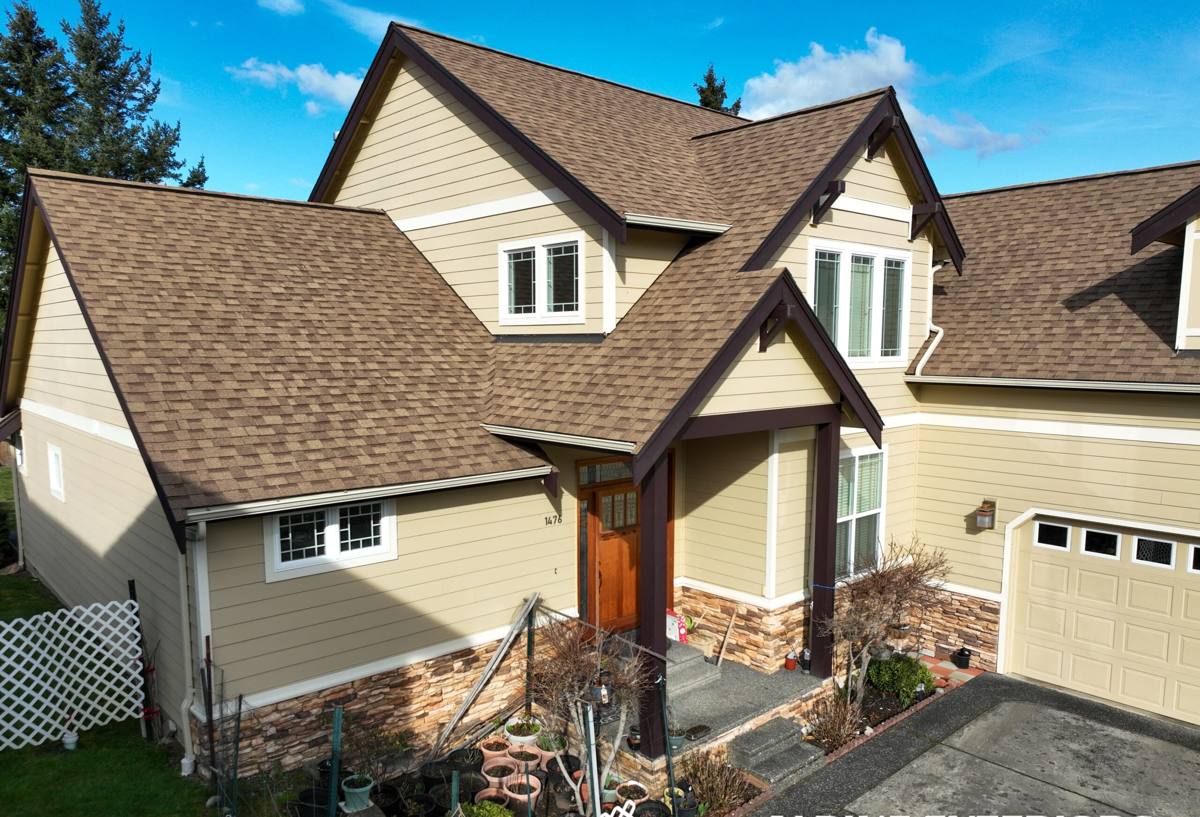
What Actually Counts as Storm Damage
Wind Damage
Wind doesn't have to peel a roof apart to cause a problem. Most of the wind damage we find in Ferndale is subtler: shingle tabs that got lifted and re-sealed crooked, sealant strips that cracked when a gust flexed the shingle, or fasteners that backed out just enough to break the shingle's grip. These spots don't always leak right away, but they're the first place the next storm finds.
Impact and Debris Damage
Branches and debris are a real factor here given how many mature trees are mixed in with residential lots around Ferndale. Impact damage can crack a shingle, punch through underlayment, or dent and split flashing around a vent or chimney without ever showing an obvious hole from the ground.
Water Intrusion Signs
The damage that actually costs homeowners money is usually the water that gets in after the wind or impact event, not the event itself. A cracked shingle sitting in dry weather does nothing. The same crack under three days of driving rain is a different story.
Why Waiting Costs More Than the Repair
A storm-damaged roof rarely fails all at once. It fails a little, then a little more, each time it rains. Underlayment that gets wet repeatedly loses its ability to shed water even after the surface shingle is fixed. Decking that stays damp for an extended period can start to soften, and once you're replacing decking instead of shingles, the job and the cost both change category. The gap between "storm damage repair" and "storm damage repair plus rotten decking" is almost always time, not severity of the original storm.
This is also the window where a tarp matters more than people expect. A properly secured tarp buys time without making the eventual repair harder. A poorly secured one can do more damage by flapping in the wind and working fasteners loose in new spots.
What a Correct Storm Repair Actually Involves
Inspection From the Deck Up, Not the Shingle Down
A repair that only addresses the visible shingle and ignores what's underneath is a repair that fails again in the next storm cycle. A correct process checks the decking for soft spots, checks the underlayment condition beyond the immediate damage area, and checks nearby flashing before closing anything back up.
Matching Materials Instead of Guessing
Shingles fade and weather at different rates depending on sun exposure and moss growth, so a patch using the wrong shingle color or profile stands out and can also create a slightly different water-shedding pattern at the seam. We match manufacturer, style, and as close to color as the existing roof allows, and we're upfront when an exact match isn't possible because a roof has aged past what's currently manufactured.
Flashing and Fasteners Done Right
A lot of recurring leaks trace back to flashing that was reused when it shouldn't have been, or fasteners driven at the wrong angle or depth. In a storm repair, flashing around penetrations, valleys, and edges gets the same scrutiny as the shingles themselves.
Patch, Section Repair, or Something Bigger?
Not every storm call needs the same scope of work. The right call depends on the roof's age, how much of it was affected, and what the inspection finds underneath. Here's roughly how we think through it:
| Situation | Typical Approach | What Drives the Decision |
|---|---|---|
| Isolated wind or impact damage, roof under 10-12 years old | Spot repair / shingle replacement | Decking and underlayment are still sound; damage is localized |
| Damage concentrated in one section, moderate roof age | Section (slope or valley) replacement | Repeated repairs in the same area, or matching shingles are no longer practical |
| Multiple leak points, decking softness found during inspection, older roof | Full reroof | Underlayment has failed broadly; patching would just move the next leak elsewhere |
| Insurance claim involved | Varies — documented with adjuster | Scope depends on the adjuster's assessment plus what our inspection confirms |
Cost ranges follow the same logic: a straightforward patch repair is generally a modest, contained expense, while a section replacement or full reroof scales up with material and labor. We'll always tell you honestly which category your roof falls into rather than defaulting to the biggest number.
How We Handle a Ferndale Storm Call
- Inspection and documentation. We walk the roof (or use safe alternative methods when conditions don't allow it) and document the damage with photos, which also supports an insurance claim if you're filing one.
- Temporary protection if needed. If there's active exposure, we get it covered correctly the same visit rather than leaving it for a follow-up date.
- Honest scope conversation. We explain what we found, what we recommend, and why — including when a smaller repair is genuinely the right answer.
- The repair itself. Matched materials, correct flashing work, and decking addressed if it was compromised.
- Final check. We confirm the repair area sheds water correctly and that surrounding materials weren't disturbed in the process.
Material and Workmanship Choices We Make for This Climate
Salt air accelerates corrosion on lower-grade fasteners and flashing metals faster than it would fifty miles inland, so we lean toward corrosion-resistant fasteners and flashing suited to a coastal-influenced climate rather than the cheapest available option. It costs a little more up front and pays for itself by not needing to be redone in a few years.
On the moss side, we're straightforward with homeowners: no shingle is moss-proof, but algae- and moss-resistant shingle lines (typically copper- or zinc-treated granules) hold up noticeably better in shaded, north-facing sections than standard shingles. We'll point out where that upgrade makes sense on your roof and where your existing shingle already has that protection built in, rather than upselling it across the board.
We also don't recommend pressure-washing moss off a roof, which is a common DIY instinct after a wet Whatcom County winter. It strips granules and can shorten the roof's life faster than the moss itself. Correct moss management is soft brushing, zinc or copper strip installation near the ridge, and keeping gutters and valleys clear so water isn't sitting where moss thrives.
Signs Your Roof Needs a Storm Inspection Now
- Granules collecting in gutters or at downspout outlets after a windy week
- A shingle tab that looks lifted, curled, or out of line with its neighbors
- Any ceiling stain, even a small one, that shows up after a storm
- Visible daylight or gaps around a vent pipe, chimney, or skylight flashing
- A tree limb or debris strike you noticed but haven't had checked
- Heavier-than-usual moss buildup combined with recent wind — moss holds moisture against shingles and can mask damage underneath
Why a Custer-Based Crew That Already Works Ferndale Matters
We're based in Custer, just up the road from Ferndale, and storm calls in this area are a regular part of our schedule rather than an occasional trip. That means we're already familiar with how wind off the water tends to hit certain roof orientations harder than others in this part of Whatcom County, and we're not learning the regional climate on your roof for the first time. It also means faster response after a storm event, since we're not routing a crew in from another county.
Familiarity with the area helps in smaller, practical ways too — knowing which shingle lines tend to be available locally for a closer match, and having done enough moss and salt-air-related repairs nearby to know what's cosmetic wear versus what's an actual failure point.
If a recent storm left you with a damaged shingle, a leak, or just a nagging feeling something's not right up there, we're happy to take a look. Estimates are free and there's no pressure to move forward — fill out the form below and we'll get back to you.