 Custer
 Why Bellingham-Area Roofs Wear Out Faster Than the Manufacturer's Chart Says
Every asphalt shingle and metal panel sold in this country comes with a lifespan number on the wrapper, and almost none of those numbers were calculated with a Whatcom County roof in mind. Between the salt-laden air rolling off Bellingham Bay, the long stretches of driving rain that define a Pacific Northwest winter, and a moss season that can run eight or nine months out of the year, roofs out here take a different kind of beating than the same product would take in a dry inland climate. That doesn't mean every roof needs replacing early — a lot of roofs fail early because of how they were installed, not because the material was wrong.
Salt Air and Metal Components
Homes closer to the water deal with airborne salt that accelerates corrosion on exposed metal — flashing, fasteners, gutters, and vent stacks in particular. A roof that looks intact from the ground can have flashing that's rusted through at the seams, which is usually where leaks start. When we replace a roof in this area we pay close attention to fastener and flashing material, not just the shingle or panel on top.
Moss, Shade, and Moisture Retention
Bellingham's tree cover and marine humidity are a perfect combination for moss and algae growth. Moss doesn't just look bad — it holds water against the roof surface, works its way under shingle tabs, and lifts them over time. On older roofs we regularly find moss that's been growing long enough to have started breaking down the mat beneath the granules. A roof replacement is the right time to correct the conditions that let moss take hold in the first place, not just cover them over with a new layer of shingles.
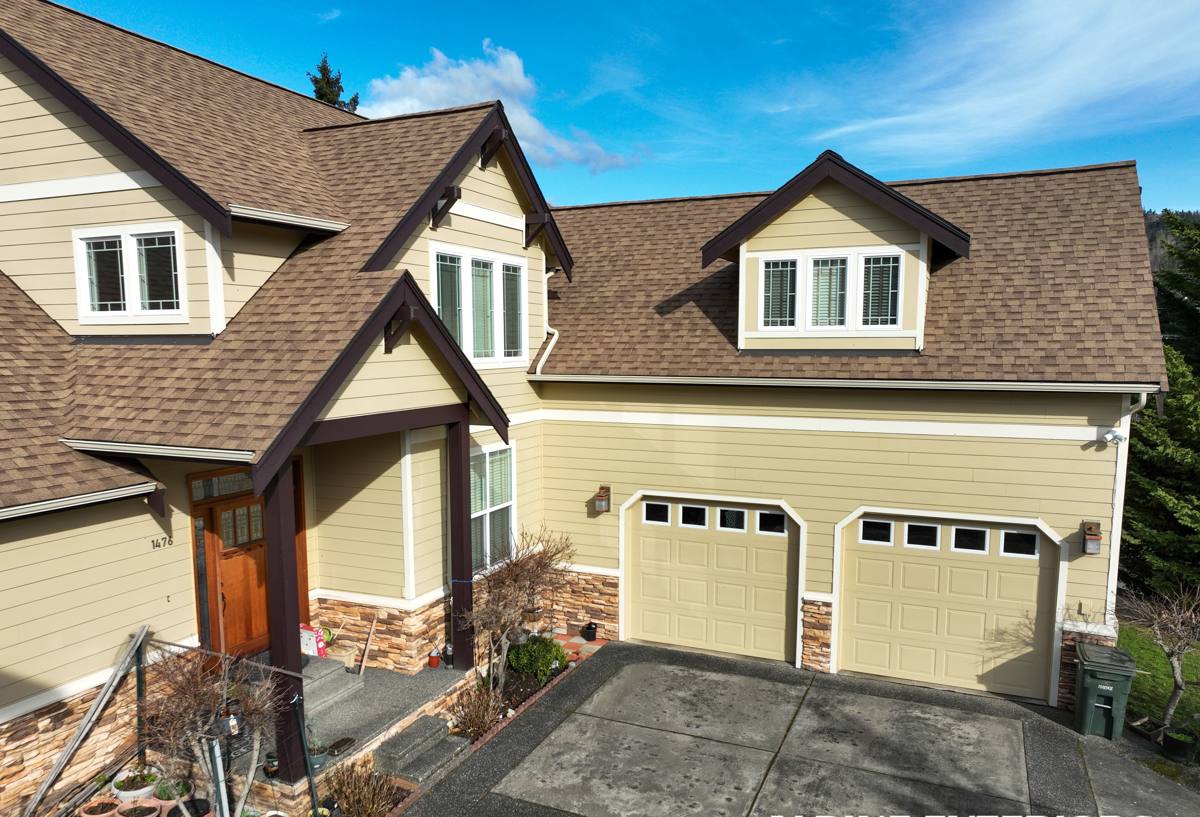
Signs a Bellingham Roof Needs Replacement, Not Another Repair
Repairs make sense when the damage is isolated and the roof underneath is still sound. Replacement makes sense when the problems are spread across the whole roof or the decking itself has been compromised. Here's what usually tips that decision:
- Granule loss heavy enough that you're finding grit in the gutters every time it rains
- Shingles that are cupping, curling, or cracking across multiple slopes, not just one spot
- Moss or algae staining that comes back within a year or two of cleaning
- Soft or spongy decking felt underfoot during an inspection, or daylight visible from the attic
- Repeated leaks around the same valley, chimney, or vent boot despite past patch jobs
- A roof that's approaching or past 20-25 years old, which is a realistic ceiling for asphalt shingle roofs exposed to this climate
What a Correct Roof Replacement Actually Involves
Full Tear-Off and Deck Inspection
We don't install new roofing over old. A full tear-off is the only way to see the actual condition of the decking, catch rot or delamination before it's hidden under a new roof, and confirm the framing hasn't been compromised by a long-term leak. Any soft or damaged sheathing gets replaced before anything new goes down — this is the step that gets skipped on cut-rate jobs and it's the one that causes the most expensive problems five or ten years later.
Underlayment Built for Driving Rain
Whatcom County storms don't just drop rain straight down — wind-driven rain gets pushed sideways under shingle edges and around penetrations. We use synthetic underlayment across the full deck and self-adhered ice-and-water membrane at eaves, valleys, and roof-to-wall transitions, which are the spots where wind-driven rain and ice damming (on the rare cold snap) cause the most damage. This is a place where it doesn't pay to cut corners for this region.
Ventilation That Actually Balances
A roof with poor attic ventilation traps moisture underneath the deck, which shortens shingle life and feeds mold growth in the attic — a bigger issue in a humid marine climate than in a dry one. Part of a correct replacement is checking that intake at the eaves and exhaust at the ridge are balanced, not just that vents exist somewhere on the roof.
Choosing a Roofing Material for This Climate
There's no single "best" roofing material — the right choice depends on budget, roof pitch, how much shade and moss exposure the roof gets, and how long you plan to own the home. Here's how the common options compare for a Bellingham-area home:
| Material | Typical Lifespan Here | Moss/Algae Resistance | Relative Cost |
|---|---|---|---|
| Architectural asphalt shingle | 20-25 years | Moderate; benefits from algae-resistant granules and periodic cleaning | Lowest upfront cost |
| 3-tab asphalt shingle | 15-18 years | Lower; thinner mat sheds less water and holds debris longer | Lower than architectural, less common today |
| Standing seam metal | 40-50+ years | High; smooth surface sheds moss and debris well | Higher upfront, lower lifetime cost |
| Synthetic composite/slate look | 30-40 years | Good, varies by manufacturer | Mid to high |
For most Bellingham and Custer homes we install architectural asphalt shingle roofs, which offer the best balance of upfront cost and real-world durability for this climate when installed correctly. Metal roofing is a strong option for homeowners planning to stay long-term or dealing with heavy shade and moss pressure, since the smooth surface simply gives moss less to hold onto.
Our Roof Replacement Process
- On-site inspection and estimate — we walk the roof (or use ladder and drone inspection where pitch or access requires it), check the attic for ventilation and moisture signs, and give you an honest read on repair versus replacement.
- Material and detail selection — shingle or panel type, color, ventilation upgrades, and any flashing or gutter work that should happen at the same time.
- Scheduling around the weather — in Whatcom County that means watching the forecast closely and building in buffer, since a tear-off left exposed overnight during a driving rain event is how interiors get damaged.
- Tear-off and deck repair — old roofing removed, decking inspected and repaired as needed, debris hauled off same day whenever possible.
- Underlayment, flashing, and installation — ice-and-water membrane at vulnerable areas, new flashing at all penetrations and transitions, then the roofing material installed to manufacturer spec.
- Cleanup and magnetic sweep — yard and driveway cleared of debris and stray nails before we consider the job done.
- Final walkthrough — we go over the finished roof with you, explain what was done, and cover any warranty paperwork.
What Drives the Cost of a Roof Replacement Here
Every roof is a little different, but the same handful of factors move the price up or down on most Bellingham and Custer jobs:
- Roof size and number of stories — more square footage and steeper access both add labor time
- Pitch and complexity — a simple gable roof costs less to work on than one with multiple valleys, dormers, and roof-to-wall intersections
- Decking condition — hidden rot found during tear-off adds material and labor that can't be fully known until the old roofing is off
- Material choice — asphalt shingle, metal, and composite products have different material and installation costs, as shown above
- Ventilation and flashing upgrades — bringing an older roof's ventilation or flashing details up to current standards is worth budgeting for even though it adds cost
We give straightforward, itemized estimates so you can see what you're paying for rather than a single lump number — that's the only way to fairly compare bids.
Keeping Moss and Algae From Coming Back
A new roof in this climate benefits from a little ongoing attention. Trimming back overhanging branches improves airflow and sun exposure across the roof surface, which is the single biggest factor in how fast moss returns. Keeping gutters clear prevents standing water from backing up under the shingle edge during heavy rain. Some homeowners also choose zinc or copper strips near the ridge, which release trace metal ions with rainfall that help discourage new moss growth over time — a low-maintenance option worth discussing at the estimate.
Why Local Experience in Bellingham and Custer Matters
A roofing crew that works this specific stretch of Whatcom County knows which details actually matter here — where wind-driven rain tends to find weak spots, how much moss pressure a shaded north slope will see, and which flashing details hold up against salt air near the water. That's different knowledge than a crew that mostly works dry, inland roofs. We also know how to plan a tear-off around this region's rain patterns so your home isn't left exposed when a system rolls in, which matters more here than in almost any other climate in the country.
If your roof is showing its age or you just want an honest opinion on repair versus replacement, we're happy to take a look. Reach out for a free, no-pressure estimate using the form below.