 Custer
 Board & Batten in Sumas: A Look That Has to Work as Hard as It Looks
Board and batten has a strong, clean vertical line that suits a lot of the farmhouse, craftsman, and modern homes we see out toward Sumas. It's also one of the least forgiving siding profiles when it's installed wrong. The wide flat boards and narrow battens create dozens of extra seams compared to a simple lap pattern, and every one of those seams is a place for water to find its way in if the person installing it doesn't understand how the assembly needs to shed and dry. In a stretch of Whatcom County that sees driving rain off the Salish Sea, a long wet moss season, and salt-laden marine air working its way inland through the Nooksack Valley, that margin for error basically disappears.
This page is about doing board and batten right for a Sumas home specifically — not board and batten in general. The climate here dictates the material, the fastening, the flashing, and the maintenance rhythm, and we treat all four as one system.
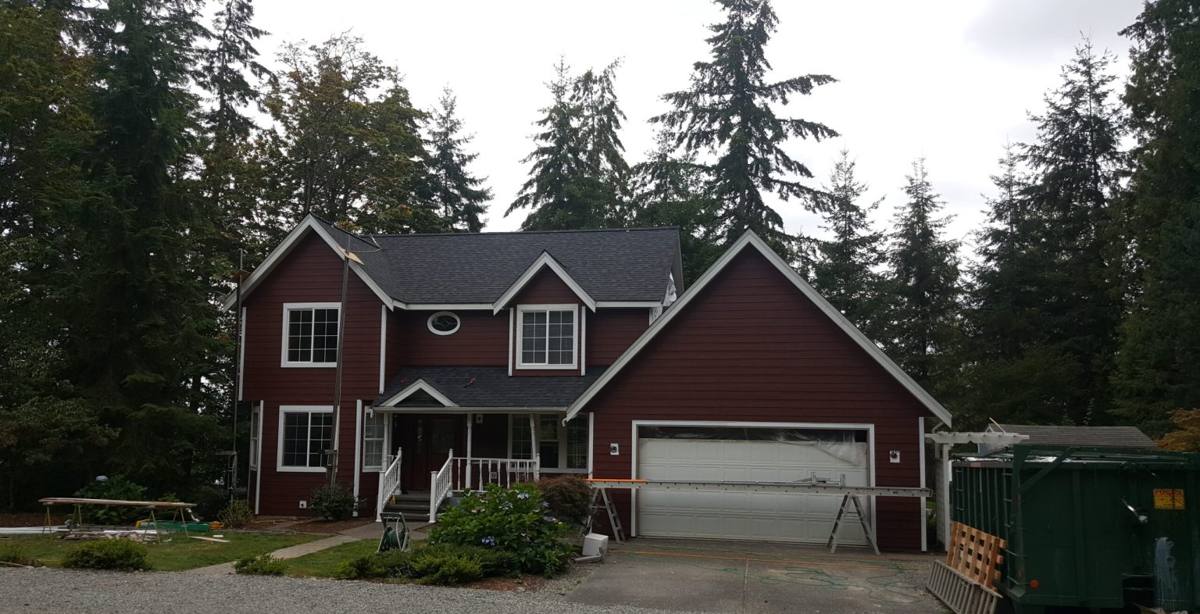
What Sumas's Climate Actually Does to Vertical Siding
Sumas sits inland from the coast, but it's still squarely inside the marine-influenced weather pattern that defines western Whatcom County. A few things about that pattern matter directly to how board and batten siding performs over the years:
- Driving rain: Wind-driven storms push water sideways into wall assemblies, not just straight down. Vertical board and batten has more horizontal seams (at the battens and panel joints) than lap siding does, so wind-driven moisture has more entry points to test.
- Long moss and algae season: Cool, damp, shaded conditions for much of the year mean north-facing walls and anything under tree cover stay wet longer between rain events. Untreated or unpainted wood-based products are the first to show green streaking and soft spots.
- Salt-influenced marine air: Air moving off the Salish Sea and Georgia Strait carries salt and moisture across the county, including inland communities like Sumas. That combination accelerates corrosion on fasteners and trim hardware that isn't rated for it.
- Freeze-thaw swings: Whatcom County winters aren't brutal, but they're wet-cold, and repeated freeze-thaw cycling is hard on any material that absorbs water, because trapped moisture expands and works joints and fastener holes loose over time.
None of this means board and batten is a bad choice for a Sumas home. It means the material and the installation details have to be matched to what the climate is actually doing to the wall, not just to the finished look.
What a Correct Board & Batten Installation Involves
The Assembly Behind the Boards
The visible boards and battens are the last layer of a system, not the whole system. A correct install starts with a water-resistive barrier over the sheathing, and in most cases we install with a rainscreen — a ventilated gap between the barrier and the siding — so that any moisture that does get past the outer layer has somewhere to drain and dry instead of sitting against the wall. On a property with heavy shade or exposure to driving rain, that gap is the difference between siding that dries out between storms and siding that stays damp for weeks.
Fasteners and Flashing
Every fastener penetration is a potential water path. We use corrosion-resistant fasteners appropriate for fiber cement and for the marine-influenced air in this part of the county, and we flash every window, door, and roof-to-wall transition before boards go up — not caulk over the top of it afterward. Caulk is a maintenance item; flashing is the actual water management.
Board and Batten Spacing and Joints
Vertical panel joints and batten spacing have to follow the manufacturer's engineering, not just what looks even from the street. Panels need proper gapping for expansion, joints need to land on framing or blocking, and battens need to be fastened in a pattern that won't split the substrate or trap water behind it. This is where a lot of cut-rate installs fail — the finished wall can look correct on install day and still be set up to fail in three to five years.
Ground Clearance and Grade
Board and batten that runs too close to grade, a deck, or a roofline invites splashback and standing moisture at the bottom edge — the single most common failure point we see on vertical siding in this climate. Maintaining proper clearance is a small detail that has an outsized effect on how long the bottom courses last.
Why We Only Install James Hardie for This Profile
Board and batten is available in vinyl, engineered wood (LP SmartSide), and fiber cement, and the profile hides differences between those materials less than lap siding does, because the vertical boards are wider and more exposed to direct weather over more of their surface. We standardized on James Hardie fiber cement for every siding job we do, including board and batten, for a few concrete reasons:
- It's non-combustible. Fiber cement doesn't contribute fuel to a fire the way wood-based products do — a real consideration in a region that sees wildfire smoke and dry-season fire risk even in a generally wet climate.
- It doesn't absorb and swell the way engineered wood can. In a climate with this much sustained moisture exposure, a product that stays dimensionally stable through repeated wet-dry cycles holds paint lines and joints better over the long run.
- ColorPlus factory finish. Hardie's factory-applied finish is baked on and warrantied against fading and cracking, which matters on a profile with this many flat, sun-exposed board faces — there's more surface for UV and weather to work on than on a narrow lap board.
- Climate-engineered product lines. Hardie builds its HZ5 product line specifically for the freeze-thaw, moisture-heavy Pacific Northwest, rather than a one-size-fits-all national spec.
- A real, transferable warranty backed by a manufacturer that's been building fiber cement siding for decades, not a warranty that depends on the installer staying in business.
We're upfront that vinyl and LP SmartSide board and batten both have a place in the market and both look fine on day one. Our decision not to install them comes down to how they hold up specifically in Whatcom County's wet, salt-influenced, moss-prone climate over fifteen and twenty years, not how they perform in a showroom or in a drier region.
How the Job Runs, Start to Finish
- On-site assessment: We walk the exterior, check for existing moisture damage, rot, or failed flashing behind the current siding, and look at sun/shade exposure and grade clearance on each wall.
- Tear-off and sheathing check: Old siding comes off and we inspect the sheathing underneath before covering it back up. Anything soft or damaged gets addressed before new siding goes on — covering a problem is worse than finding it.
- Water-resistive barrier and rainscreen: New barrier goes on correctly lapped, followed by the ventilated gap that lets the wall dry.
- Flashing: Windows, doors, and roof lines get flashed properly before any siding is installed against them.
- Board and batten installation: Panels and battens go up to Hardie's fastening and spacing specification, with proper clearance at grade, decks, and roof transitions.
- Trim and caulk detailing: Final trim work and sealant at the points designed to be sealed — not as a substitute for flashing done earlier.
- Walkthrough: We go over the finished job with the homeowner before calling it done.
Board & Batten vs. Other Siding Approaches for a Sumas Home
| Consideration | Hardie Board & Batten | Vinyl Board & Batten | LP SmartSide Board & Batten |
|---|---|---|---|
| Moisture behavior in wet climate | Dimensionally stable, doesn't swell | Doesn't absorb water, but can warp/buckle with heat and age | Engineered wood core can swell if moisture reaches cut edges or seams |
| Fire resistance | Non-combustible | Melts/deforms under heat exposure | Wood-based, combustible |
| Finish longevity | Factory ColorPlus finish, warrantied against fading | Color is through-body but can chalk and fade over time | Field or factory paint, repaint cycle typically shorter |
| Typical lifespan installed correctly | Decades, often matching or exceeding the home's roof life | Long-lived but appearance degrades sooner | Shorter than fiber cement, more sensitive to moisture exposure |
| Installation sensitivity | High — must follow Hardie spec closely | Moderate | High — edge sealing and flashing critical |
What Drives the Cost of a Board & Batten Project
We don't post fixed prices online because every Sumas property is different, but these are the real variables that move the number:
| Factor | Why It Matters |
|---|---|
| Tear-off scope | Full removal of old siding and any hidden repair to sheathing or framing adds labor and material |
| Wall complexity | Dormers, gables, and cut-ins around windows and trim take more time on a vertical profile than a flat wall |
| Rainscreen inclusion | Adding a ventilated rainscreen gap is additional labor but pays off in long-term moisture performance |
| Trim and batten spacing | Narrower batten spacing means more material and more fastening labor per square foot |
| Color and finish selection | Factory ColorPlus finishes vary in cost by color family and coating |
| Access and site conditions | Slopes, landscaping, and staging space affect how efficiently a crew can work |
Living With Board & Batten After It's Installed
Fiber cement board and batten is low-maintenance compared to wood, but "low-maintenance" isn't "no-maintenance" in this climate. A short annual routine keeps it performing the way it's designed to:
- Rinse off accumulated moss, pollen, and grime once a year, especially on shaded and north-facing walls where moss takes hold fastest.
- Walk the caulk lines at trim and penetrations annually and have any cracked or separated sealant redone before the wet season sets in.
- Keep gutters clear so overflow isn't running down the wall face and concentrating moisture at specific boards.
- Trim back vegetation that's shading or touching the siding — airflow is what keeps moss and mildew from taking hold.
- Watch the bottom courses near grade and decks for the first sign of staining, which usually means splashback rather than a product failure, and is easy to correct early.
Why a Crew That Already Works in Sumas Matters
Board and batten forgives almost nothing when a crew is guessing at how a coastal Whatcom County climate behaves. We've installed and serviced fiber cement siding across this part of the county, and that means we're not learning on your house how driving rain moves across a wall, where moss actually takes hold first, or which details fail early when the marine air rolls in off the Salish Sea. A crew that already knows the region brings that judgment to the flashing details, the rainscreen decisions, and the batten layout before the first board goes up — not after a callback.
If you're weighing board and batten for a home in or around Sumas, we're happy to walk the property, look at your existing siding condition, and give you a straight answer about what the job actually involves. Request a free, no-pressure estimate below and we'll take it from there.