 Custer
 Roof Repair in Lynden: A Climate That Doesn't Give a Roof Much Rest
Lynden sits inland in Whatcom County, closer to the Canadian border than to open saltwater, but that distance doesn't buy a roof much of a break. Storms moving through this part of Washington still carry salt-tinged marine air off the Strait of Georgia and the Salish Sea, and by the time they reach Lynden they're usually loaded with driving rain that comes in sideways as often as it comes straight down. Add in a moss and algae season that runs most of the year on north-facing and shaded roof planes, and you've got a climate that's genuinely hard on shingles, flashing, and the wood underneath them, even for a home that's never seen a drop of ocean spray directly.
We work roofs, siding, windows, and decks across this stretch of Whatcom County, and roof repair calls in and around Lynden tend to follow a pattern: the roofing material itself is rarely the whole story. Most of the leaks and failures we find trace back to flashing, moss-related moisture retention, or small gaps that let wind-driven rain in — problems that get worse with every wet season they go unaddressed, and cheaper to fix the earlier they're caught.
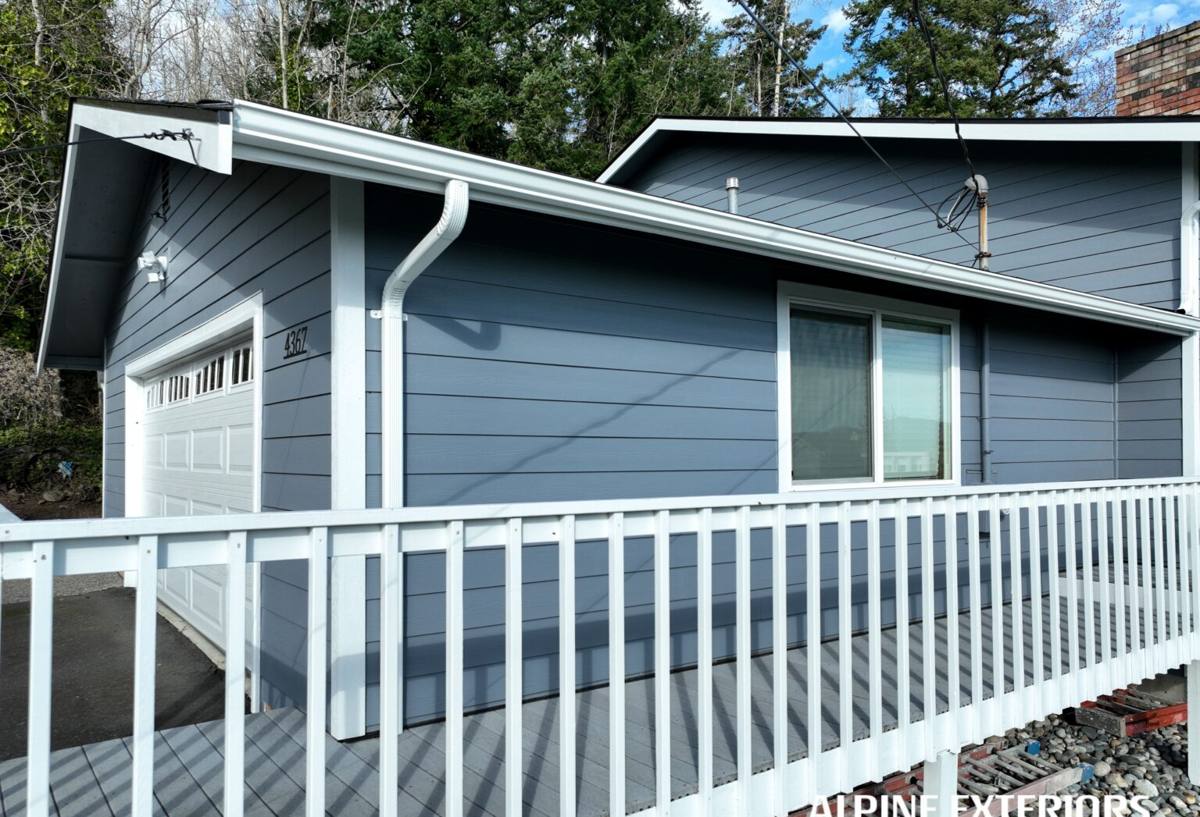
What This Climate Does to a Roof
Driving Rain
Open farmland and relatively flat terrain around Lynden don't slow storms down much, and wind-driven rain gets pushed under shingle edges, into exposed nail heads, and around any flashing that isn't lapped correctly. A roof that would shed water fine in a calmer climate can still leak here if the details underneath the shingles aren't right.
Moss, Algae, and Organic Growth
Mild temperatures and near-constant moisture through fall, winter, and spring give moss a long growing season across Whatcom County, and roofs are one of the first places it shows up. Moss doesn't just look bad — it holds water against the shingle surface, works its way under shingle edges as it grows, and can lift them enough to create a path for water underneath. Algae streaking is more cosmetic but often shows up alongside it on the same shaded, slow-drying areas.
Salt-Tinged Air
Lynden isn't on the water, but storms coming off the Strait still carry enough marine air inland to accelerate corrosion on lower-grade flashing, fasteners, and roof vents over years of exposure. It's a slower process than what a true waterfront roof deals with, but it's real, and it shows up as rust streaking and premature fastener failure on roofs that used cheaper hardware to begin with.
Temperature Swings and Attic Condensation
Cold, damp winters and warmer, humid interiors create real condensation pressure inside an attic space, and poor ventilation makes it worse. Moisture that condenses on the underside of the roof deck can soak sheathing and even drip down onto insulation, and it's often mistaken for a roof leak when the actual source is inadequate attic airflow rather than a failure in the roofing material itself.
Signs a Lynden Roof Needs Repair
- Water stains on interior ceilings or upper walls, especially after a windy storm
- Visible moss buildup along shingle edges, valleys, or the ridge line
- Shingles that are cracked, curling at the edges, or missing granules in patches
- Rust streaking around flashing, vents, or exposed fasteners
- Sagging or soft-feeling spots when walking a roof for inspection
- Daylight visible through the roof deck from inside the attic
- Granules collecting in gutters or at downspout outlets
What a Correct Roof Repair Actually Involves
Flashing First
Flashing around chimneys, skylights, vent pipes, and roof-to-wall transitions is where most roof leaks in this climate actually originate, not the field of the roof itself. A correct repair means removing the surrounding shingles far enough to reinstall flashing properly rather than caulking over an existing gap, because caulk alone breaks down under sustained wind-driven rain and just delays the same leak from coming back.
Moss and Debris Removal Done Right
Moss needs to come off without stripping granules or damaging the shingle mat underneath, which rules out pressure washing directly against asphalt shingles. We remove moss by hand or with low-pressure methods suited to the roofing material, then address the conditions that let it take hold in the first place — usually shade, poor drainage, or a valley that's collecting debris instead of shedding water.
Decking and Underlayment Condition
Shingles are only as good as the surface underneath them. If sustained moisture has softened or rotted the roof deck in a repair area, replacing shingles over compromised sheathing just hides the problem instead of fixing it. Any repair we do includes checking deck condition in the affected area, not just swapping out visible shingles.
Repair vs. Replacement: How We Make the Call
Not every roof issue in Lynden means a full replacement, and we don't default to recommending one. A localized leak with sound shingles everywhere else is usually a repair. Widespread granule loss, multiple leak points, or a roof that's past its expected service life is a different conversation.
| Condition | Repair Usually Makes Sense | Replacement Usually Makes Sense |
|---|---|---|
| Single leak with sound shingles elsewhere | Yes — targeted flashing or shingle repair | Only if the roof is already near end of life |
| Moss buildup, shingles otherwise intact | Yes — removal plus prevention steps | Not on its own |
| Widespread granule loss or curling shingles | Rarely a lasting fix | Yes |
| Soft or rotted decking in isolated area | Yes, if limited to a small section | Yes, if it's found in multiple areas |
| Roof at or past typical material lifespan | Short-term patch only | Yes, for a durable long-term fix |
Materials We Work With, and the Trade-Offs Involved
We install and repair both asphalt shingle and metal roofing systems, and we talk homeowners through the real trade-offs rather than steering everyone toward one product. Asphalt shingles remain the most common choice for good reason — reasonable cost, straightforward repair, and a wide range of styles. Metal roofing costs more up front but sheds moss more readily, holds up longer under sustained rain exposure, and has fewer edges for wind-driven rain to work under. Neither is the automatically correct answer for every home; it depends on budget, roof pitch, and how long the homeowner plans to stay in the property.
- Asphalt shingles: Lower upfront cost, easy to repair in sections, but more susceptible to moss taking hold and granule loss over a long, wet lifespan.
- Metal roofing: Higher installed cost, sheds water and moss faster, and generally outlasts asphalt in a climate this wet — but repair work requires more specific expertise if it's ever needed.
- Underlayment quality: A synthetic, self-adhering underlayment at valleys and eaves adds real protection against wind-driven rain regardless of which shingle or panel system is on top.
- Fastener and flashing grade: Corrosion-resistant hardware matters more here than in a drier inland climate, given how far marine air travels on a hard storm.
How Roof Issues Connect to Gutters and Siding
A roof rarely fails in isolation. Clogged or undersized gutters back water up under the roof edge instead of carrying it away, which shows up as rot at the fascia and eventually the roof deck itself. Siding that's improperly flashed where it meets the roofline can let water into the wall assembly even when the roof itself is sound. We handle roofing, siding, gutters, and windows as connected systems rather than separate jobs, because the crew doing roof repair on a Lynden home needs to understand how water moves through the whole exterior, not just across the shingles.
A Checklist Before Hiring for Roof Repair in Lynden
- Confirm current Washington contractor licensing and active liability insurance
- Ask specifically how they handle flashing at chimneys, vents, and roof-to-wall transitions, not just shingle replacement
- Get a written scope that identifies the actual cause of the leak, not just the visible symptom
- Ask how they remove moss and whether the method is safe for the specific roofing material
- Ask whether they check deck condition in the repair area before closing it back up
- Get a written estimate that separates repair scope from any recommended future work
Why a Local Crew Matters for Roof Repair
A crew that already works this part of Whatcom County regularly has seen how wind-driven rain, moss, and salt-tinged storm air actually behave here, compared to a drier or more sheltered climate. That experience shows up in the details — how much lap a flashing detail gets, how a valley is protected against debris buildup, which fastener grade gets specified — and those details are what determine whether a repair holds for one wet season or for many years.
Our Process
We start with an on-site inspection that includes getting on the roof itself when conditions allow, checking flashing, moss coverage, shingle condition, and any signs of interior water intrusion. From there we give a straightforward read on what's causing the issue, whether it calls for a targeted repair or points toward a larger problem, and a written scope before any work begins. Deck condition gets checked as part of every repair, not treated as a surprise add-on once the job is underway.
If you're dealing with a leak, moss buildup, or damaged shingles on a Lynden roof — or you just want an honest read on how much life is left in the one you've got — we're happy to take a look. Reach out below for a free, no-pressure estimate.