 Custer
 Siding Built for Where You Live, Not Just What's Popular
Semiahmoo sits close enough to the water that homes here deal with a version of the Pacific Northwest climate that inland Whatcom County properties don't fully share. Salt-laden air off the bay, wind-driven rain that hits siding sideways instead of falling straight down, and a moss season that can stretch from October into May all put steady stress on a home's exterior. Siding that's rated fine for a general Pacific Northwest install can still underperform here if it isn't installed with this specific exposure in mind.
This page is about one job: installing siding correctly on Semiahmoo homes. Not a general overview of siding types, not a sales pitch — just what the local conditions demand, what a correct installation actually involves, and why the crew doing the work matters as much as the material itself.
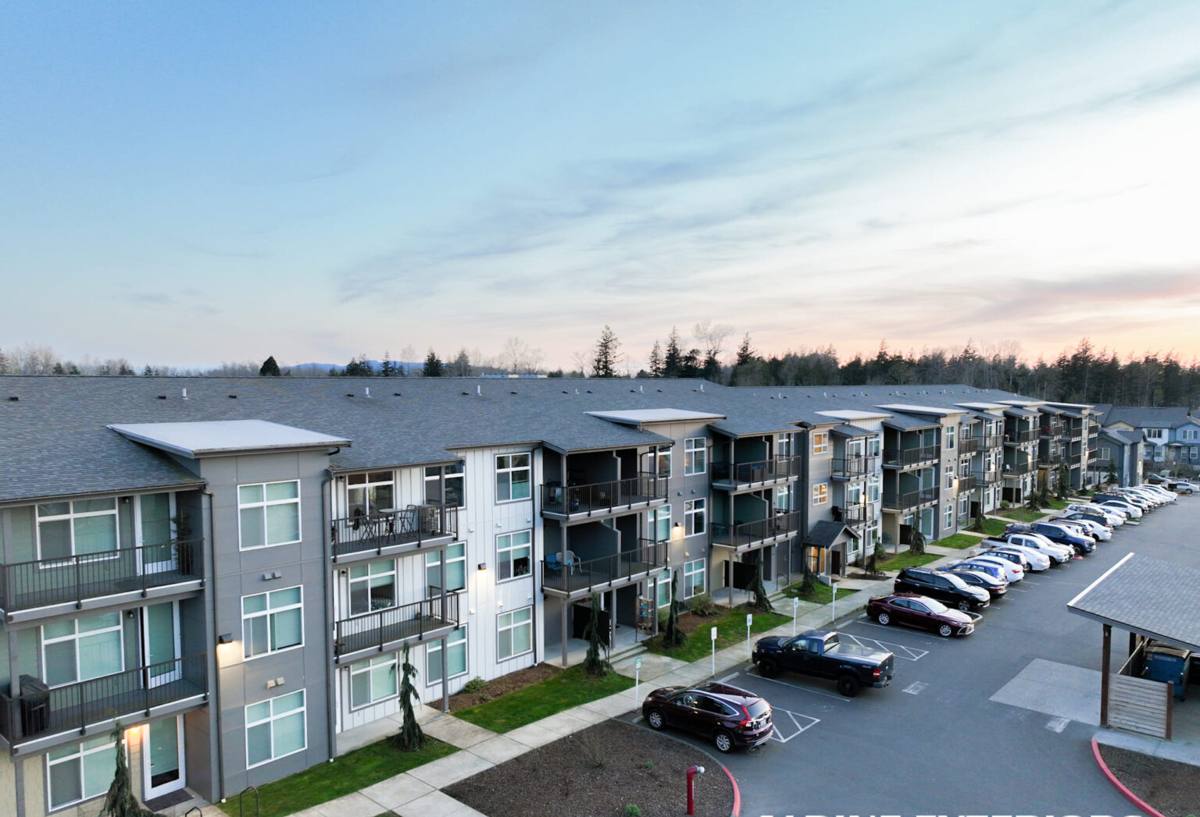
What Semiahmoo's Climate Actually Does to Siding
Salt air and coastal moisture
Homes within a few miles of the water pick up airborne salt that settles on exterior surfaces. Over years, that salt film holds moisture against the siding longer than it would on a dry inland wall, accelerates corrosion on exposed fasteners and trim hardware, and can dull or degrade coatings that weren't formulated to handle it. This isn't unique to Semiahmoo, but it's more pronounced here than on the average Whatcom County job site further from the shoreline.
Driving rain and wind exposure
Open water nearby means less windbreak. Rain doesn't just fall on these homes, it gets pushed into seams, laps, and butt joints at an angle. Any weakness in flashing details, caulking, or panel overlap shows up faster here than it would on a more sheltered lot. Water intrusion at a poorly lapped joint might take years to become visible on a protected inland wall — on an exposed Semiahmoo elevation, it can show up much sooner.
A long, wet moss season
Whatcom County's moss season is long to begin with, and the extra humidity near the water stretches it further. Moss and algae hold moisture against siding surfaces, feed on organic binders in some coatings, and create a constant low-grade dampness in shaded areas — north-facing walls, spots under overhangs, anywhere airflow is limited. Siding that can't shed that moisture, or a coating that moss can colonize, ages faster in exactly the spots where problems are hardest to spot early.
What "Correct Installation" Means Here
A siding job can use good material and still fail early if the installation doesn't account for local exposure. On Semiahmoo homes, we pay particular attention to:
- Weather-resistive barrier and flashing sequencing — every layer has to shed water down and out, in the correct shingled order, especially at window and door openings facing the water or prevailing wind.
- Fastener selection and placement — corrosion-resistant fasteners, driven to the manufacturer's specified depth and pattern, are not optional in a salt-air environment. Overdriven or under-driven fasteners are a common failure point we correct for.
- Proper clearances — siding held off decks, patios, and grade at the manufacturer's minimum clearance so splash-back and standing moisture don't sit against the bottom course.
- Joint and seam treatment — factory-cut and field-cut edges sealed and lapped correctly so wind-driven rain can't work its way in at panel breaks.
- Ventilation behind the cladding — a rainscreen gap or properly detailed drainage plane so any moisture that does get past the siding can dry out instead of sitting against the sheathing.
None of this is exotic. It's standard best practice done without shortcuts — but the exposure at Semiahmoo means the margin for error is smaller than it is a few miles inland.
Why We Install Only James Hardie Fiber Cement
This is the material we put on every home we side, and it's a deliberate standard, not a default. In a salt-air, high-moisture, moss-prone environment like Semiahmoo, the material matters as much as the workmanship:
- Non-combustible core — fiber cement doesn't feed a fire the way wood-based or foam-backed products can, which matters near wildland-adjacent lots and just as a baseline safety standard.
- Dimensionally stable in wet-dry cycling — Hardie's fiber cement doesn't swell, warp, or delaminate the way wood-based composite sidings can when they take on repeated moisture exposure.
- ColorPlus factory finish — a baked-on finish applied under controlled conditions, engineered to hold color and resist the fading and chalking that field-applied paint struggles with under UV and salt exposure.
- HZ5 climate-engineered formulation — Hardie's HZ product lines are formulated for specific climate zones, including the moisture and freeze-thaw conditions typical of the Pacific Northwest coast.
- Strong transferable warranty — backed by a manufacturer warranty that transfers to a new owner, which matters for resale in a market where buyers are increasingly asking what the siding is and when it was done.
We don't install vinyl, LP SmartSide, Cemplank, Allura, or primed wood siding — not because those products have no place in the market, but because we've standardized on one system we can install to spec every time and stand behind. That consistency is part of what makes the finished job reliable.
Our Process on a Semiahmoo Job
1. On-site assessment
We look at your home's specific exposure — which walls face the water and prevailing wind, where moss and moisture are already showing, what the current siding and flashing conditions tell us about how the house has been handling weather so far.
2. Tear-off and substrate check
Old siding comes off, and we check the sheathing underneath for rot or moisture damage before anything new goes up. Covering a compromised substrate with new siding just hides a problem — we address it first.
3. Weather barrier and flashing
New weather-resistive barrier, correctly lapped flashing at every penetration and opening, and a drainage plane appropriate to the exposure on that elevation.
4. Hardie installation to manufacturer spec
Panels and fasteners installed per James Hardie's published installation instructions — clearances, fastener spacing, joint treatment — because that's also what keeps the warranty intact.
5. Final detail and walkthrough
Trim, caulking at appropriate joints (not as a substitute for proper flashing), and a walkthrough so you understand what was done and how to maintain it.
Cost Factors for Semiahmoo Siding Jobs
Every home is different, but these are the factors that most often move the number on a Semiahmoo project specifically:
| Factor | Why It Matters Here |
|---|---|
| Water/wind exposure of the lot | More exposed elevations need more careful flashing and joint detailing, which adds labor time |
| Substrate condition | Moisture-damaged sheathing found during tear-off requires repair before new siding goes up |
| Home size and complexity | Corners, dormers, and multiple roof lines increase cutting, fitting, and flashing points |
| Existing siding type | Some materials come off faster than others; hazardous materials in older homes may require special handling |
| Trim and color selection | ColorPlus factory finishes and specialty trim profiles vary in material cost |
| Access and staging | Waterfront lots and tighter properties can affect equipment staging and scaffolding needs |
Maintenance in a Salt-Air, Moss-Season Climate
Correct installation gets you most of the way to a low-maintenance exterior, but a few habits extend the life of the job:
- Rinse siding periodically, especially walls facing the water, to reduce salt film buildup
- Keep gutters clear so overflow doesn't run down the siding face and feed moss growth
- Trim back vegetation that shades siding and traps moisture against the wall
- Check caulking at trim joints annually and have any gaps resealed before wet season
- Address moss on siding promptly with a gentle wash rather than letting it establish and spread
Why Local Experience on Semiahmoo Specifically Matters
A crew that's worked in and around Custer and the Semiahmoo area already knows which elevations tend to take the worst of the weather, what substrate conditions are common in homes of a given age here, and how the moss and moisture pattern plays out through the year. That's not something you can fully substitute with a generic install checklist — it shapes decisions about flashing details, drainage planning, and where to spend extra attention before problems start. A properly installed Hardie exterior, put on by a crew that understands this specific stretch of Whatcom County coastline, is built to handle what Semiahmoo actually throws at it, year after year.
If you're considering new siding for a home in Semiahmoo, we're happy to take a look and give you a straightforward, no-pressure estimate — no obligation, just an honest read on what your home needs.