 Custer
 Building New in Sandy Point Means Building for the Water
Sandy Point sits right on the water north of Custer, in a part of Whatcom County where the weather comes off the Strait of Georgia with nothing to slow it down. If you're framing a new home or a major addition out here, the windows you choose and how they're installed will决定 how that house holds up over the next twenty or thirty years — not just how it looks on day one. Salt air, wind-driven rain, and a long moss season all work on a building slowly and constantly, and new-construction windows are one of the few components you genuinely get to do right from the start instead of retrofitting later.
This page is specifically about new-construction window installation for Sandy Point properties — not replacement windows in an existing opening, and not a general overview of window types. New construction means the window is going into a rough opening with no existing frame, which is both an opportunity and a responsibility: done correctly, it's the strongest, most weathertight way to install a window. Done poorly, it's how a brand-new house ends up with hidden water damage inside five years.
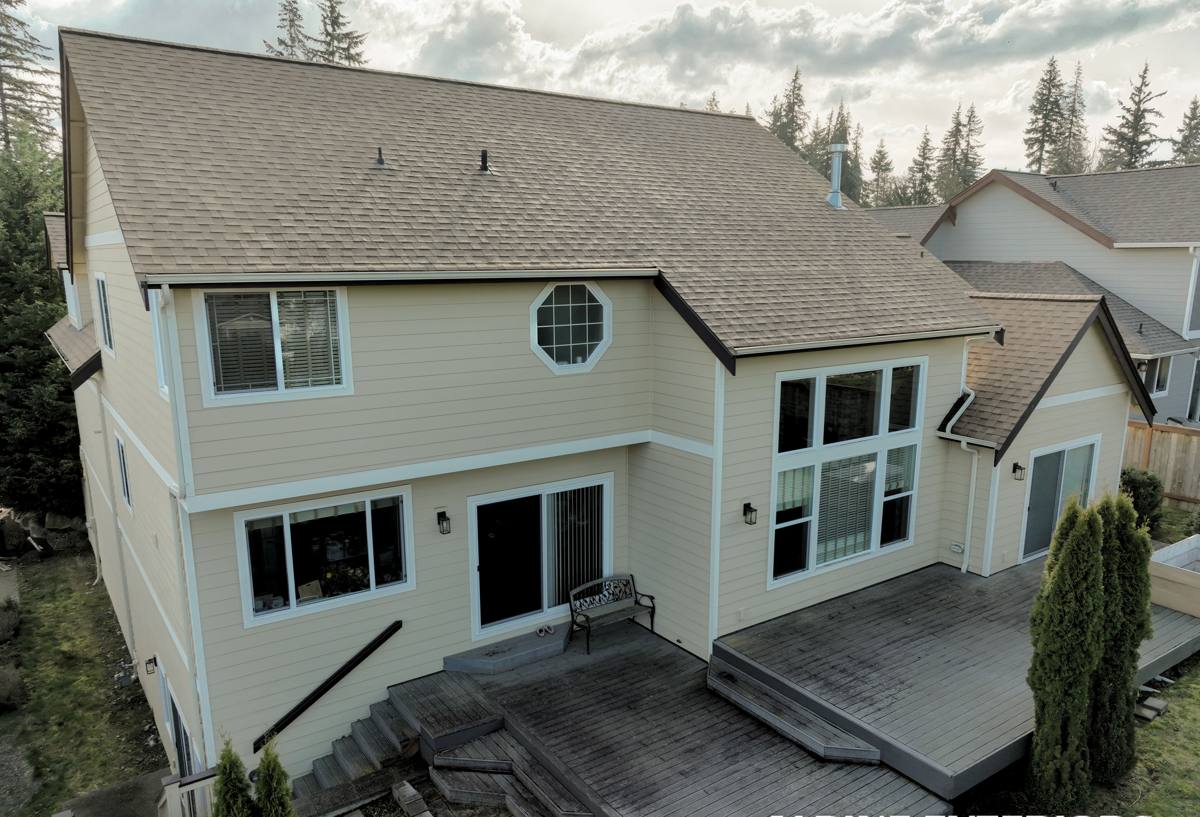
What Sandy Point's Climate Actually Demands
Custer and the surrounding Whatcom County coastline get a specific combination of conditions that inland Washington homes rarely deal with all at once. Understanding these is the whole reason a "just install the window" approach fails out here.
Salt Air and Metal Components
Homes close to saltwater deal with airborne salt that settles on every exterior surface, including window frames, hardware, and fasteners. Over time, salt accelerates corrosion on lower-grade metal components — hinges, cranks, screws, and some aluminum cladding — long before the glass or frame itself would otherwise need attention. This doesn't mean every metal window is a bad idea, but it does mean hardware quality and fastener selection matter more in Sandy Point than they would twenty miles inland.
Wind-Driven Rain
Sandy Point is exposed, waterfront, and low-lying, which means storms don't just drop rain straight down — they push it sideways into the building envelope. A window that would perform fine in a sheltered inland lot can leak here if the flashing details, sill pan, and sealant aren't installed to actively shed water rather than just resist it. This is the single biggest factor we plan around when installing new-construction windows in this area.
A Long Moss and Mildew Season
Whatcom County's damp, mild climate keeps surfaces wet for long stretches of the year, and shaded or north-facing walls near mature trees or water can stay damp even longer. That moisture supports moss, algae, and mildew growth on siding and trim around window openings if water isn't properly directed away from the wall. Correct window flashing isn't just about preventing leaks — it's also about keeping the surrounding wall assembly dry enough that moss and mildew don't get a foothold around your window trim.
Window Materials: What Holds Up Near the Water
There's no single "best" window material for every home — it depends on budget, exposure, and how the rest of the house is built. Here's how the common options actually perform in a Sandy Point setting.
| Material | Salt Air Performance | Moisture Behavior | Maintenance |
|---|---|---|---|
| Vinyl | Good — won't corrode | Handles moisture well; no rot risk | Low; occasional cleaning |
| Fiberglass | Excellent — very stable in coastal conditions | Dimensionally stable, minimal expansion/contraction | Low |
| Wood-clad (exterior clad, wood interior) | Good on the exterior if cladding is intact; interior wood needs protection from any leaks | Sensitive if the clad seal ever fails | Moderate — depends on cladding integrity |
| Bare aluminum | Prone to pitting and corrosion in salt air over time | Conducts moisture and cold; more condensation risk | Higher — we don't recommend bare aluminum this close to the water |
For most Sandy Point new builds, we steer clients toward vinyl or fiberglass frames for the exterior-facing performance, with hardware upgraded to corrosion-resistant options. If you want the look of wood-clad windows, that's workable too — it just means we're extra deliberate about the cladding seams and won't cut corners on the flashing behind them, since any failure there is harder to catch early.
What a Correct New-Construction Install Actually Involves
New construction gives us access to the rough opening before siding and interior finishes go on, which is the best chance to get the water management right. A correct install, in order, looks like this:
- Rough opening is checked for square, level, and correct sizing before the window ever shows up on site.
- A sloped sill pan is installed at the bottom of the opening so any water that does get past the window has somewhere to drain — out, not into the wall.
- Weather-resistive barrier (house wrap) is integrated with the opening using the correct shingle-lap order, so water sheds down and out, never behind a layer that traps it.
- The window is set, shimmed level and plumb, and fastened per the manufacturer's specifications — not just "close enough."
- Flashing tape goes over the nailing fin at the sides and top, layered so upper courses overlap lower ones, matching how water actually runs down a wall.
- Exterior sealant is applied at the correct joints only — sealing the wrong joint can trap water instead of keeping it out, which is a common mistake we see from crews unfamiliar with coastal detailing.
- Interior air sealing and insulation around the frame are completed before drywall closes up the opening.
Every one of these steps matters more in a wind-driven-rain environment like Sandy Point than it would somewhere sheltered. Skipping the sill pan or reversing the flashing lap order might not show a problem for a year or two — but it will eventually, usually as hidden rot inside the wall long before it's visible from outside.
Our Process for New-Construction Jobs in Sandy Point
Whether we're working directly with a homeowner or alongside a general contractor and framing crew, our process stays consistent:
- Review the window schedule and rough openings against the plans before installation day, catching sizing mismatches early.
- Confirm window selection fits the site's exposure — which elevations face the water and prevailing wind matters for hardware and glazing choices.
- Install sill pans, flashing, and weather barrier integration in the sequence above, on every opening, without shortcuts.
- Coordinate timing with the siding crew so flashing laps correctly under the water-resistive barrier and finished siding.
- Walk every opening before it's covered up — this is the point where a mistake is a five-minute fix instead of a tear-out.
- Provide the homeowner or builder with a clear record of what was installed and where, useful for warranty purposes and future maintenance.
We treat that pre-cover walkthrough as non-negotiable. Once siding goes on, a flashing mistake is hidden for years — which is exactly the kind of problem that shows up as a stain on an interior wall long after everyone's forgotten who installed the windows.
Mistakes We See in New-Construction Window Work
Most window problems in newer coastal homes trace back to a handful of avoidable errors:
- Reversed or missing flashing laps — installed in a hurry, without regard for which layer needs to overlap which.
- No sill pan, leaving the bottom of the opening with no drainage path if water does get in.
- Over-sealing — caulking every joint solid, including the bottom, which traps water instead of letting it drain.
- Mismatched hardware — standard-grade cranks and hinges that weren't specified for coastal exposure, leading to early corrosion.
- Rushed timing with the siding crew, where windows get flashed one way and then the water-resistive barrier gets lapped the wrong direction over top.
None of these are exotic problems. They're all things that get caught by a crew that's slowed down enough to do the sequence correctly and has actually dealt with a wind-driven-rain coastline before.
Energy Performance and Code Considerations
Washington's energy code sets minimum performance requirements for new-construction windows, typically measured by U-factor (how well the window resists heat loss) and, in some cases, solar heat gain coefficient. For Whatcom County's climate, a solid dual-pane, low-E window with a good U-factor is standard for most homes; some builders and homeowners choose triple-pane for additional performance, particularly on walls facing open water and prevailing wind where heat loss is highest. We'll walk through what your specific plans require and what makes sense for your budget and exposure — there's rarely a need to over-spec every elevation of the house the same way.
Why It Matters to Hire a Crew That Already Works Sandy Point
Sandy Point is a tight-knit, low-lying waterfront community, and building here comes with practical realities that a crew unfamiliar with the area can miss — site access, working around wind and tide conditions, and understanding just how much exposure a given lot actually gets based on which direction it faces the water. A crew that's already worked in this specific area knows to treat every new-construction window install with coastal detailing as the default, not an upgrade — because in Sandy Point, "coastal" conditions aren't the exception, they're the baseline.
That local familiarity also means fewer surprises during the build. We know which elevations tend to take the worst of the weather, which materials hold up and which don't, and how to sequence work with other trades so the window installation isn't the weak link in an otherwise well-built house.
Let's Talk About Your New Build
If you're planning new construction or a major addition in Sandy Point or elsewhere around Custer, we're happy to look at your plans and talk through window selection, sequencing, and what correct installation looks like for your specific site and exposure. Reach out for a free, no-pressure estimate — there's a form right below to get started.