 Custer
 Why Bellingham Roofs Take a Different Kind of Beating
Bellingham sits close enough to the water that salt-laden air is a real factor in how a roof ages, not just a talking point. Salt air speeds up corrosion on exposed fasteners, drip edge, and flashing years before a roof's shingles are actually worn out. Add in driving rain that comes off the water at an angle instead of falling straight down, and you get wind-driven moisture working its way under laps and around penetrations that would stay dry in a calmer climate.
Then there's the moss. Whatcom County's mix of mild temperatures, shade from mature trees, and months of damp weather gives moss and algae a long growing season with almost no dry, hot stretch to knock it back. On a lot of roofs around Bellingham, moss isn't an occasional problem — it's a maintenance item that never fully goes away. Left alone, it holds water against the roofing material and works its way under shingle tabs, which is where a lot of "mystery leaks" actually start.
None of this means every roof needs to be torn off. It means repairs in this area have to account for moisture and corrosion in ways a drier climate wouldn't require.
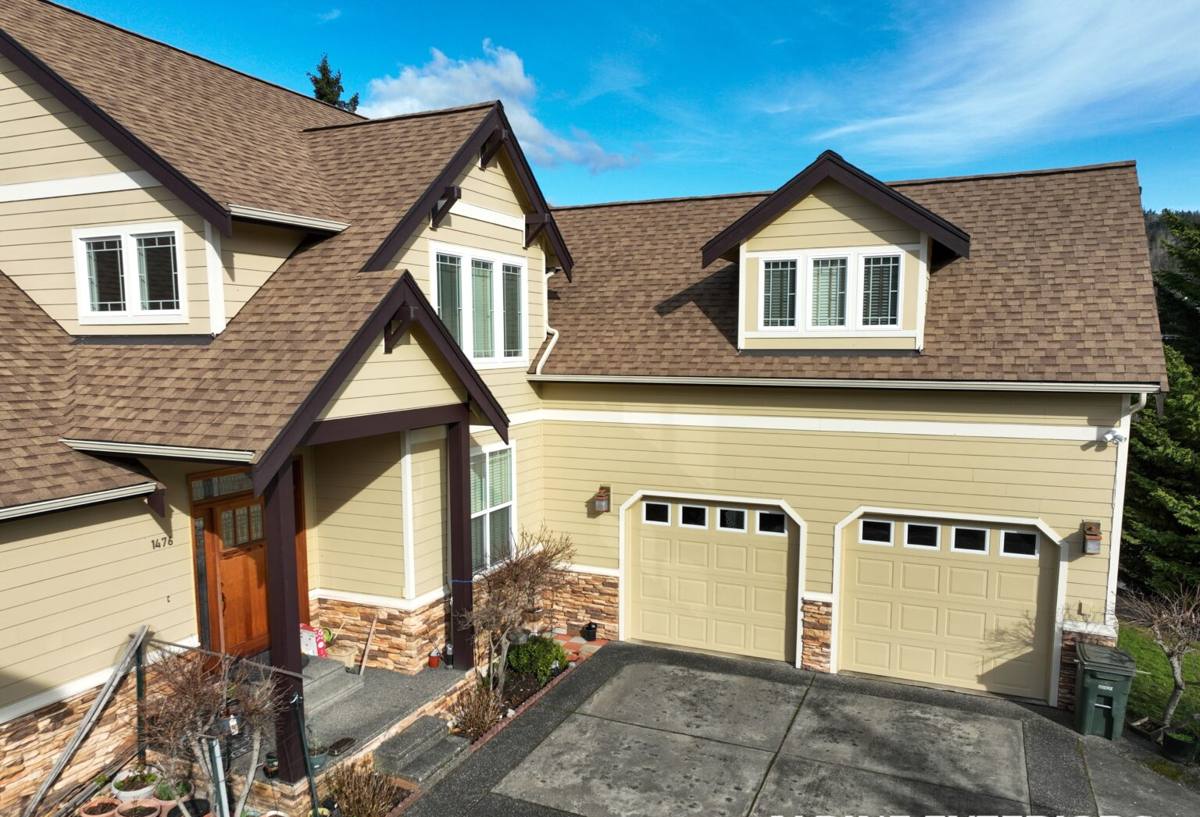
Signs a Repair Is Overdue
Inside the House
Most homeowners find out about a roof problem from the inside first: a brown ring on a ceiling, a musty smell in an attic or closet, or a soft spot in drywall near an exterior wall. By the time water shows up inside, it's usually been getting in for a while — the leak point on the roof is often several feet away from where the stain appears, because water travels along the underlayment or framing before it drips.
On the Roof Itself
- Shingle edges curling up or granules collecting in gutters and downspouts
- Moss mats thick enough to hold their shape when you press on them
- Rust streaks below metal flashing or exposed fastener heads
- Lifted or cracked shingles at valleys, ridges, or where the roof meets a wall or chimney
- Daylight visible through the roof deck from inside an unfinished attic
Any one of these on its own might just need a spot repair. Several together, especially around the same area, usually points to a bigger problem underneath.
What a Correct Repair Actually Involves
Finding the Real Leak
A repair that just patches the spot where a stain shows up inside the house often doesn't fix anything — it treats the symptom, not the source. A correct repair starts by tracing the water's actual path, which usually means checking valleys, step flashing, pipe boots, and any place two roof planes or a roof and a wall meet. Those transition points fail far more often than the open field of shingles.
Repairing to Match, Not Just Patch
Where shingles need to be replaced, we try to match the existing material as closely as possible — color, profile, and where practical, age and wear so a patch doesn't stand out as an obvious mismatch. Flashing gets rebuilt to shed water properly rather than just caulked over, since caulk is a short-term fix that fails faster than metal, especially with the amount of rain Bellingham sees. A repair that's done right should hold up the same way the surrounding roof does, not become the next spot that needs attention.
Repair or Replace? What Actually Drives the Decision
Homeowners often assume a leak means a new roof, and sometimes it does — but often a targeted repair is the honest, cost-effective answer. Here's how we weigh it:
| Factor | Points Toward Repair | Points Toward Replacement |
|---|---|---|
| Age of roofing material | Under roughly 60–70% of expected lifespan | Near or past expected lifespan |
| Extent of damage | Isolated to one area or a few penetrations | Widespread across multiple roof planes |
| Deck condition | Solid, dry sheathing under the damaged area | Soft, rotted, or repeatedly wet decking |
| Moss/algae staining | Surface growth without granule loss | Heavy, long-term growth with visible wear |
| Number of past repairs | First or second repair in that area | Same area repaired multiple times already |
A straight answer up front costs nothing and saves money either way — a repair we can stand behind if that's genuinely what's needed, or an honest recommendation to replace if repairs would just be delaying the inevitable at your expense.
How We Approach a Bellingham Repair Call
Inspection First
We walk the roof (or use a lift when pitch or access calls for it), check the attic if there's access, and look at the whole system — not just the spot you called about. A leak at one valley is sometimes a sign that flashing elsewhere is close behind it in age and condition.
A Written Scope Before Any Work Starts
You get a clear description of what we found, what we're fixing, and why — in writing, before anything is torn into. No verbal "trust me" estimates.
The Repair Itself
We remove damaged material back to sound decking and flashing, rebuild the affected area with materials matched to the rest of the roof, and seal transitions the way they should be sealed — mechanically, not just with sealant as the primary defense.
Cleanup and Walkthrough
Debris and old material are cleared off the property, and we walk you through what was done before we consider the job finished.
Moss, Algae, and Bellingham's Long Wet Season
Because moss growth here isn't a one-time event, dealing with it is part of a healthy repair rather than a separate project. During a repair we'll typically clear moss and debris from the affected area using methods that don't strip granules or damage the shingle surface — pressure washing a roof is a fast way to shorten its life, so we avoid it. Where it makes sense, zinc or copper strips near the ridge let rainwater carry trace metal down the roof slope, which slows new moss growth over time without chemicals that can run off into gutters and landscaping.
Trimming back overhanging branches, where that's within your control, also helps — shade and trapped leaf debris are two of the biggest reasons some roofs stay damp longer than others in the same neighborhood.
Materials and Flashing Choices We Stand Behind
Given the salt air and rain exposure common around Bellingham, we lean toward corrosion-resistant metal flashing rather than the lightest or cheapest option available, because flashing failure is one of the top causes of the leaks we get called out for in the first place. We also favor algae-resistant shingle products where a repair calls for replacing shingles, since standard shingles in a climate this damp can show streaking within just a few years.
We're选择 careful about underlayment choices too — some lower-cost synthetic and felt products don't handle prolonged moisture exposure as well as others, which matters more here than in a drier climate. These are professional judgment calls based on how materials actually perform in this specific environment, not brand-name preferences — we're happy to walk through the reasoning and trade-offs for your specific roof.
Why a Crew That Already Works Whatcom County Matters
Roofing crews that mostly work inland or in drier regions sometimes underbuild for what a marine climate actually throws at a roof — lighter flashing details, less attention to ventilation that keeps moisture from condensing in the attic, or underlayment choices that make sense somewhere else but not here. Working out of Custer, we're already in Whatcom County day to day, which means we're familiar with how local homes are built, what the county's permitting expects for larger repair work, and how quickly weather can turn a small leak into a bigger problem if it sits too long before someone looks at it.
It also means a faster response when something needs attention now rather than in three weeks — we're not driving in from out of the area to look at a Bellingham roof.
Simple Maintenance Between Repairs
A repair holds up longer when it's not fighting the same conditions that caused the original problem. A few habits make a real difference:
- Clear gutters and downspouts at least twice a year so water isn't backing up under the roof edge
- Look at the roofline from the ground after storms for lifted shingles or debris buildup
- Keep an eye on attic spaces for musty smells or damp insulation, especially after heavy rain
- Have visible moss addressed before it forms thick mats, rather than waiting until it's established
- Get flashing around chimneys, skylights, and vents checked every few years even if there's no visible leak yet
If you're dealing with a leak, moss buildup, or just want an honest read on where your roof actually stands, we're glad to come take a look. The estimate is free, there's no pressure to move forward, and you'll get a straight answer about what your roof needs — not a sales pitch.