 Custer
 Why Blaine Roofs Wear Differently Than Roofs Inland
Blaine sits right up against Boundary Bay and the Strait of Georgia, which means homes here deal with a combination of weather stresses that a roof twenty miles inland in Whatcom County simply doesn't see. Salt-laden air moves in off the water and settles on every exposed surface, including your roof. Combine that with driving rain that comes in sideways during winter storms, and a moss season that can run eight or nine months out of the year in shaded, north-facing sections, and you have a roofing environment that punishes shortcuts. A roof installed the same way you'd install one in a dry inland climate will show problems in Blaine years before it should.
We install new roofs specifically with this coastal exposure in mind — fastener selection, underlayment choice, ventilation design, and edge detailing all get adjusted for what a Blaine roof actually has to survive, not just what's on a generic spec sheet.
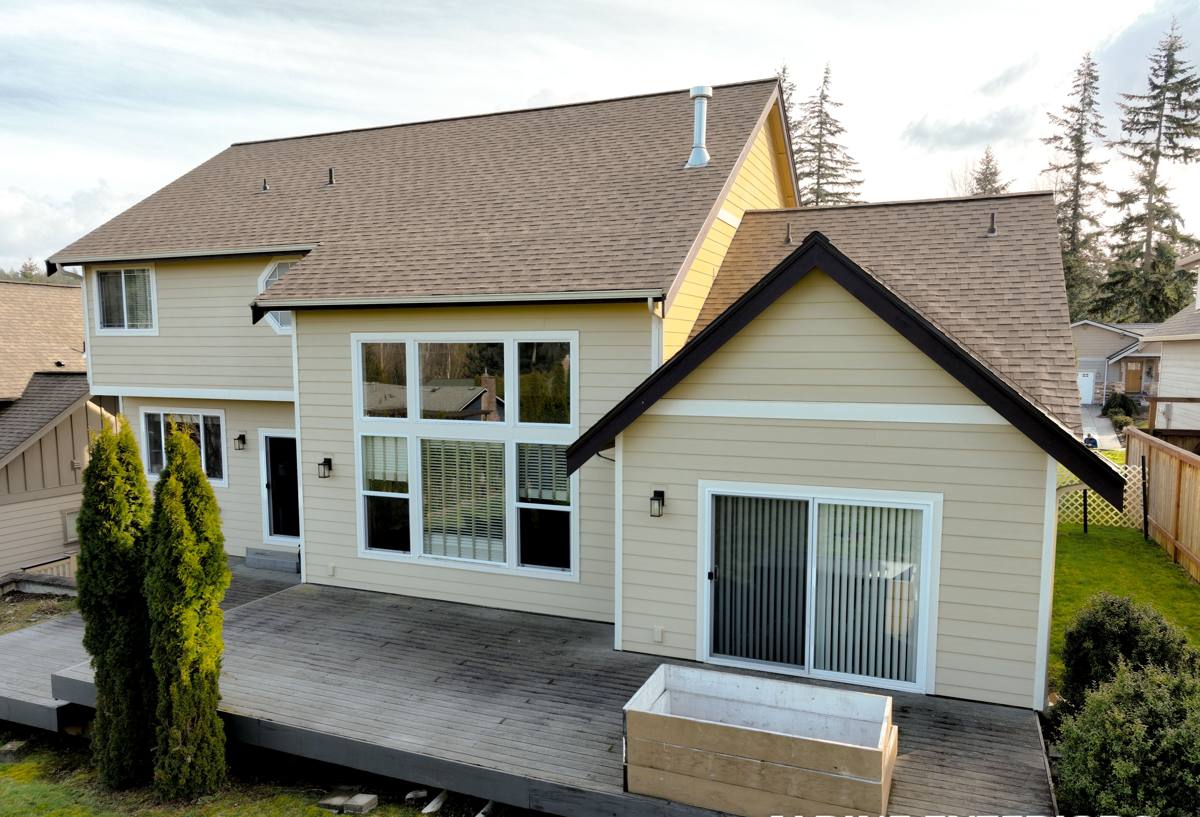
What Salt Air, Rain, and Moss Actually Do to a Roof
Salt Air and Corrosion
Airborne salt accelerates corrosion on any exposed metal — flashing, fasteners, vents, and drip edge. Standard electro-galvanized fasteners can start rusting at the head within a handful of years near the water, which leads to streaking, loosened shingles, and eventually leaks at the exact points that are supposed to be keeping water out.
Driving Rain and Wind-Driven Water
Blaine's storms often push rain nearly horizontal off the water. That means water gets forced up under shingle edges and through laps that would stay dry in a straight-down rain. Valleys, eaves, and any roof-to-wall transition are where this shows up first if the install wasn't detailed for wind-driven exposure.
Moss and Prolonged Moisture
Shaded roof sections, especially north- and east-facing slopes under trees, stay damp long after the rest of the roof has dried. That sustained moisture is exactly what moss needs to establish. Once moss takes hold, it lifts shingle tabs, holds water against the roof deck, and shortens the life of even a good roofing product.
What a Correct New Roof Installation Includes
A roof that's going to hold up in this climate isn't just shingles nailed to plywood. Here's what we consider non-negotiable on every Blaine install:
- Tear-off and deck inspection: Old roofing comes off completely so we can inspect the deck for soft spots, rot, or delamination before anything new goes down.
- Ice-and-water shield at vulnerable zones: Eaves, valleys, and roof penetrations get a self-adhering waterproof membrane, not just felt, because these are the spots where wind-driven rain and ice dams cause the most damage.
- Synthetic underlayment across the field: More tear-resistant and more water-resistant than old-style felt, and it holds up better if weather moves in mid-project.
- Corrosion-resistant fasteners and flashing: In a salt-air environment we use fastener and flashing materials chosen to resist corrosion, not the cheapest option that happens to meet code.
- Proper ventilation: Balanced intake and exhaust ventilation keeps the underside of the deck dry, which matters even more here because of how long moisture sits in the air.
- Careful valley and step-flashing work: These are the highest-risk leak points on any roof, and they're where a rushed install shows up first as a callback.
Roofing Material Options for the Blaine Coast
There isn't one "correct" roofing material for every Blaine home — it depends on your roof's exposure, your budget, and how long you want to go between maintenance. Here's how the common options actually compare in this climate:
| Material | How It Handles Salt Air & Moisture | Moss Resistance | Typical Lifespan Here |
|---|---|---|---|
| Architectural asphalt shingles | Good, especially with algae-resistant granules | Moderate — benefits from zinc/copper strips | 20–30 years |
| Standing seam metal | Excellent when properly coated and fastened | High — sheds water fast, little for moss to grip | 40–50+ years |
| Basic 3-tab shingles | Fair — thinner profile wears faster near salt exposure | Lower — flatter profile holds moisture longer | 15–20 years |
| Composite/synthetic shingles | Good — resistant to moisture absorption | Moderate to high depending on product | 30–40 years |
We'll walk you through which of these makes sense for your specific roof geometry, sun exposure, and tree cover during the estimate — there's no one-size-fits-all answer, and we'd rather steer you toward the right product than the most expensive one.
Our Installation Process, Start to Finish
1. On-Site Assessment
We inspect the existing roof, the attic or crawlspace ventilation, and note any problem areas — sagging, soft decking, moss buildup, or flashing that's already failing. This is also when we measure exposure to prevailing wind and rain direction, which affects how we detail valleys and eaves.
2. Written Scope and Material Selection
You get a clear scope of work: what's being torn off, what underlayment and flashing package is being used, and what shingle or metal product you've chosen. No vague line items.
3. Tear-Off and Deck Repair
Full removal of old roofing, disposal, and any deck repair identified during tear-off — done as its own step, not glossed over.
4. Waterproofing Layer and Underlayment
Ice-and-water membrane at eaves and valleys, synthetic underlayment across the field, and flashing installed at every wall intersection, chimney, and penetration.
5. Roofing Material Installation
Installed to manufacturer specification for nail pattern, exposure, and fastening — this is where warranty compliance is either earned or lost.
6. Ventilation and Final Details
Ridge and soffit ventilation checked and corrected if needed, all flashing and trim sealed, and a final walk-through so you know exactly what was done.
7. Cleanup and Magnetic Sweep
Full site cleanup including a magnetic sweep for stray nails around the house, driveway, and yard.
Signs Your Blaine Roof Needs Replacing, Not Patching
Not every roof problem calls for a full replacement, but there are signs that patching is just delaying an expensive failure:
- Granule loss showing up heavily in gutters, especially on the roof's water-facing slopes
- Shingles that are curling, cupping, or cracking, particularly on sun- and wind-exposed sections
- Moss that keeps returning within a season or two of cleaning, especially on shaded slopes
- Soft or spongy decking felt underfoot during any roof access
- Leaks at valleys, chimneys, or wall intersections that have recurred more than once
- A roof approaching or past its expected lifespan for its material type, especially if it was installed without coastal-grade detailing
Why Hiring a Crew That Already Works in Blaine Matters
A roofing crew that mostly works inland won't automatically think about salt-air fastener corrosion or wind-driven rain at the eaves — those details come from having actually seen what fails on homes exposed to Boundary Bay weather. We work throughout Whatcom County, including Blaine and the surrounding coastal areas, so the detailing choices on your roof aren't guesses — they're based on what we've seen hold up and what we've seen fail in this exact climate.
That local knowledge also shows up in scheduling and material staging. Coastal weather windows can be narrower than inland ones, and a crew familiar with the area plans tear-off and dry-in around that reality instead of getting caught mid-project when a system rolls in off the water.
Maintenance That Extends Your New Roof's Life
A well-installed roof still benefits from basic upkeep, especially in a moss-prone, salt-air climate:
- Keep gutters clear so water isn't backing up under the eaves
- Have moss treated or removed before it spreads across a full slope, not after
- Trim back overhanging branches that keep sections of roof shaded and damp
- Schedule a visual inspection every year or two, especially after major storms
- Address small flashing or sealant issues promptly rather than waiting for a leak
What Affects the Cost of a New Roof in Blaine
Every roof is different, but the main cost drivers we see are consistent:
| Factor | Why It Matters |
|---|---|
| Roof size and pitch | More surface area and steeper slopes mean more material and labor time |
| Material choice | Standing seam metal costs more upfront than asphalt but lasts far longer |
| Deck condition | Rot or soft decking found during tear-off adds repair cost before new roofing goes on |
| Number of valleys and penetrations | More flashing detail work means more labor |
| Tear-off layers | Removing multiple old layers of roofing takes longer than a single-layer tear-off |
| Access and site conditions | Steep lots, limited access, or tall roofs can affect equipment and safety setup |
We'd rather give you an honest range during an in-person estimate than a number over the phone that doesn't hold up once we're actually on your roof.
If your Blaine home needs a new roof — or you're just not sure whether repair or replacement makes more sense — we're happy to take a look and give you a straightforward, no-pressure estimate. Use the form below to get started.