 Custer
 Storm Damage Roof Repair for Meridian: A Whatcom County Reality, Not a Rare Event
Meridian sits in the stretch of Whatcom County between Bellingham and the Canadian border, close enough to Custer and the surrounding farmland to see the same weather patterns come through: wind off the Strait of Georgia, long stretches of driving rain, and marine air that carries salt further inland than most homeowners expect. Storm damage to roofing here isn't usually a single dramatic event — it's more often the accumulation of repeated wind and rain exposure that finally shows up as a leak, a missing shingle, or a soft spot in the decking after a bad winter.
We work on roofs throughout this part of the county, and storm damage repair calls follow a pattern. A windstorm lifts a section of shingles or blows debris across a roof plane, rain gets underneath before anyone notices, and by the time a homeowner sees a stain on a ceiling, water has often been working its way into the roof deck for weeks. Getting a correct, complete repair after a storm — not just a patch over the visible damage — is what actually protects a Meridian home for the next storm, and the one after that.
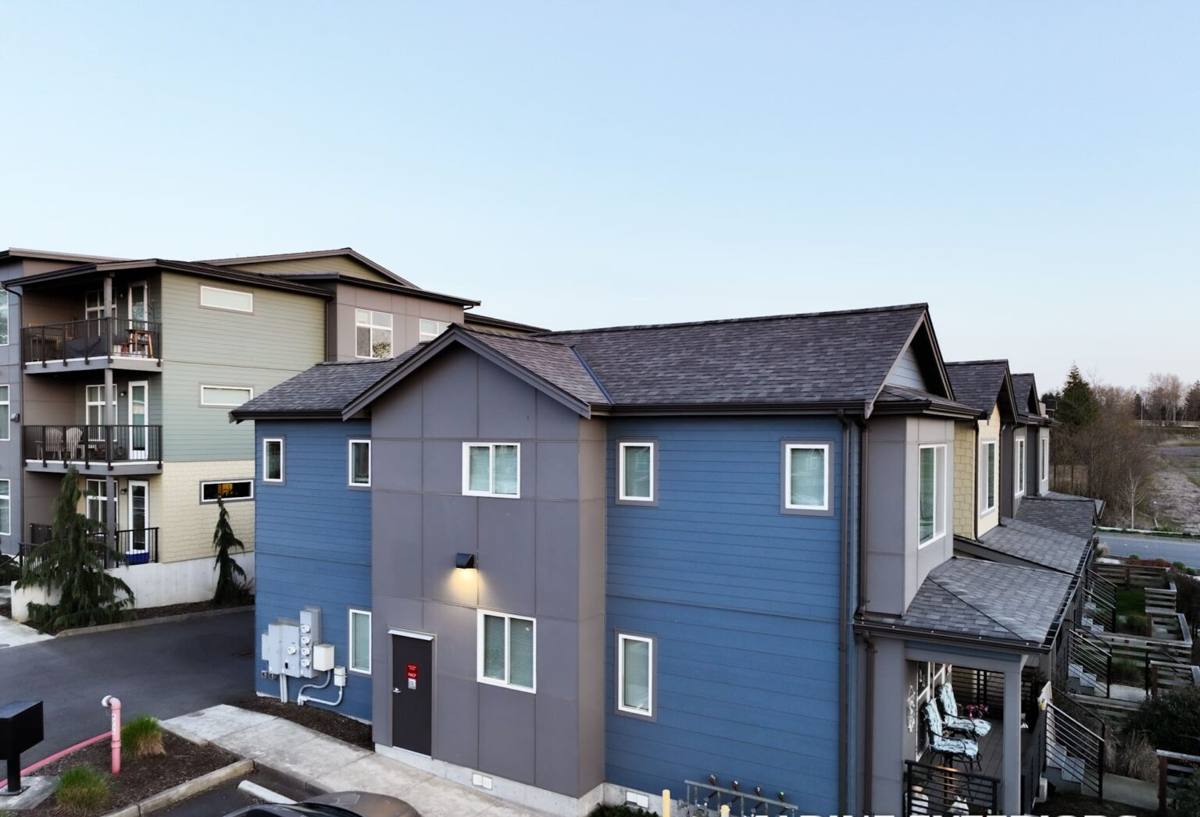
What Storms Actually Do to Roofs Around Meridian
Wind Uplift and Lifted Shingles
Open farmland and few windbreaks mean wind moving through the Meridian area can get under the edge of shingles or roofing panels, breaking the seal strip that's supposed to hold them flat. Once that seal is broken, the shingle can lift again in the next wind event even if it looks fine from the ground — it's no longer sealed, just resting in place.
Wind-Driven Rain at Roof Edges and Penetrations
Rain in this part of Whatcom County rarely falls straight down during a real storm. It comes in sideways, which pushes water into places a roof was never designed to shed water from directly — under ridge caps, around vent boots, along flashing at chimneys and walls. Storm damage in these spots is often invisible from the ground and only shows up as a leak well after the storm has passed.
Debris Impact
Branches and debris carried by wind can crack or puncture shingles, dent metal flashing, or knock granules loose from asphalt shingles. Granule loss doesn't look dramatic, but it's often the first sign of accelerated wear on a section of roof that took an impact.
Moss and Trapped Moisture After the Storm Passes
Whatcom County's long, mild, wet stretch of the year gives moss plenty of time to establish on any spot where storm damage left a roof holding water instead of shedding it. A section of lifted shingles or a clogged valley that isn't corrected after a storm becomes a moss and moisture problem within a season or two, which compounds the original damage.
Signs a Meridian Roof Has Storm Damage
- Shingles that are cracked, curled, creased, or missing entirely after a windstorm
- Granules collecting in gutters or at the base of downspouts
- Water stains on ceilings or upper walls that appeared after a storm
- Soft or spongy spots when walking the roof, indicating a compromised deck below
- Visible daylight through the roof deck from inside an attic space
- Flashing around chimneys, vents, or walls that's bent, lifted, or separated
- Debris, branches, or dents visible on roof planes after a storm
What a Correct Storm Damage Repair Actually Involves
A proper storm damage repair starts with more than a look at the section that's obviously damaged. Wind and rain rarely limit their effect to one visible spot, and a repair that only addresses what's easy to see often misses damage that will show up as a leak within a year.
1. Full Roof Inspection, Not Just the Damaged Area
We walk the entire roof after a storm, not just the section a homeowner points to. Wind that lifted shingles in one area often affected the seal strip on adjacent shingles too, even if they haven't visibly moved yet.
2. Deck Assessment Where Water Has Intruded
Anywhere shingles were compromised long enough for water to reach the roof deck, we check the decking itself for soft spots or rot before replacing surface materials. Covering damaged decking with new shingles just hides the problem instead of fixing it.
3. Flashing and Penetration Repair
Storm damage at flashing points — chimneys, vent boots, wall-to-roof transitions — gets corrected as part of the repair, not left for a future call. These are the points most likely to leak again in the next wind-driven rain event if they aren't properly resealed and, where needed, replaced.
4. Matching Materials Correctly
Where a repair is patching into an existing roof rather than a full replacement, matching shingle type, profile, and where possible color matters for both appearance and performance — mismatched materials can shed water differently at the seam between old and new.
Repair vs. Replacement After Storm Damage
Not every storm damage call ends in a full roof replacement, and we don't default to recommending one. The right call depends on how much of the roof was affected, how old the existing roofing is, and whether the damage is isolated or a sign the roof was already near the end of its service life.
| Situation | Repair Usually Makes Sense | Replacement Usually Makes Sense |
|---|---|---|
| Isolated section of lifted or missing shingles, roof otherwise sound | Yes | Not necessary |
| Roof under 10-15 years old with a scattered storm impact | Yes | Rarely needed |
| Roof already near the end of its expected service life | Short-term only | Often the better long-term value |
| Widespread granule loss and brittle shingles across multiple planes | Rarely a lasting fix | Yes |
| Deck rot found under damaged shingles | Depends on extent | Yes, if rot is widespread |
Working With Insurance on Storm Damage Claims
Storm damage repair often involves a homeowner's insurance policy, and a clear, honest assessment matters here as much as the repair itself. We document what we find — the extent of damage, whether it's consistent with wind or impact, and what correcting it properly requires — so homeowners have accurate information to bring to an adjuster. We don't inflate a scope of work to pad a claim, and we don't recommend a full replacement when a targeted repair genuinely solves the problem; our job is to tell a Meridian homeowner what their roof actually needs.
Why Timing Matters After a Storm
The gap between a storm and a repair is where most of the real damage happens in this climate. A section of lifted shingles left through even one more heavy rain can let enough water into the deck to turn a straightforward shingle repair into a deck replacement. Tarping an exposed area as a temporary measure, then scheduling the permanent repair as soon as reasonably possible, is standard practice for a reason — Whatcom County's rain doesn't wait for a convenient repair date.
A Simple Checklist for Meridian Homeowners After a Storm
- Check gutters and the ground around the house for granules or shingle fragments after any significant wind event
- Look at ceilings and upper-floor walls for new stains, even faint ones, in the days after a storm
- Avoid walking the roof yourself to inspect it — a soft deck under storm-damaged shingles isn't always obvious or safe to stand on
- Get a full roof inspection, not just a look at the obviously damaged section
- Ask for photos and a written description of the damage found, useful for both your records and any insurance claim
- Have any exposed area temporarily protected right away rather than waiting for a scheduled repair date
Our Process
We start with a full roof walk after a storm, checking every plane and every penetration point rather than just the area a homeowner flags. From there we give a straightforward read on what's actually damaged, what a correct repair involves, and whether repair or replacement makes more sense given the roof's age and condition. If insurance is involved, we document what we find clearly enough to support that process. Repairs are done to match the existing roof correctly, with flashing and penetration details treated as part of the job rather than an afterthought.
If a recent storm has left your Meridian-area roof with missing shingles, a new leak, or damage you're not sure how serious it is, we're glad to take a look. Reach out below for a free, no-pressure estimate.