 Custer
 New Roof Installation Built for Meridian's Weather
Meridian sits close enough to the water and open farmland east of Custer that its roofs take a different kind of beating than homes further inland. Salt-tinged air off the Strait and Bellingham Bay, wind-driven rain that comes in sideways instead of straight down, and a moss season that can run eight or nine months out of the year all add up to roofs that age faster than their warranty paperwork suggests. A new roof installation here isn't just about swapping old shingles for new ones — it's about building an assembly that's actually matched to what this stretch of Whatcom County throws at it.
We install new roofs for homes throughout Meridian and the surrounding Custer area, and most of the calls we get start the same way: a roof that's twelve to twenty years old, showing granule loss or moss staining, and an owner who wants to know whether it's time to replace or if one more repair will buy another season. This page is about what a correct, full roof installation looks like when it's done right for this specific climate — not a generic overview.
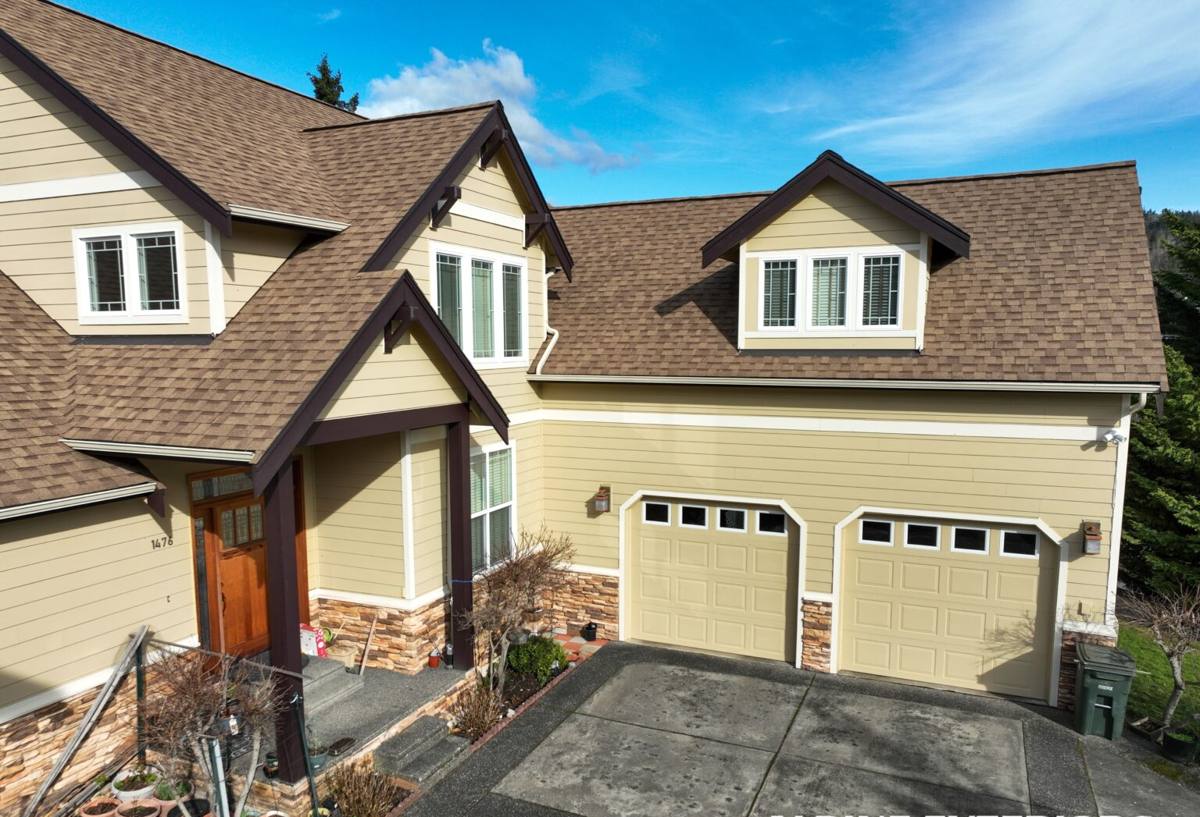
What Salt Air, Rain, and Moss Actually Do to a Roof
Salt Air
Airborne salt doesn't just affect homes right on the waterfront. It travels on wind and settles on roofing metal, fasteners, and flashing well inland, including in Meridian. Over years, it accelerates corrosion on anything that isn't rated for coastal exposure — cheap nails, unprotected flashing edges, and standard fasteners are the first things to fail. A roof installed with marine-grade or coated fasteners and properly finished flashing holds up; one installed with builder-grade hardware starts showing rust streaks and loosened flashing well before the shingles themselves wear out.
Driving Rain
Whatcom County storms frequently bring wind-driven rain rather than straight-down rain, which changes how water moves across a roof. It gets pushed up under shingle tabs, sideways along ridges, and into any gap in the underlayment or flashing that a calmer climate could get away with ignoring. This is why underlayment choice and flashing detail work matter more here than in drier parts of the state — a roof that would perform fine in Spokane can leak within a few winters in Meridian if it's installed the same way.
Moss Season
Shade, moisture, and mild temperatures give moss a long growing window in this part of Whatcom County. Moss holds water against the roof surface, works its way under shingle edges, and lifts them over time, which is exactly the kind of entry point wind-driven rain needs. A new roof gives you a clean start, but the installation choices you make — material, ventilation, and whether zinc or copper strips are added — determine how fast moss comes back.
What a Correct New Roof Installation Includes
A new roof is more than the visible shingles or panels. The parts you don't see are what determine whether the roof actually performs in this climate for its full expected life.
- Tear-off and deck inspection: old roofing removed down to the deck, with any soft, rotted, or water-stained sheathing replaced before anything new goes down.
- Ice-and-water shield at vulnerable areas: valleys, eaves, and around every penetration, since these are where wind-driven rain finds its way in first.
- Synthetic underlayment across the full roof: a continuous, properly lapped water-resistant layer under the primary roofing material.
- Corrosion-resistant fasteners and flashing: hardware rated for coastal-influenced air, not standard interior-grade materials.
- Properly detailed flashing: around chimneys, skylights, walls, and roof-to-roof transitions, where the majority of real-world leaks originate.
- Balanced attic ventilation: intake and exhaust sized to the home, which controls moisture buildup and reduces the damp conditions moss favors.
- Moss-inhibiting details where appropriate: zinc or copper strips near the ridge on shaded roofs, positioned to work with rainfall rather than against it.
Choosing a Roofing Material for a Meridian Home
There's no single "best" material for every Meridian roof — it depends on your roof's pitch, how much shade it gets, and your budget. Here's how the common options actually compare for this specific climate.
| Material | Performance in Salt Air / Rain | Moss Resistance | Typical Lifespan Here |
|---|---|---|---|
| Architectural asphalt shingles | Good, when paired with corrosion-resistant fasteners and full underlayment | Moderate — benefits from zinc/copper strips | 20–30 years |
| Standing seam metal | Excellent when properly coated and fastened; sheds wind-driven rain well | High — smooth surface discourages growth | 40–50+ years |
| Cedar shake (natural) | Fair — requires diligent maintenance in damp, shaded areas | Low without regular treatment | 20–25 years with upkeep |
| Synthetic composite shake/slate | Good, non-absorbent and stable in wet conditions | Moderate to high | 30–50 years |
For homes with significant tree cover — common on many Meridian lots — we tend to steer owners toward metal or synthetic composite when budget allows, simply because moss and moisture retention are the biggest long-term maintenance burden for shaded roofs. Cedar can still be the right call for homes prioritizing a specific look, but it asks for more upkeep in this climate than the alternatives, and we'll be upfront about that trade-off rather than talk anyone out of a roof they want.
Roof Pitch, Shade, and Moss: Planning Around Your Specific Roof
Two roofs on the same street can age very differently depending on pitch and sun exposure. Low-slope sections and north-facing planes that stay shaded most of the day hold moisture longer and grow moss faster, regardless of material. When we install a new roof, we look at each plane separately — a steep, sun-exposed south face might need nothing beyond standard underlayment and shingles, while a shaded, low-pitch section over a porch or addition may get extra ice-and-water coverage and moss-inhibiting strips as standard practice, not an upsell.
Ventilation Matters More Than Most Homeowners Expect
Poor attic ventilation traps moisture underneath the roof deck, which shortens shingle life from below at the same time salt air and rain are working on it from above. Part of a correct installation is checking that intake vents at the eaves and exhaust at the ridge are balanced for the home's actual attic volume — not just leaving whatever venting was there before, which is often undersized on older Whatcom County homes.
Our Installation Process
- On-site inspection and estimate: we walk the roof, check the deck where accessible, note pitch, shade patterns, and existing damage, and give you a written estimate with material options explained honestly.
- Material selection: we go over the trade-offs for your specific roof — pitch, shade, budget, and how long you plan to stay in the home — rather than pushing one product line.
- Tear-off and deck repair: full removal of old roofing, with any compromised sheathing replaced before we move forward.
- Underlayment and flashing installation: full-roof underlayment, reinforced ice-and-water protection at vulnerable areas, and properly detailed flashing at every penetration and transition.
- Roofing material installation: installed to manufacturer specification with fasteners and hardware suited to coastal-influenced conditions.
- Ventilation check and adjustment: intake and exhaust venting balanced as part of the job, not treated as a separate add-on.
- Final walkthrough: we go over the finished roof with you, explain what maintenance (if any) it needs, and make sure you know what's covered under warranty.
Why a Crew That Already Works Meridian Matters
Roofing crews that mainly work drier inland regions sometimes install roofs to a generic standard — adequate underlayment, standard fasteners, minimal flashing detail — because that's what holds up where they usually work. That approach doesn't hold up as well in Meridian. A crew that regularly works this part of Whatcom County already knows which fastener grades to use without being asked, where wind-driven rain tends to find gaps, and which roof planes on a given lot are going to need extra moss protection. That local familiarity shows up in fewer callbacks and a roof that's still performing well a decade or two down the road, not just at the final walkthrough.
Planning Your New Roof: A Practical Checklist
- Get a full deck inspection, not just a shingle estimate — hidden rot changes both cost and timeline.
- Ask what underlayment and flashing details are included, not just the shingle or metal brand.
- Confirm fasteners and flashing are rated for coastal-influenced air, not standard interior-grade hardware.
- Discuss shade and moss history for your specific roof, not just the material in general.
- Have ventilation checked and balanced as part of the installation, not treated as optional.
- Get the warranty terms in writing, including what's covered on labor versus materials.
- Ask how the crew handles cleanup and job-site protection for landscaping and gutters.
Cost Factors to Expect
Every roof is different, but the main variables that move the price on a Meridian installation are consistent enough to plan around.
| Factor | Why It Matters |
|---|---|
| Roof size and number of planes | More cuts, valleys, and transitions mean more labor and material waste |
| Deck condition | Rotted or soft sheathing found during tear-off adds repair cost before new roofing goes on |
| Material choice | Asphalt, metal, and composite differ significantly in material cost and installation time |
| Pitch and access | Steep or hard-to-access roofs take longer and require additional safety equipment |
| Extra moisture protection | Shaded, low-slope, or moss-prone sections may need additional ice-and-water shield |
We'd rather walk your roof and give you real numbers than throw out a broad range that doesn't mean much until we've seen the actual conditions. If you're weighing a new roof for a Meridian home, we're glad to come take a look and talk through what your specific roof actually needs — no pressure, no obligation. Use the form below to request a free estimate.