 Custer
 Laurel's Weather Works Against Roofs Year-Round
Laurel sits close enough to the water and open farmland north of Custer that roofs here take a different kind of beating than roofs twenty miles inland. Whatcom County winters bring long stretches of driving rain riding in sideways on wind off the strait, and the salt-laden air that comes with it is hard on exposed fasteners, flashing, and any metal that isn't rated for a marine-adjacent climate. Add a moss season that can run eight or nine months out of the year in the shaded, damp conditions common to this area, and you get a roof that's fighting three things at once: wind, water intrusion, and slow organic damage that often goes unnoticed until it's expensive.
Storm damage repair in Laurel isn't just patching a leak. It's understanding how those three forces interact on a specific roof, in a specific location, and fixing the actual cause rather than the symptom that happens to be dripping onto the ceiling.
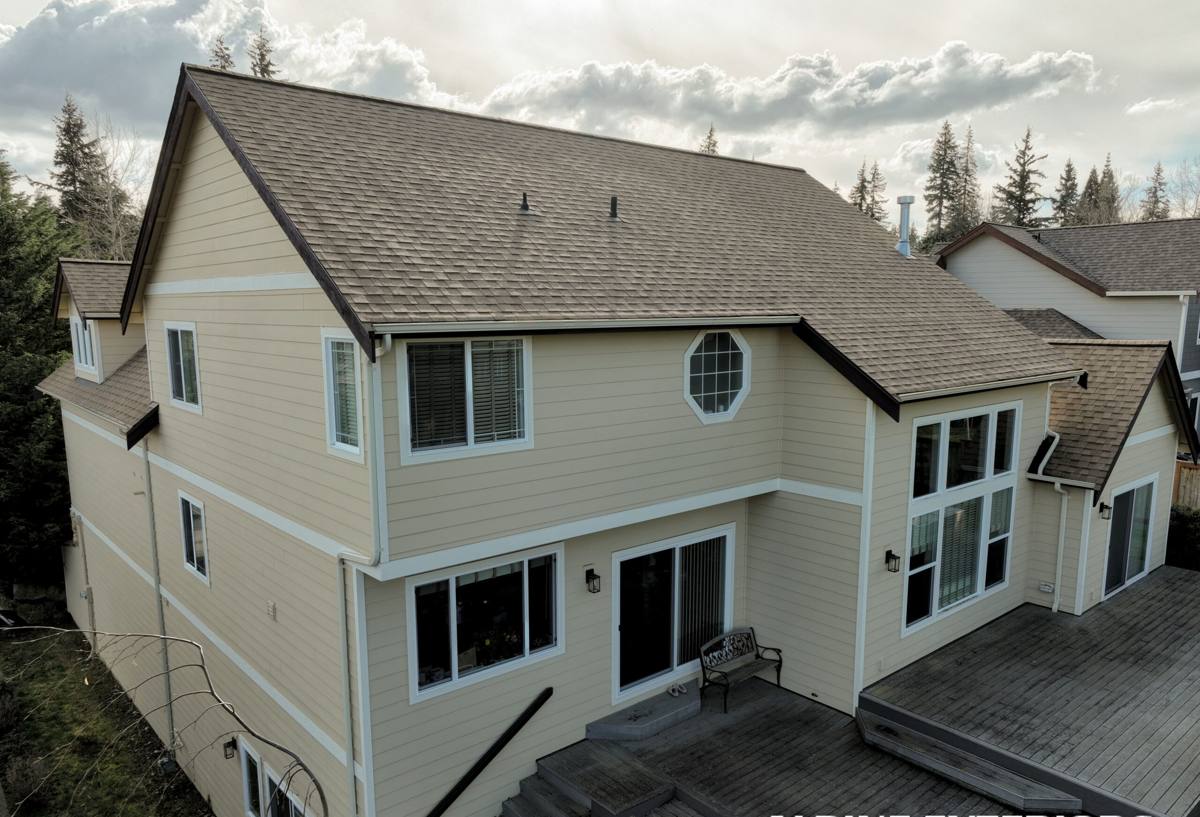
What Storm Damage Really Looks Like on a Laurel Roof
Wind and Uplift Damage
Sustained wind off open fields and the nearby water doesn't just knock a few shingles loose. It gets underneath tab edges and ridge caps and works them like a lever, loosening fasteners in a spreading pattern that's often bigger than what's visible from the ground. A roof that looks fine after a storm can have a dozen compromised tabs that won't show a leak until the next heavy rain finds them.
Wind-Driven Rain Intrusion
Rain that falls straight down mostly runs off a well-built roof without issue. Rain driven sideways by wind is a different problem — it gets pushed up under laps, into vents, and around flashing that was only ever designed to shed water moving downhill. This is one of the most common storm-related call-outs we see in this part of the county, and it's often mistaken for a bigger problem than it is, or dismissed as nothing when it's actually letting water into the deck.
Moss and Organic Buildup
Moss doesn't cause storm damage on its own, but it makes every storm worse. A mat of moss holds moisture against shingles long after a storm has passed, keeps granules and shingle surfaces soft and vulnerable, and can lift edges just enough for wind-driven rain to get a foothold it wouldn't otherwise have. On north-facing slopes and roofs shaded by trees — common around Laurel's mix of open and wooded lots — moss buildup is often the difference between a storm a roof shrugs off and one that causes a real leak.
Why Waiting Makes It Worse
A small storm-related opening in a roof doesn't stay small. Water that gets under shingles or through a cracked flashing joint travels — it can run several feet along the deck or rafters before it ever shows up as a stain on a ceiling. By the time a homeowner notices a spot, the insulation underneath may already be saturated and the decking may already be softening. Storm damage repair done within a reasonable window after the event is almost always cheaper and simpler than the same repair done after a few more rain cycles have had time to spread the damage.
What a Correct Storm Damage Repair Involves
An Honest Inspection First
Before any repair, a correct job starts with getting on the roof (not just looking from the ground) and checking the full field, not only the spot where the leak showed up. Wind and rain damage is frequently in more than one location, and a repair that only addresses the visible symptom often leaves a second problem to surface after the next storm.
Temporary Protection When Needed
If a storm has left an active leak or an exposed section of deck, the first priority is stopping water intrusion — tarping or temporary sealing — before working out the permanent fix. This matters more in Laurel's wetter months, when even a day or two of exposure between storms can add up.
Checking the Deck and Structure, Not Just the Surface
Shingles and flashing are the visible layer, but storm damage repair that skips checking the decking underneath is incomplete. Water intrusion from wind-driven rain can soften or rot decking in ways that won't show from above until the roofer pulls back the damaged section. Any repair worth doing includes confirming the deck underneath is sound, or replacing the section that isn't, before new material goes down.
Flashing and Underlayment Done Right
Most storm-related leaks trace back to flashing — around chimneys, vents, valleys, and roof-to-wall transitions — rather than the field shingles themselves. Correct repair means reworking the flashing detail properly, with underlayment lapped the right direction, rather than just running a bead of sealant over the gap. Sealant-only fixes are common shortcuts and they rarely last through a second storm season.
Matching Materials, Not Just Colors
A repair on an older roof should account for the fact that new shingles won't weather-match immediately, and that the repaired section needs to tie into the existing roofing in a way that sheds water correctly — not just look reasonably close from the street.
Our Process, From Call to Completion
- Initial call or estimate request — a description of the storm event and where the damage is showing helps us come prepared.
- On-roof inspection — we check the full roof, not just the reported problem area, including flashing, valleys, and any moss-heavy sections.
- Written scope and honest recommendation — what needs fixing now, what to watch, and what can reasonably wait.
- Temporary protection if needed — tarping or sealing an active leak before scheduling the full repair.
- Repair work — deck check, underlayment and flashing correction, matched shingle or roofing material installed properly.
- Final walkthrough — confirming the repair with the homeowner before we consider the job done.
Repair or Replace? What Actually Determines the Answer
Not every storm-damaged roof needs a full replacement, and not every roof that "just needs a patch" is actually a good candidate for one. The right call depends on a few honest factors:
| Factor | Favors Repair | Favors Replacement |
|---|---|---|
| Roof age | Under 12-15 years, otherwise in good condition | Nearing or past expected lifespan |
| Extent of damage | Isolated to one section or slope | Spread across multiple slopes or recurring in several spots |
| Deck condition | Sound, no rot found on inspection | Soft decking or repeated water staining found under shingles |
| Moss history | Minor, manageable with cleaning and maintenance | Heavy, longstanding buildup that's degraded shingle surfaces broadly |
| Prior repairs | First storm-related repair on this roof | Multiple past patches that haven't held |
We'll tell you honestly which side of that table your roof falls on rather than defaulting to whichever job is larger.
Insurance Considerations for Storm Damage
Many storm damage repairs in this area involve a homeowner's insurance claim. We can document the damage we find with photos and a written scope that an adjuster can review, but we're not the insurance company and won't promise a claim outcome. What we can promise is an honest, defensible assessment of what's actually storm-related versus what's pre-existing wear — that distinction matters to adjusters, and getting it right the first time avoids delays in the claims process.
A Homeowner's Checklist After a Storm
- Check ceilings and attic spaces for new staining, even faint ones, after any significant windstorm.
- Look at the yard and gutters for granules, shingle fragments, or flashing pieces — a sign something came loose.
- Note which direction the wind was coming from; it helps narrow down which slope to check first.
- Avoid getting on the roof yourself, especially in wet or windy conditions — this is where most storm-related injuries happen.
- Don't wait on a small leak hoping it dries out on its own — get it looked at before the next rain event.
- Take photos of any visible exterior damage as soon as it's safe to do so, for your own records and any insurance claim.
Why a Crew That Already Works Laurel Matters
A roofer who works this stretch of Whatcom County regularly already knows what a typical storm season here does to a roof — which flashing details fail first, how bad the moss gets on shaded slopes near the water, and what wind-driven rain actually gets into versus what just looks alarming. That familiarity means less time spent diagnosing and more time spent fixing the right thing the first time. It also means we're not guessing at material choices that hold up to salt air and repeated wet-dry cycles; we're using what we already know works on roofs like yours, in this exact area.
If a recent storm has left you with a leak, missing shingles, or just a nagging feeling that something came loose during the last windstorm, we're happy to take a look. Reach out for a free, no-pressure estimate using the form below, and we'll give you a straight answer about what's actually going on with your roof.