 Custer
 Why Ferndale Homes Need Siding Built for This Exact Climate
Ferndale sits close enough to the water and open farmland around Custer that homes here take a specific kind of beating. It's not one big storm that causes problems — it's the accumulation. Salt-laden air moving in off the coast slowly works on anything with exposed fasteners or unsealed seams. Driving rain, pushed sideways by wind instead of falling straight down, finds gaps that would never be tested in a calmer climate. And Whatcom County's long, damp shoulder seasons mean moss and algae get months of growing conditions on north-facing walls and anywhere shade lingers.
Siding that isn't specifically suited to this combination doesn't fail dramatically. It fails quietly — a little swelling here, a little color fade there, a soft spot behind a downspout that nobody notices until a repair becomes a replacement. For Ferndale homeowners, the siding decision is really a moisture-management decision first and a looks decision second.
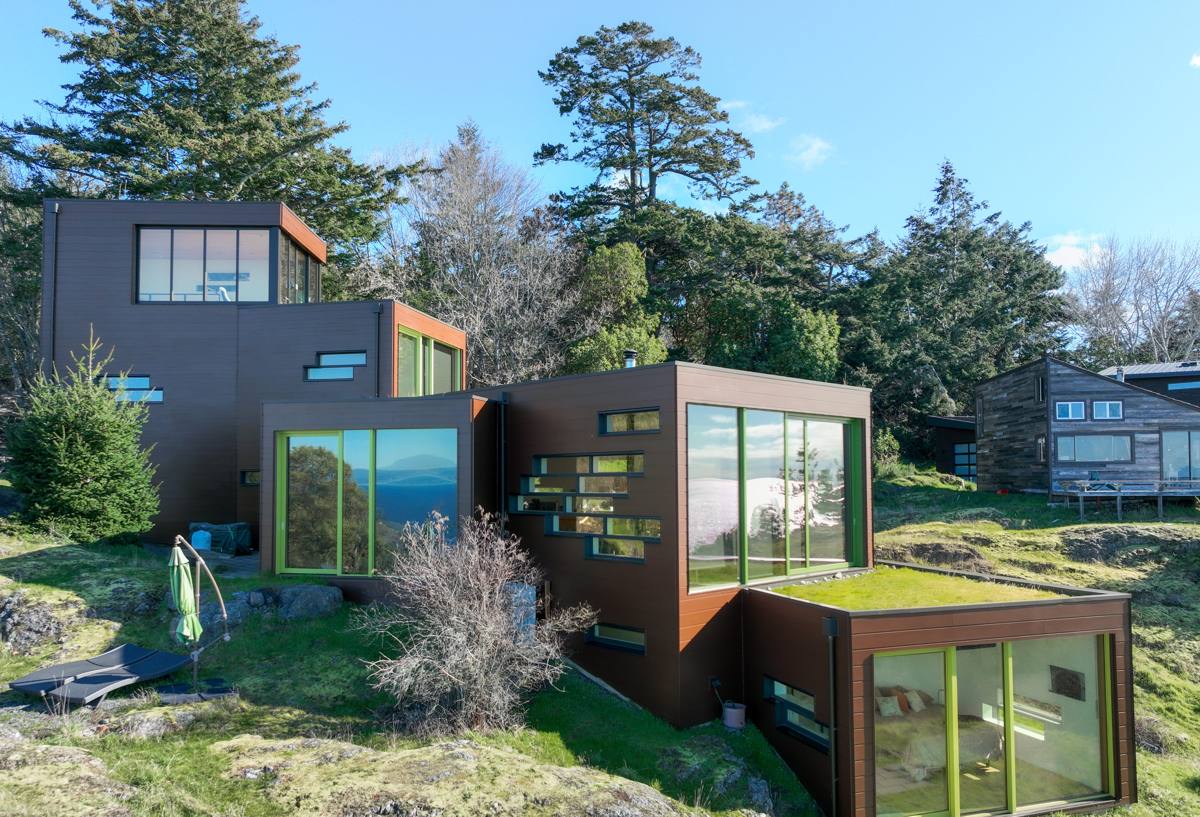
What James Hardie Brings to a Ferndale Property
We install James Hardie fiber cement exclusively, and on a property like this, the reasons aren't abstract. Hardie's HZ5 product line is engineered specifically for climates that cycle between wet and freezing, which describes a typical Whatcom County winter more than people expect. Fiber cement doesn't absorb moisture the way wood-based products do, and it doesn't degrade from repeated wetting and drying the way some engineered wood siding can over a couple decades.
The ColorPlus factory finish matters here too. Field-applied paint is the first thing to give up in a salt-air, high-moisture environment — it's a surface coating fighting against constant exposure. ColorPlus is baked on in a controlled factory process with a finish designed to hold color and resist the fading and chalking that coastal UV and salt exposure cause faster than they would inland.
Non-Combustible Construction
Fiber cement doesn't burn. That's not marketing language for Hardie — it's a material fact that matters for insurance conversations and for peace of mind, especially as wildfire smoke seasons have become a more regular part of Pacific Northwest summers even in areas that don't face direct fire risk.
Built to Handle Moss and Algae Pressure
No siding is moss-proof, but the surface characteristics of fiber cement make it easier to keep clean and less hospitable to sustained growth than wood-fiber composites, which can hold moisture in their surface layer and effectively feed the problem.
Why We Don't Install Vinyl, LP SmartSide, or Other Alternatives Here
We get asked about cheaper options often enough that it's worth addressing directly, especially for a coastal-adjacent area like Ferndale.
- Vinyl siding expands and contracts significantly with temperature swings, and in wind-driven rain, its overlapping panel design is more prone to water intrusion behind the surface than a properly flashed fiber cement installation. It also softens and can warp with any sustained heat exposure, and salt air accelerates the surface chalking that makes older vinyl look dull.
- LP SmartSide and other engineered wood products use treated wood strand technology that performs reasonably well in moderate climates, but they depend on unbroken paint film and sealed cut edges to keep moisture out. In a high-moisture, high-salt environment, any breach in that seal — from a missed caulk joint to a woodpecker strike — gives moisture a path into a wood-based core, which can swell and deteriorate.
- Cedar and primed spruce are beautiful materials, and we're not going to pretend otherwise. But they require an ongoing maintenance commitment — refinishing, sealing, and monitoring — that most homeowners underestimate when they price out the initial install. In a climate that keeps wood wet for weeks at a stretch during the fall and winter, that maintenance schedule gets less forgiving, not more.
None of these are bad products used correctly in the right setting. They're just not what we're willing to put our name on for homes dealing with this specific combination of salt, wind-driven rain, and moss pressure year after year.
What Correct Installation Looks Like on a Ferndale Home
Hardie's own warranty and performance depend heavily on installation quality — more so than most homeowners realize. A rushed or generic install can undercut the material's advantages entirely.
The Details That Actually Matter
- Proper weather-resistive barrier installed and lapped correctly before any siding goes up, giving the wall a drainage plane behind the cladding.
- Rainscreen or furring strategy where conditions call for it, so moisture that does get behind the siding has somewhere to go instead of sitting against the sheathing.
- Correct fastener type, spacing, and placement per Hardie's published installation specifications — not general contractor judgment.
- Flashing detail at every window, door, and penetration, since these are the actual failure points in most siding jobs, not the field of the wall.
- Proper clearance at grade, decks, and roof lines so the bottom edge of the siding isn't sitting in standing water or snow load.
- Factory-cut edges used wherever possible, with any field cuts sealed per manufacturer spec to protect the cut edge from moisture intrusion.
Skip any one of these and you can end up with a wall that looks like a correct Hardie installation but doesn't perform like one. This is the gap between "Hardie siding" and "Hardie siding installed to spec" — and it's the entire reason installer experience matters as much as the material choice.
Comparing the Approaches
| Factor | James Hardie Fiber Cement | Vinyl | Engineered Wood (e.g. LP SmartSide) |
|---|---|---|---|
| Moisture tolerance | High — doesn't absorb or swell | Moderate — vulnerable behind panels | Moderate — depends on intact seal |
| Salt air performance | Strong, factory finish resists chalking | Chalks and dulls faster over time | Depends on paint film integrity |
| Fire rating | Non-combustible | Combustible | Combustible |
| Maintenance | Low — occasional wash | Low, but degrades in appearance | Moderate — monitor seals, touch-up paint |
| Typical lifespan | Multiple decades with correct install | 15–25 years, appearance fades sooner | Variable, sensitive to moisture events |
Our Process for a Ferndale Job
Every project starts with a walk-around assessment of the existing wall assembly — not just the visible siding, but what's happening behind it. On homes near Custer that have had prior siding failures, we're looking for sheathing damage, past water paths, and areas where trim or flashing has been patched rather than properly replaced.
- On-site evaluation of current siding condition, moisture points, and trim/flashing detail
- Written scope covering weather barrier, drainage strategy, fastening plan, and product selection (lap, panel, or shingle profile and color line)
- Tear-off and inspection of sheathing, with repairs addressed before any new material goes up
- Weather-resistive barrier and flashing installed at every penetration before siding starts
- Hardie installation to manufacturer spec, including fastener pattern and clearances
- Final walkthrough covering caulking, trim details, and care going forward
Why Local Experience in Ferndale Specifically Matters
Whatcom County covers a lot of microclimates, and Ferndale's exposure isn't identical to a job a few miles inland or up against the foothills. A crew that's worked homes in this specific area already knows which wall orientations take the worst of the wind-driven rain, where moss pressure tends to concentrate, and what past building practices in the area tend to need correcting when we open up a wall. That's the kind of judgment that doesn't come from a install manual — it comes from having done the work here before.
It also matters for something more practical: warranty support and material sourcing. A crew that regularly installs James Hardie in this region has the manufacturer relationship and installation certification to back the product's transferable warranty properly, and knows the local supply timelines rather than guessing.
What This Costs to Think About
We don't publish blanket pricing because every home's wall condition, square footage, trim complexity, and existing damage are different — and quoting a number without seeing the wall assembly first does homeowners a disservice. What we can tell you honestly: fiber cement installed to spec typically costs more upfront than vinyl and is comparable to or somewhat more than engineered wood siding, depending on product line and trim detail. The difference shows up over the following 10, 20, and 30 years in maintenance costs avoided and in a wall assembly that isn't fighting moisture the whole time.
If you're weighing a siding replacement or repair on a Ferndale home and want a straight answer about what your walls actually need, we're glad to take a look. A free, no-pressure estimate gets you a real assessment, not a sales pitch — use the form below to get started.